
TL;DR
A Help Scout alternative is a support platform that does what an email-first inbox can’t: recommend products, track orders, run WhatsApp, and tie chat to revenue. This guide ranks 7 alternatives for ecommerce and Shopify on commerce fit, AI, and cost. Top pick: Zipchat, for turning pre-purchase questions into sales.
Help Scout is a clean email inbox with a knowledge base bolted on. That’s the point of it, and it’s good at it. The problem shows up the moment your store needs the tool to sell, not only reply. It doesn’t recommend products, look up orders in chat, send a cart-recovery message on WhatsApp, or tell you which conversations turned into orders. This list scores each alternative on the axis that matters for a store: does it turn support into revenue, or does it only close tickets?
How we picked these Help Scout alternatives
We judged each tool on what an ecommerce operator needs, not what a generic SaaS support team needs. Commerce fit came first: native Shopify, WooCommerce, or Magento support, order lookup, and product knowledge inside the conversation. Then AI quality, pricing model (seat, resolution, or flat), setup time, and revenue impact beyond deflection. Channel coverage mattered too, so we weighed WhatsApp, Instagram, and email against a plain shared inbox.
Ratings come from G2 or Capterra, checked in September 2026. Pricing reflects each vendor’s public rates as of September 2026 and can change, so confirm the current figure on the vendor’s own pricing page before you buy. Where a tool is strong, we say so. Where it’s weak, we say that too, including for Zipchat.
Help Scout alternatives compared at a glance
| Tool | Best for | Pricing model and starting price | Ecommerce / Shopify fit | Rating |
|---|
| 1. Zipchat | Turning pre-purchase questions into revenue | Reply-based plan, from $80/month | Built for Shopify; WooCommerce, Magento | 4.8/5 G2 |
| 2. Richpanel | AI-native ecommerce helpdesk | Per-agent, from $99/seat/month | Strong (DTC-focused) | 4.7/5 G2 |
| 3. Kustomer | Enterprise CX at high volume | Custom pricing | Moderate (CRM-led) | 4.5/5 G2 |
| 4. Freshdesk | Budget multichannel ticketing | Per-agent seat, from $29/agent/month | Moderate (via integrations) | 4.4/5 G2 |
| 5. Intercom | Product-led teams that want Fin AI | Seat + per-resolution, seats from $19/seat/month | Moderate (not ecommerce-native) | 4.5/5 G2 |
| 6. Re:amaze | Multi-store, multi-channel messaging | Per-seat or flat, from $26.10/user/month | Strong (Shopify app) | 4.6/5 G2 |
| 7. Crisp | SMB flat-rate live chat and bots | Flat workspace, free plan then from $45/month | Light to moderate | 4.6/5 Capterra |
Pricing and ratings as of September 2026.
Why ecommerce stores switch from Help Scout
Stores leave Help Scout because it’s built for email support, not selling. It has no native product recommendations, no in-chat order tracking, no WhatsApp marketing, and no revenue attribution on conversations.
Help Scout’s model is the shared inbox. Standard runs $25 per user per month on annual billing, Plus is $45, and Pro is $75. Every new hire adds a seat, so cost tracks headcount, not value.
The customer-facing AI, AI Answers, is billed on top of seats at $0.75 per resolution, charged in arrears. A five-person team on Plus pays $225 a month for seats. Add 1,000 AI resolutions and the bill jumps to $975. That’s fine for a support desk. It’s expensive for a store that also wants the AI to answer “will this fit?” and close the sale.
Then there’s the commerce gap. A pre-sale shopper asking for a size, a material, or a bundle gets a knowledge-base answer, not a product card. There’s no order lookup in the widget, no discount code generation, and no WhatsApp campaign to win back a cart. Help Scout still scores a solid 4.4 out of 5 on G2 across 423 reviews, so this isn’t a quality problem. It’s a fit problem for ecommerce.
The 7 best Help Scout alternatives
1. Zipchat, best for turning pre-purchase questions into revenue
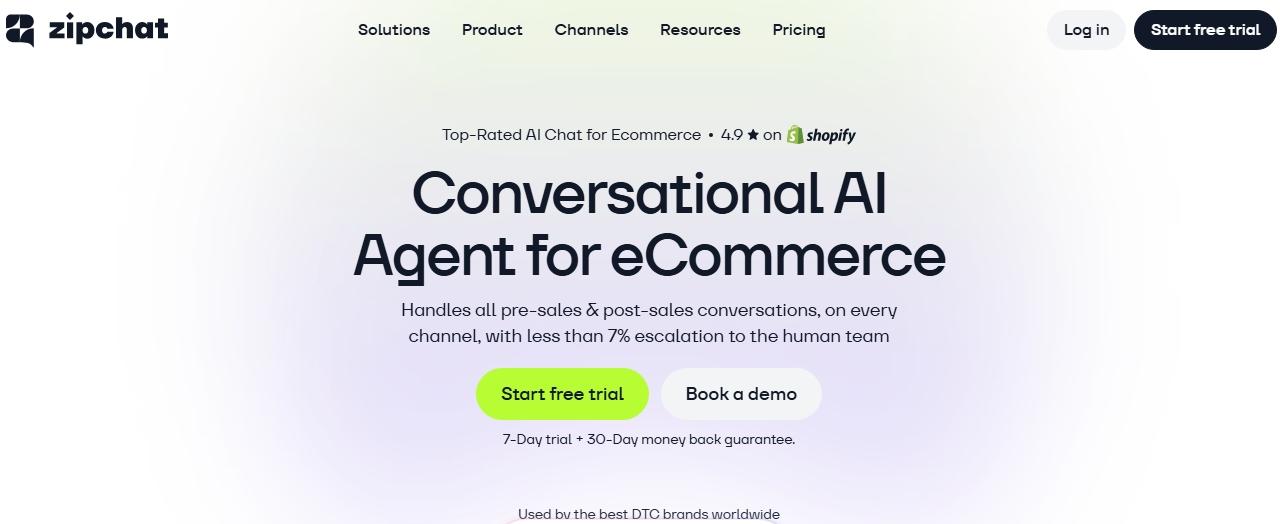
Zipchat is an AI customer engagement platform for ecommerce that answers support questions and sells in the same conversation. It reads your catalog, policies, and pages, then handles pre-sale questions, order tracking, and post-sale support in 95+ languages. It’s the only tool here built first to recover revenue, not only to deflect tickets.
Key features:
- Built for Shopify certified, plus WooCommerce, Magento, and Wix.
- AI product recommendations and visual product matching from a customer photo.
- In-chat order tracking and one-time Shopify discount code generation.
- WhatsApp, Instagram, Messenger, and email in one inbox, with WhatsApp marketing campaigns.
- Revenue attribution: it reports sales, orders, and AOV from chats, not only ticket counts.
Pricing: Starter is $80/month, with a 7-day free trial and a 30-day money-back guarantee. AI replies are included in every plan, so there’s no separate per-resolution fee. Setup runs off your catalog and goes live in under an hour, with no Help Center required first.
Rating: 4.8/5 on G2 and 4.8/5 on the Shopify App Store.
Pros:
- Fast catalog-based setup.
- Revenue attribution on chats.
- Any-language replies.
Cons:
- It’s built for ecommerce and software support and not as a legacy multi-department ticketing suite with heavy internal SLAs.
Best for: Shopify, WooCommerce, and Magento stores where pre-purchase questions are costing sales.
2. Richpanel, best AI-native ecommerce helpdesk

Richpanel is an AI-native helpdesk built for DTC and ecommerce brands. It pairs an agent workspace with AI that resolves tickets and a self-service portal for returns and order status. Order context sits next to every conversation, so human replies move faster.
Key features:
- AI and automations included in the Pro tier, not gated behind enterprise.
- Self-service portal for returns, order tracking, and common requests.
- Multichannel inbox with ecommerce macros.
- Native Shopify order actions.
Pricing: entry seats from $99 per agent per month, with $0.20 per AI-handled conversation for the AI Agents.
Rating: 4.7/5 on G2.
Pros:
- Strong ecommerce fit.
- AI in the paid base tier.
- Clean returns flow.
Cons:
- The starting price is high.
Best for: DTC brands that want AI resolution and a returns portal in one ecommerce-focused tool.
3. Kustomer, best for enterprise CX at high volume
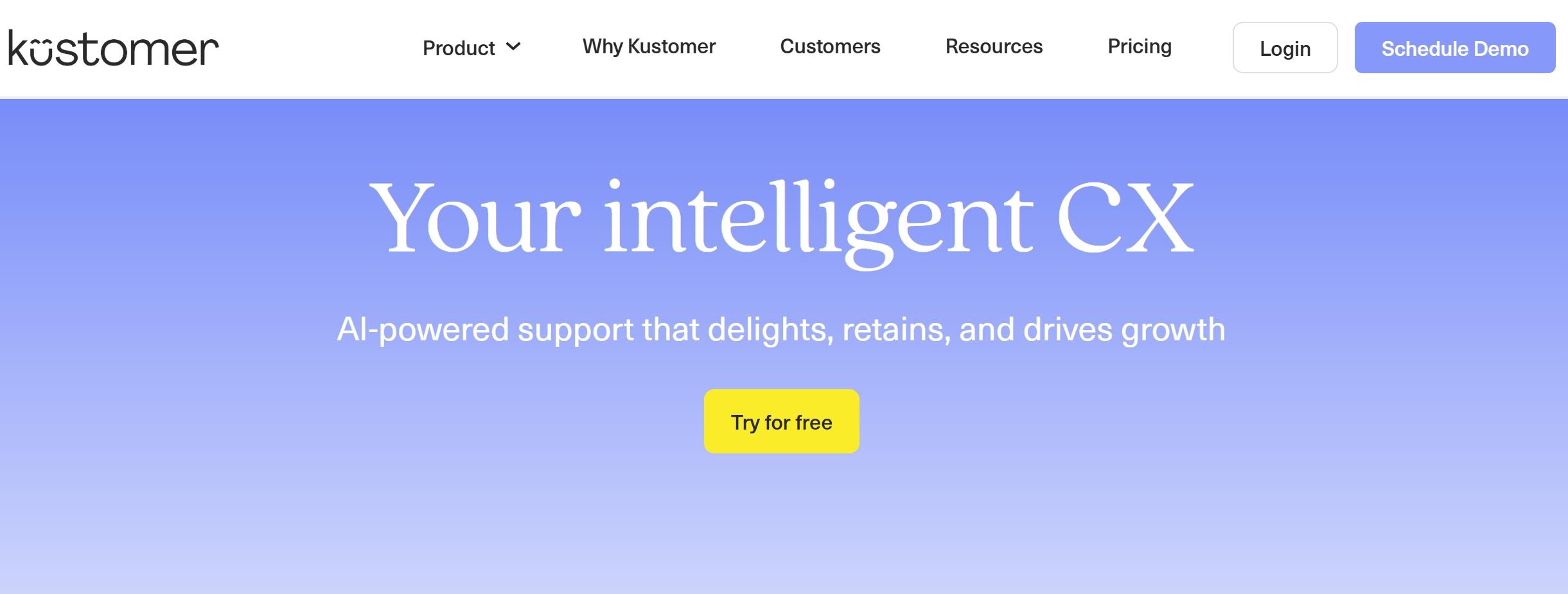
Kustomer is a CRM-first support platform for large teams that want every interaction on one customer timeline. It’s powerful and data-rich, and it’s priced for enterprise, with seat minimums and an implementation project attached. For a big multi-brand operation, that depth earns its keep.
Key features:
- Unified customer timeline across channels and order history.
- Conversation-based routing and automation at scale.
- AI for Customers deflection layer and AI for Reps assist.
- Deep CRM data model and reporting.
Pricing: Custom pricing.
Rating: 4.5/5 on G2 across 500+ reviews.
Pros:
- Strong CRM depth.
- Scales to high volume.
- Flexible seat or conversation pricing.
Cons:
- Seat minimums.
- AI billed per conversation.
- Setup cost puts it out of reach for most SMBs.
Best for: large, multi-brand support organizations that need a CRM-grade platform, not a lean store.
4. Freshdesk, best budget multichannel ticketing
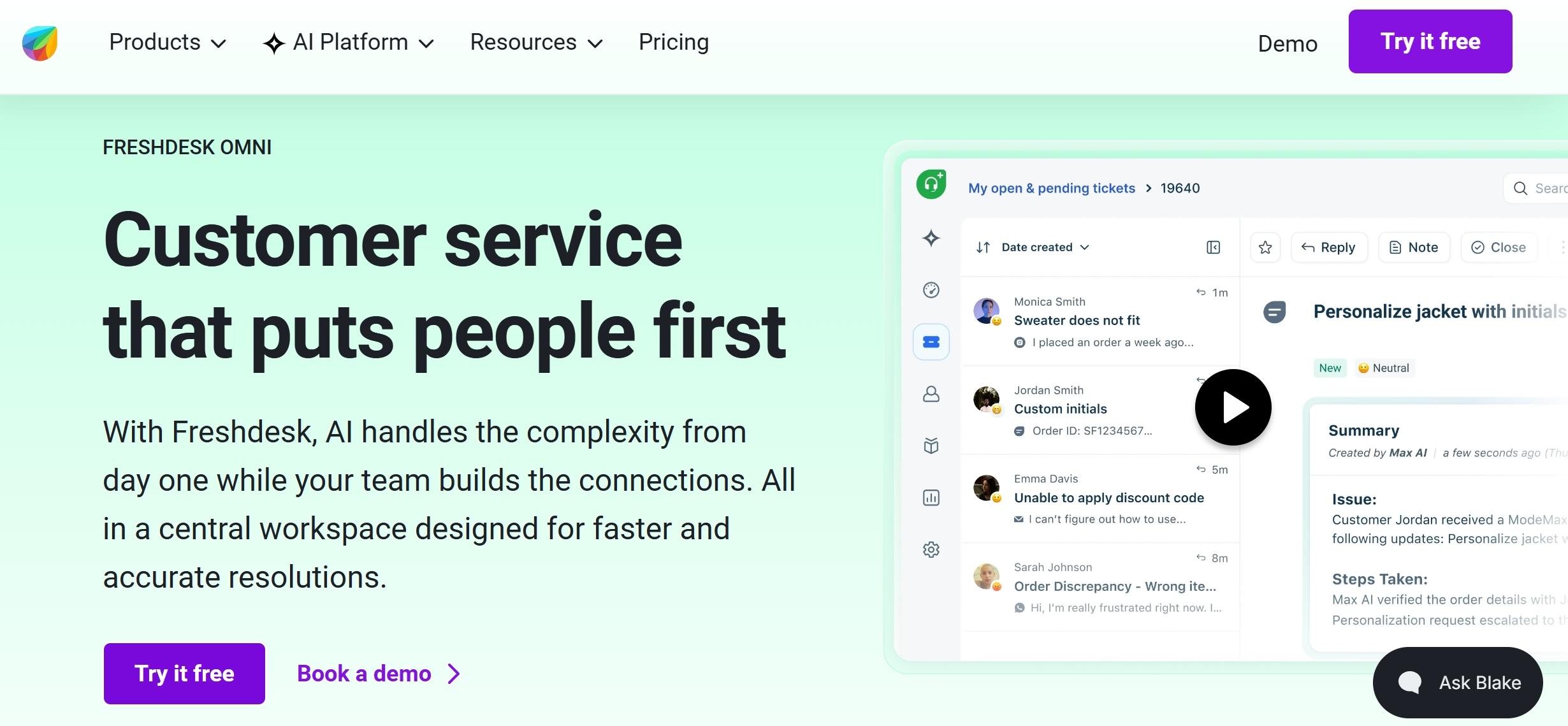
Freshdesk is a familiar, affordable ticketing tool with a low entry seat price. It’s a solid general help desk, and ecommerce depth comes through integrations rather than native commerce features. The trade-off is that useful AI and omnichannel sit in higher tiers and add-ons.
Key features:
- Multichannel ticketing across email, chat, and social.
- Freddy AI Copilot for agents and Freddy AI Agent for automated resolutions.
- Automations and SLA management.
- Large integration library.
Pricing: Growth from $29 per agent per month on annual billing, Pro at $79, and Enterprise at $119. Freddy AI Copilot adds $29 per agent per month, and Freddy AI Agent sessions run $49 per 100 after the included allotment.
Rating: 4.4/5 on G2 across 3,000+ reviews.
Pros:
- Low starting seat price.
- Mature ticketing.
- Wide integrations.
Cons:
- It’s still seat-based.
- The AI you’ll want lands in paid add-ons that raise the real price.
Best for: teams that want classic multichannel ticketing at a low seat price and don’t need native commerce features.
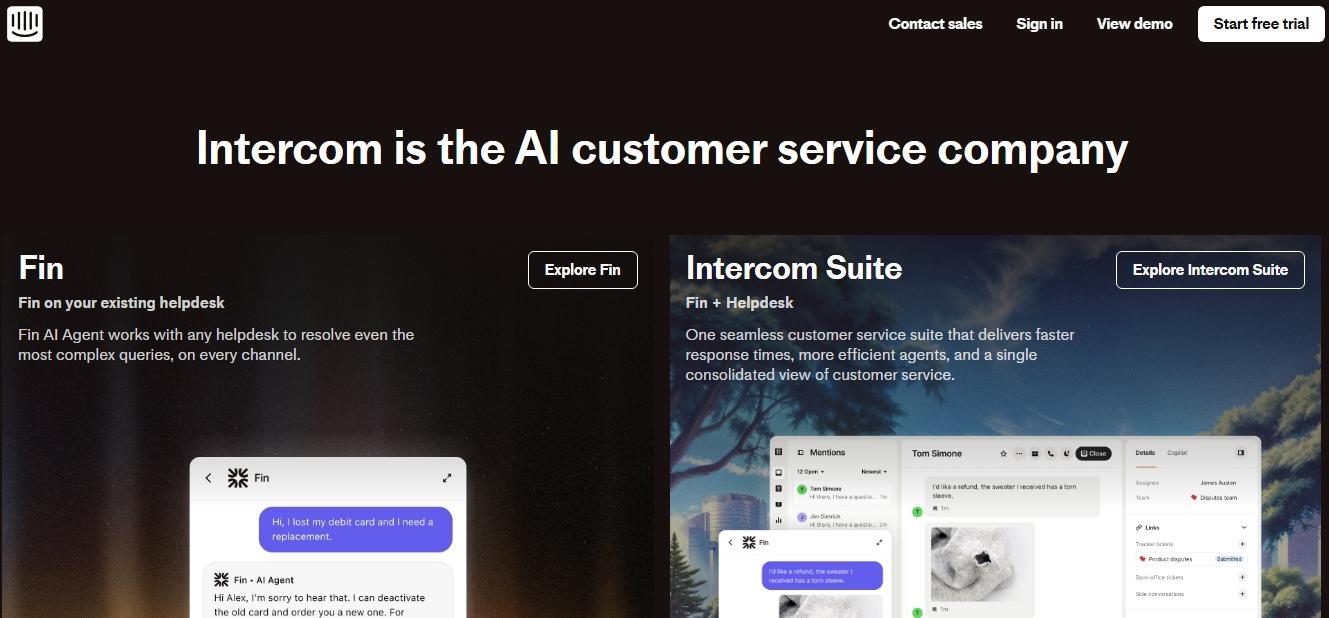
Intercom is a customer service suite with a strong AI agent, Fin, that product-led and SaaS teams like. It’s a mature platform, but it isn’t ecommerce-native, so order and catalog workflows need setup. The pricing stacks seats and per-resolution fees, which climbs fast at volume.
Key features:
- Fin AI agent with high deflection on well-documented topics.
- Messenger, email, and help center in one workspace.
- Workflow automation on higher tiers.
- Large app marketplace.
Pricing: seats from $19 per seat per month on annual billing (Essential), rising to $85 (Advanced) and $132 (Expert), plus Fin at $0.99 per resolution. The seat-plus-resolution stack means a mid-plan team with steady AI volume can pay several times the sticker price.
Rating: 4.5/5 on G2 across 3,000+ reviews.
Pros:
- Excellent AI agent.
- Mature platform.
- Strong automation.
Cons:
- Costs get unpredictable at volume.
- It’s built for SaaS support more than storefront selling. For a direct look, see our Zipchat vs Intercom comparison.
Best for: product-led and hybrid teams that value Fin and don’t need ecommerce-native selling.
6. Re:amaze, best for multi-store, multi-channel messaging
Re:amaze is a helpdesk and messaging platform built for websites, stores, and apps, with a native Shopify app and broad channel coverage. It shines when you run several stores or brands and want one inbox for chat, email, social, and SMS. The AI is lighter than the leaders here, but the multi-store fit is strong.
Key features:
- Unified inbox for chat, email, social, SMS, and VOIP.
- FAQ knowledge bases and chatbot automations.
- Multi-brand and multi-store support in one account.
- Shopify app with order data.
Pricing: per-seat Basic at $26.10 per user per month, Pro at $44.10, and Plus at $62.10. Annual billing saves about 10% across the per-user plans.
Rating: 4.6/5 on G2.
Pros:
- Flexible pricing.
- Strong multi-store fit.
- Broad channels.
Cons:
- AI is lighter than the top tools.
- The flat plan caps conversations.
Best for: operators running multiple stores or channels who want one affordable inbox.
7. Crisp, best for SMB flat-rate live chat and bots
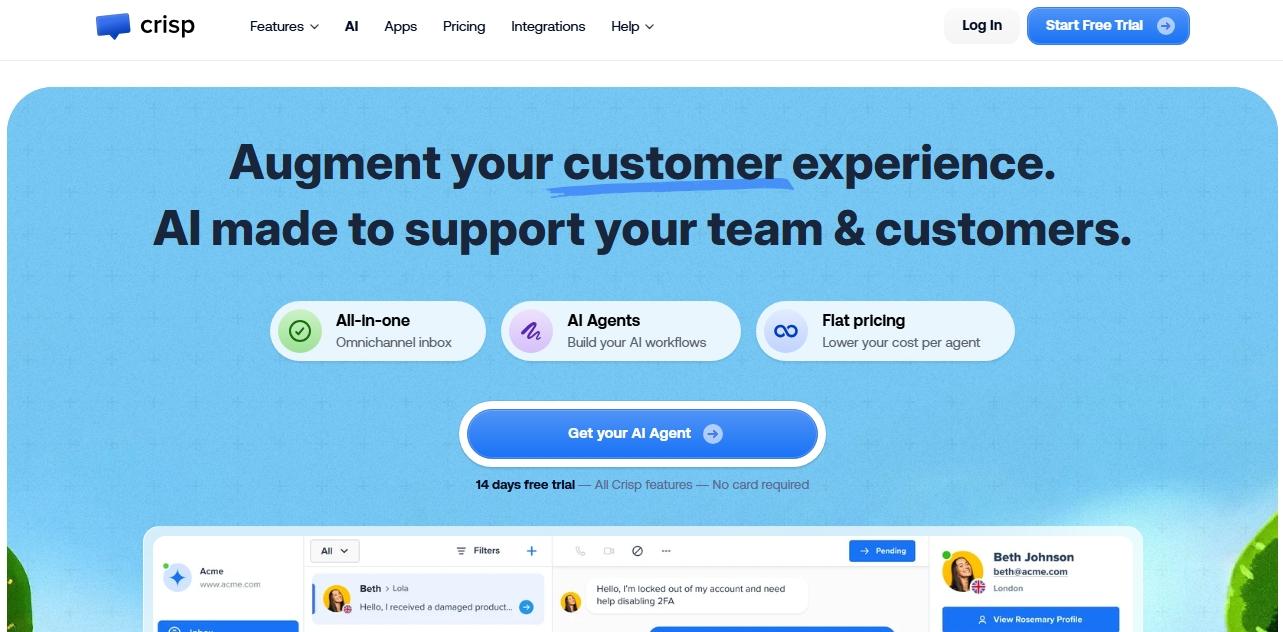
Crisp is a live chat and messaging tool for small teams, priced by workspace instead of by seat. That flat model is its edge: a growing team can add people without watching the bill climb per head. Ecommerce depth is light, so it fits stores that want chat and light automation more than a full commerce engine.
Key features:
- Flat-rate workspace pricing with a permanent free tier.
- Live chat, shared inbox, and chatbot builder.
- Hugo AI assistant for automated replies.
- Broad channel coverage including social and email.
Pricing: Free for 2 seats, Mini at $45/month for 4 seats, Essentials at $95/month for 10 seats, and Plus at $295/month for 20 seats, each per workspace. Hugo AI runs on credits included with each tier, then pay-as-you-go after that.
Rating: 4.6/5 on Capterra across 140+ reviews.
Pros:
- Flat pricing that doesn’t punish team growth.
- Free tier.
- Easy setup.
Cons:
- Light ecommerce features.
- AI usage is metered by credits.
Best for: small stores that want affordable flat-rate live chat with light AI, not deep commerce automation.
Help Scout alternatives cost compared
The cheapest Help Scout alternative depends on your cost driver. Seat-plus-resolution tools (Help Scout, Intercom) get pricier as headcount and AI volume rise. Reply-based tools (Zipchat) hold a flat monthly cost no matter how many tickets the AI resolves.
Here’s a like-for-like scenario. Assume a 5-agent store handling 2,000 conversations a month, with AI resolving 40% (800 resolutions). Prices are as of September 2026 and are illustrative; your counts will vary.
| Cost line | Help Scout (seat + resolution) | Zipchat (reply-based plan) |
|---|
| Seats | 5 x $45 (Plus) = $225/mo | Included (unlimited team members on Pro) |
| AI resolutions | 800 x $0.75 = $600/mo | Included in plan |
| Plan fee | Included above | $300/mo (Pro, 3,000 AI replies) |
| Estimated total | ~$825/mo | ~$300/mo |
Use this formula to compare any two tools on the same basis:
Cost per resolution = Total monthly tool cost / conversations handled

Help Scout:  $825 / 2,000 = $0.41 per conversation
Zipchat:     $300 / 2,000 = $0.15 per conversation
The gap isn’t a rounding error. Seat-plus-resolution pricing grows with both your team and your AI volume, while a reply-based plan decouples cost from resolution count. On top of that, an AI that answers pre-purchase questions recovers sales a pure inbox never counts.
How to choose a Help Scout alternative
Don’t choose on inbox features alone. Every tool here can hold a conversation. The real differences are cost model and commerce depth, so match the tool to your cost driver and the job you need done.
| If your situation is… | Then prioritize… | Best fit here |
|---|
| Pre-purchase questions cost you sales | An AI that answers and recommends products | Zipchat |
| You’re Shopify-first and want AI resolution | Native order actions and included AI | Zipchat, Richpanel |
| Budget is tight and you want classic ticketing | A low seat price with multichannel | Freshdesk |
| You run multiple stores or channels | A unified multi-store inbox | Re:amaze, Richpanel |
| You want flat pricing as the team grows | Workspace pricing, not per-seat | Crisp |
| You’re enterprise with a CRM-grade need | Deep customer data and high-volume routing | Kustomer |
For a wider view of the category, see the best AI chatbot for Shopify and our roundup of top Shopify chatbots.
Which Help Scout alternative is best for Shopify?
For Shopify, pick a tool with a native app, order lookup, in-chat discount creation, and a checkout-page presence. Zipchat is Built for Shopify certified and creates one-time discount codes and tracks orders inside the chat. Richpanel and Re:amaze also offer native Shopify apps with order data.
Native Shopify support removes middleware. The AI should read your catalog, look up an order with an email and order number, and generate a discount to close a hesitant buyer, without a developer. On Shopify Plus, a checkout-page presence lets the AI answer during the final step, where doubt kills conversions.
The difference is intent. Richpanel and Re:amaze route and resolve tickets well, while Zipchat adds a pre-purchase layer that recommends products and recovers carts. If your Shopify problem is mostly post-sale support, a native helpdesk is enough. If it’s lost sales from unanswered pre-sale questions, you want the selling layer.
When Help Scout is still the right choice
Keep Help Scout when your job is content-led email support and a public knowledge base, not storefront selling. For docs-heavy teams and simple inboxes, its simplicity is a feature.
Help Scout still wins for teams that live in email and want a clean, human-first inbox without automation overhead. It fits SaaS and service businesses that publish a big Docs knowledge base and route most support through email and a help widget. If your volume is low and your questions are informational, the shared inbox does the job without a heavier platform.
The threshold is roughly this: if support is mostly email tickets and article deflection, Help Scout is a fine, tidy choice. If support is pre-sale questions, order status, and cross-channel messaging that should drive revenue, an ecommerce-first alternative resolves more and sells while it does. A catalog-trained assistant can resolve support tickets automatically from day one, no mature Help Center required, and you can automate ecommerce support across chat, WhatsApp, and email from one place.
FAQ
What is the best Help Scout alternative for ecommerce?
Zipchat is the best pick for ecommerce because it adds product recommendations and in-chat order tracking on top of tickets, with Built for Shopify support. Richpanel is the runner-up as an AI-native ecommerce helpdesk.
Why do ecommerce stores leave Help Scout?
It’s inbox-first. It lacks commerce features like in-chat product recommendations, native order tracking, WhatsApp marketing campaigns, and revenue attribution on conversations, so it closes tickets but doesn’t help sell.
Which Help Scout alternative is best for Shopify?
Zipchat is Built for Shopify certified, with in-chat order lookup and discount creation. Richpanel and Re:amaze also offer native Shopify apps with order data for stores that want a ticketing-led tool.
Are there cheaper alternatives to Help Scout?
Yes. Freshdesk starts at $29 per agent per month and Re:amaze at $26.10 per user. Zipchat starts at $80/month with AI replies included and no per-resolution fee, which often beats a per-seat plan once AI usage is counted.
Does Help Scout have AI?
Yes. Help Scout offers AI Answers for customer-facing replies at $0.75 per resolution, plus AI drafts for agents. AI-first ecommerce alternatives like Zipchat include AI replies in the plan and add product recommendations on top.
Can a Help Scout alternative handle any language?
Yes. AI-native tools detect the shopper’s language and reply in kind. Zipchat supports 95+ languages across chat, WhatsApp, Instagram, Messenger, and email from the same knowledge base.
What should I look for in an ecommerce help desk?
Match the tool to your cost driver and the job. Prioritize native commerce features, an AI pricing model that fits your volume, and revenue impact beyond deflection. Use the how-to-choose table above to shortlist by need.
Verdict
For ecommerce and Shopify, Zipchat is the top Help Scout alternative because it resolves support and recovers revenue on a flat, reply-based plan, not per-agent seats plus per-resolution fees. Richpanel is the runner-up for stores that want an AI-native helpdesk with a returns portal.
If pre-purchase questions are costing you sales, start a 7-day free trial and see how many chats turn into orders.