AI chatbot pricing comes in three main units: per seat, per resolution, and per reply. Most vendors mix two of them, which is why quotes from different tools are so hard to line up. A $19 seat price and a $0.99 resolution fee can end up costing more than a flat plan, or far less.
This guide breaks down how each model works, what each unit counts, and what happens when you go over. We checked every price on the vendors’ own pricing pages in October 2026.
What are the main AI chatbot pricing models?
There are four models you’ll meet in quotes: the three units above, plus conversation packs, which sell AI usage as a monthly quota. Each one charges for a different thing, so the same month of traffic produces four different bills.
| Pricing model | What you pay for | Who uses it | Cost rises when |
|---|
| Per seat plus AI usage | Each human agent, then each AI resolution | Zendesk, Intercom | You hire, or the AI resolves more |
| Per resolution | Each conversation the AI closes alone | Intercom Fin, Gorgias AI Agent | The AI resolves more |
| Conversation packs | A monthly quota of AI conversations | Tidio Lyro | You buy a bigger quota |
| Per reply | Each message the AI sends | Zipchat | The AI sends more messages |
Seat pricing tracks your team size. Usage pricing tracks your customers. For a growing store, that difference decides how your chatbot cost behaves in November.
Here’s how the five tools in most ecommerce shortlists charge, as listed in October 2026.
| Tool | Base price | AI unit | AI price | Team seats |
|---|
| Zendesk | $19 to $115 per agent/month | Automated resolution | $1.50 committed, $2.00 pay-as-you-go | Paid per agent |
| Intercom + Fin | $19 to $132 per seat/month | Fin outcome | $0.99 ($9.99 for a sales qualification) | Paid per seat |
| Gorgias | Ticket tiers from 50 to 5,000 tickets/month | Resolved interaction | $0.90 on most plans, $1 on Starter | Unlimited |
| Tidio + Lyro | Free to $49.17/month, Plus from $300 | Lyro conversation | Lyro from $32.50/month for 50 | Up to 10 on self-serve |
| Zipchat | $64 to $960/month (annual) | AI reply | Included in plan | Unlimited |
Zendesk: per agent plus automated resolutions
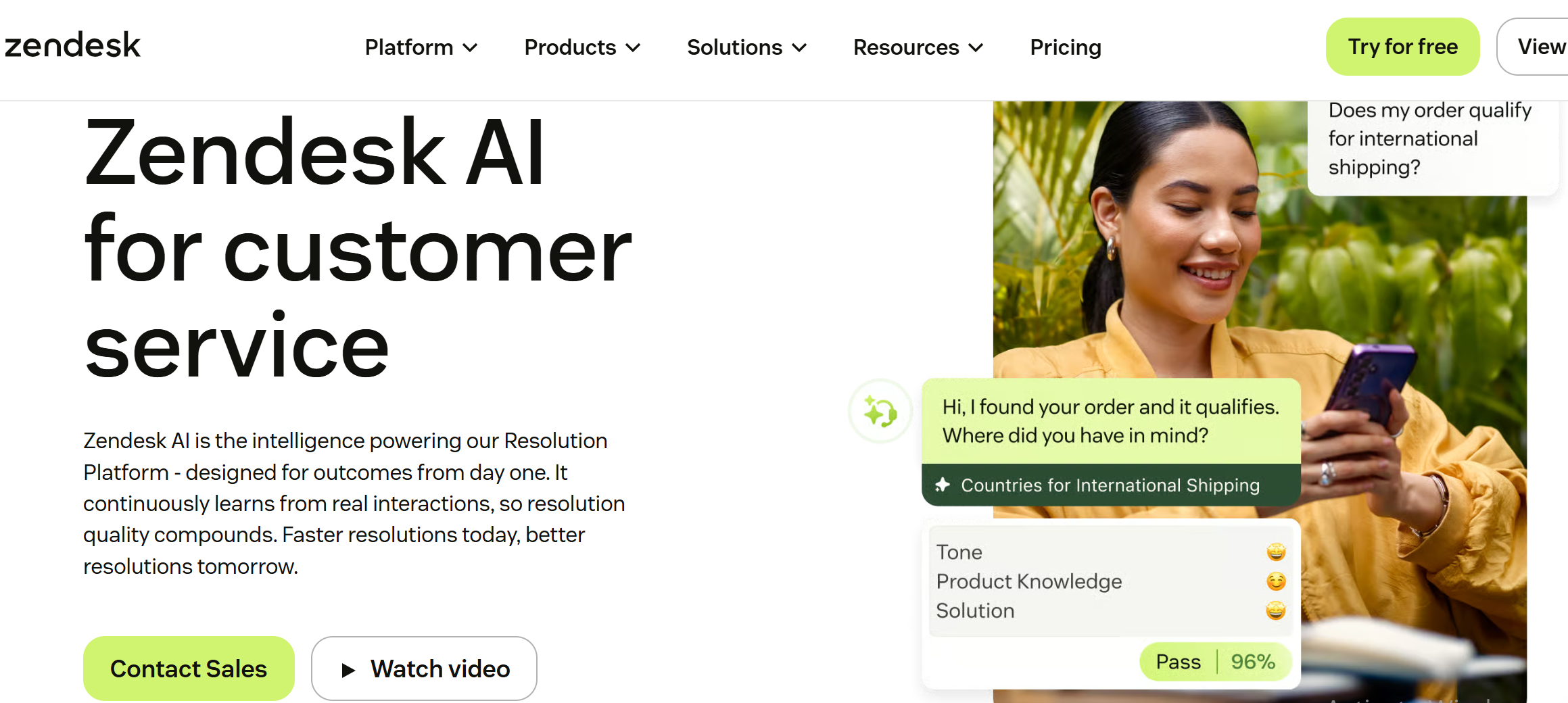
Zendesk charges per agent first. On annual billing, Support Team is $19 per agent per month, Suite Team is $55, and Suite Professional is $115. Month-to-month, those become $25, $69, and $149.
AI agents bill on “automated resolutions.” Plans include 5 per agent per month (10 on a higher tier). Extra resolutions cost $1.50 each if you commit to a volume, or $2.00 pay-as-you-go.
A Zendesk automated resolution is a request the AI resolves without escalating to a human. Voice, App Builder, and Action Builder are also billed on usage past your allowance.
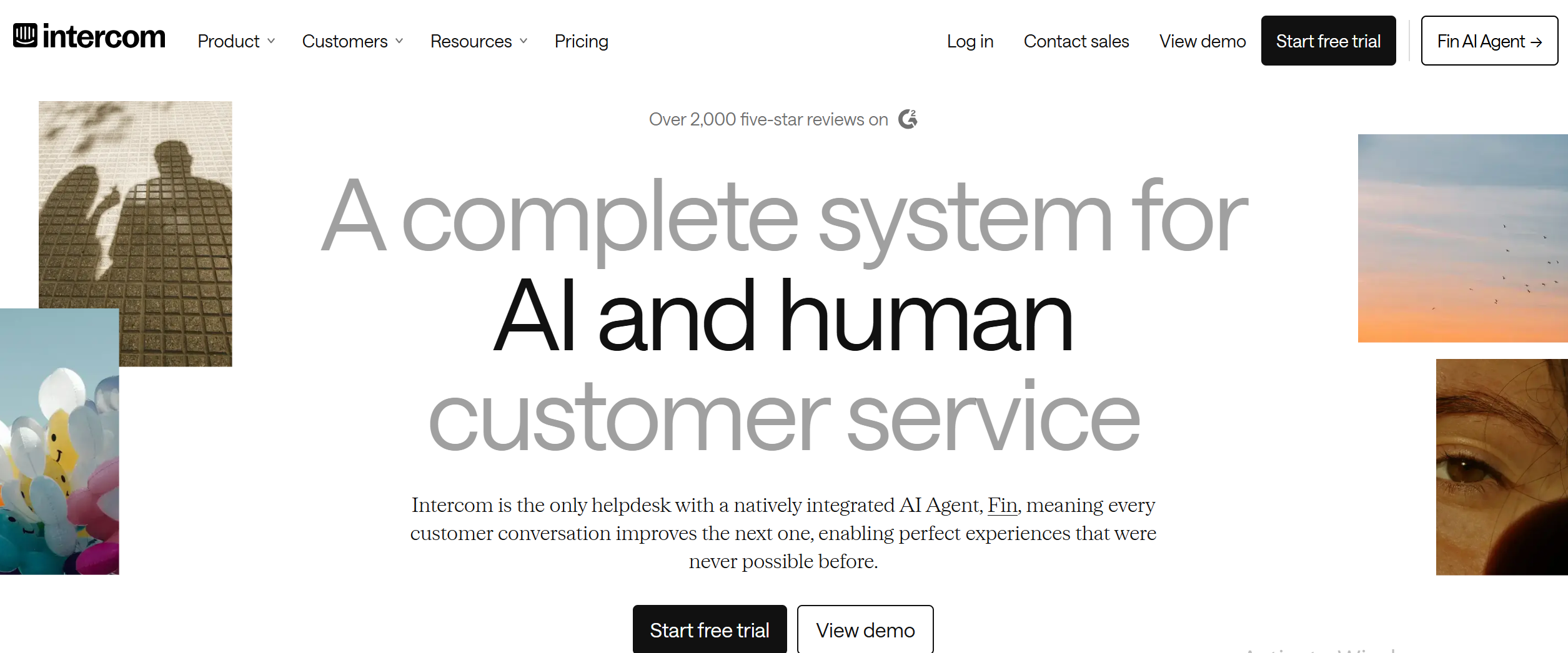
Intercom splits the bill in two. Seats cost $19 a month on Essential (a new-customer discount from $29), $85 on Advanced, and $132 on Expert, billed annually. Fin then costs $0.99 per outcome, as of October 2026.
An outcome is usually a resolution: no further help is requested after Fin’s last answer. Procedure handoffs and some sales routings also count, and a sales qualification costs $9.99. Fin bills one outcome per conversation, however many messages it sends.
Using Fin with another helpdesk needs no seats, but there’s a minimum of 50 outcomes a month.
Gorgias: ticket tiers plus AI resolutions
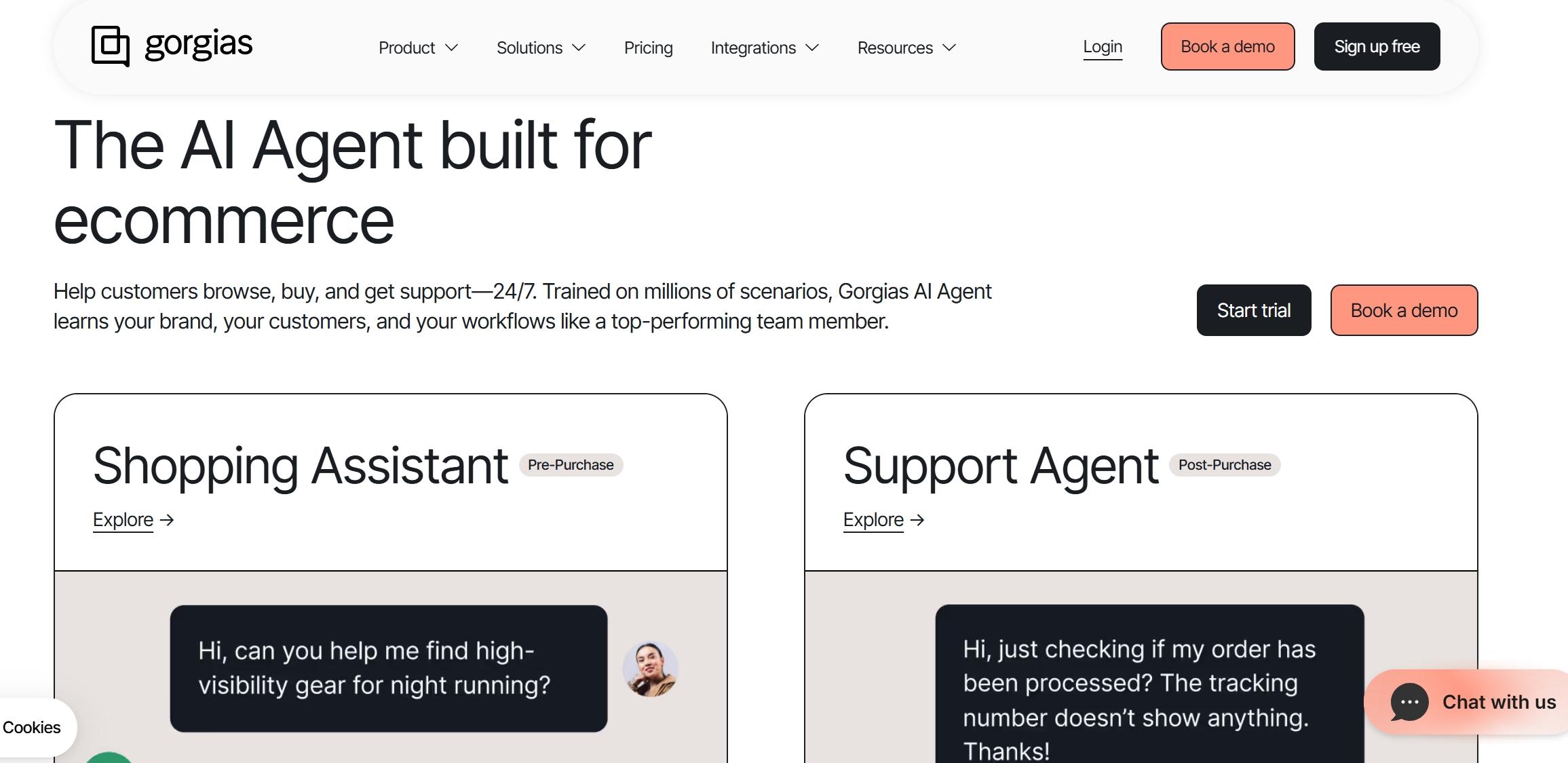
Gorgias prices its helpdesk by ticket volume, not by agent. Plans scale from 50 to 5,000 tickets a month with unlimited seats, as of October 2026.
AI Agent is a separate add-on. Gorgias’s own pricing guide puts it at $0.90 per resolved interaction on most plans and $1 on Starter. Plans include 90 to 2,500+ automated interactions a month.
A conversation the AI hands to a human isn’t charged as an AI interaction. It moves to your helpdesk plan and counts as a regular ticket.
Tidio Lyro: conversation packs
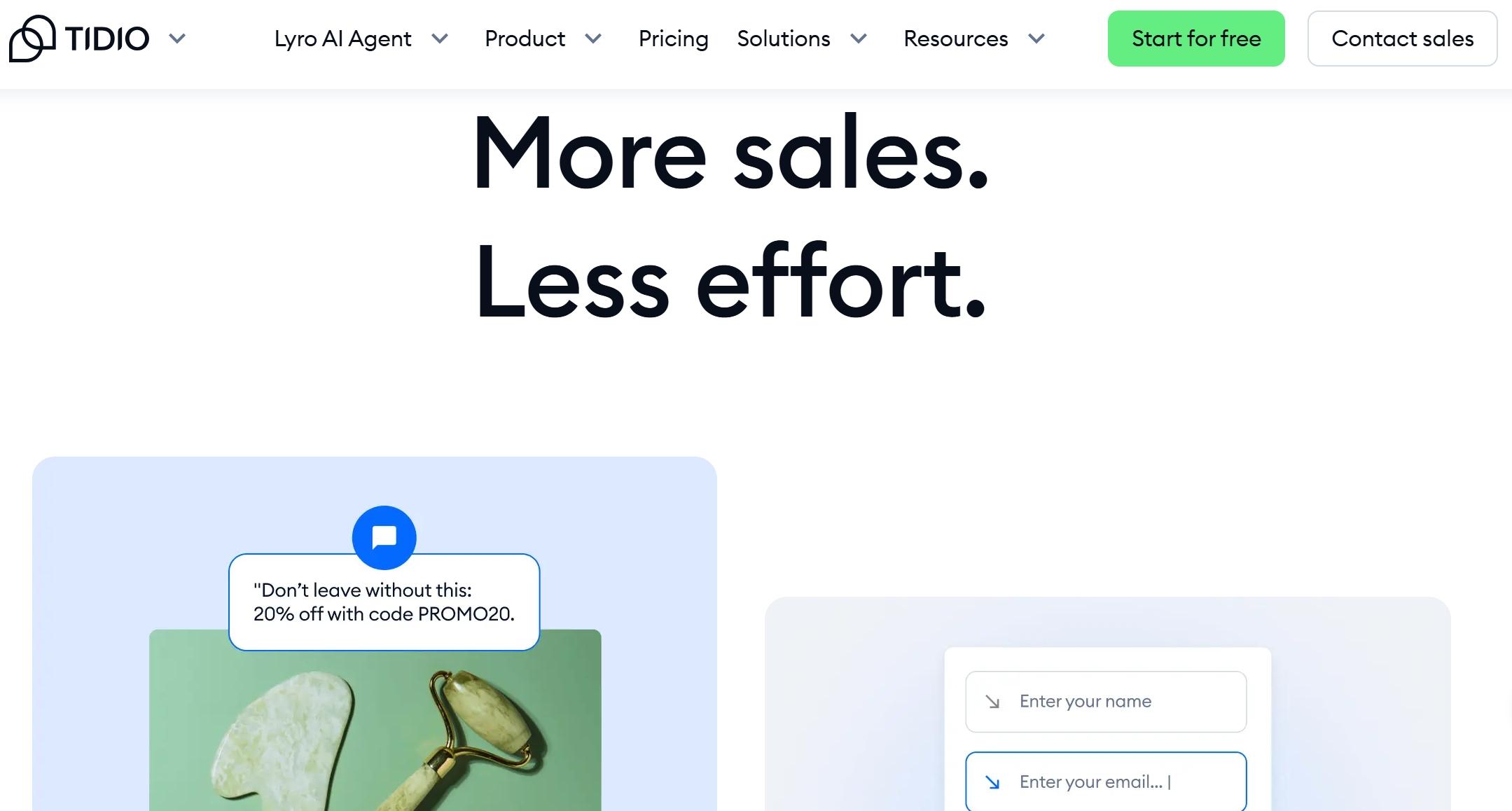
Tidio sells human support and AI separately. The Free plan covers 50 billable conversations a month. On annual billing, Starter is $24.17 a month for 100, and Growth starts at $49.17 for 250, as of October 2026.
A Tidio billable conversation is one your human team replies to. Lyro’s AI replies don’t count toward it; they draw from a separate Lyro quota.
Lyro, the AI agent, starts at $32.50 a month for 50 Lyro conversations. You pick a monthly quota between 50 and 1,000, and every account gets 50 Lyro conversations free, once. Pay-per-resolution billing exists, but only on the sales-led Premium plan.
Zipchat: per reply
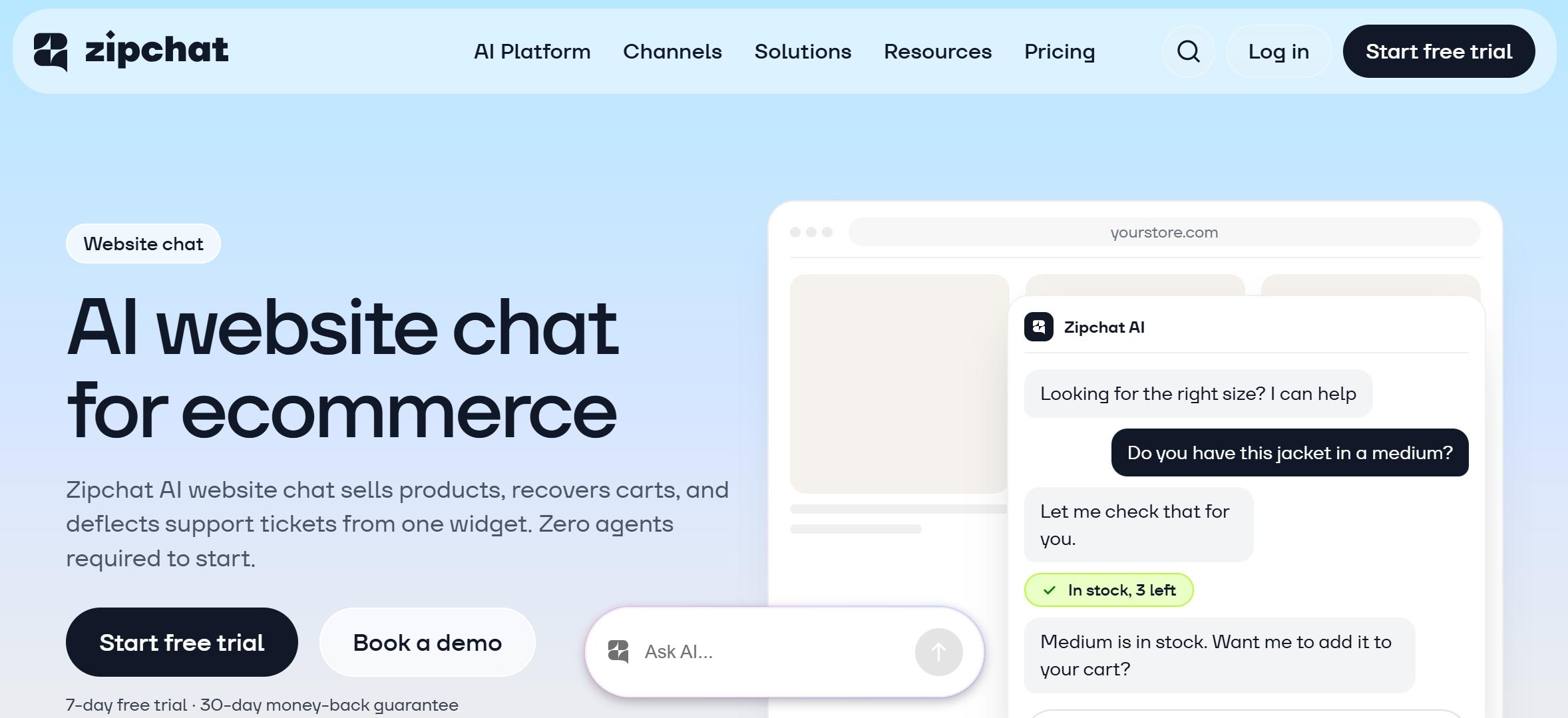
Zipchat is priced per reply, not per seat. Every plan includes every channel, every language, unlimited team members, and a 30-day money-back guarantee, as of October 2026 (Zipchat pricing).
| Plan | Price (billed annually) | AI replies/month | AI agents |
|---|
| Starter | $64/month ($80 billed monthly) | 750 | 1 |
| Pro | $240/month | 3,000 | 3 |
| Scale | $480/month | 6,000 | 5 |
| Scale Plus | $960/month | 14,000 | 10 |
| Unlimited | From $2,100/month (sales-led) | Unlimited | Custom |
The Unlimited plan is for high-volume stores and uses custom pricing. Zipchat quotes a fixed monthly fee for your volume, and you can lock the rate for 12 months.
What counts as a reply, a conversation, or a resolution?
These three units sound similar, but they measure different things. Some vendors also sell AI credits, which convert into one of these units at a rate they set. Before you compare two quotes, translate both into the same unit.
A reply
A reply is one message the AI sends. On Zipchat, each outbound AI message counts as one reply, whether it goes out in the chat widget, email, WhatsApp, Instagram, or Messenger.
Customer messages don’t count. Neither do messages your team writes when they take over a chat.
A conversation
A conversation is a whole thread, however long. Tidio counts a Lyro conversation once Lyro replies at least once. A dozen Lyro replies, or a shopper who leaves and comes back later, still counts as one conversation.
That makes packs predictable per chat. It also means a two-message “where’s my order?” costs the same as a 20-message sizing consult, even though the AI model does far more work in the second.
A resolution
A resolution is a conversation the AI closes without a human. Zendesk calls it an automated resolution, Gorgias a resolved interaction, and Intercom an outcome. You don’t pay for chats the AI escalates.
The catch is the definition of “resolved.” Intercom bills when no further help is requested after Fin’s last answer.
A shopper who gets an answer and closes the tab can count as resolved, even if they were unhappy. Ask each vendor how it detects a resolution and whether you can dispute one.
What happens when you go over your plan?
Every model handles overage differently. This is where a cheap entry price turns into a surprise invoice.
- Zendesk: Resolutions past your included allowance bill at $2.00 each on pay-as-you-go, or $1.50 on a committed volume.
- Intercom: Fin outcomes are pure usage, so there’s no plan to exceed. You set alerts and hard limits to cap spend.
- Gorgias: Each automated interaction over your baseline is an overage. Support-only rates run $1.00 to $2.00 on monthly plans and $0.83 to $1.67 on annual plans. Support + Shopping Assistant plans pay $1.50.
- Tidio: Your Lyro quota refreshes 30 days after payment. The pricing page doesn’t say what Lyro does when the quota runs out mid-cycle, so ask before you sign.
- Zipchat: Extra replies cost $49 per 250 on Starter, Pro, and Scale, and $49 per 500 on Scale Plus.
On Zipchat, you choose what happens at the limit. With auto-charge on, a pack of extra replies is added when you run out. With it off, the AI pauses until you top up or upgrade, and your team can keep replying by hand.
If you hit the limit every month, upgrade. Starter works out to about 8.5 cents per reply, while an overage pack costs about 19.6 cents per reply.
Which model is cheapest as conversation volume grows?
It depends on two numbers you can measure: how many conversations your AI handles, and how long those conversations run. No single model wins at every volume.
Use these to turn any quote into a monthly cost.
Per seat + resolution = (agents × seat price) + (AI resolutions − included) × resolution price
Per resolution only   = AI resolutions × price per resolution
Conversation packs    = price of the smallest quota ≥ your AI conversations
Per reply             = plan price + extra packs needed for (AI conversations × replies per conversation)
The per-reply line needs your own replies per conversation. You can find it in a trial: Zipchat’s dashboard shows chats started and total AI replies side by side, so divide one by the other.
A worked example
Take a store with five support agents whose AI resolves 1,000 conversations a month. Then triple the volume.
| Monthly cost | 1,000 AI resolutions | 3,000 AI resolutions |
|---|
| Zendesk Suite Team (5 agents, pay-as-you-go) | $275 + 975 × $2.00 = $2,225 | $275 + 2,975 × $2.00 = $6,225 |
| Intercom Advanced (5 seats) | $425 + $990 = $1,415 | $425 + $2,970 = $3,395 |
| Gorgias AI Agent (AI only, at $0.90) | $900 + helpdesk tier | $2,700 + helpdesk tier |
| Zipchat, 3 replies per conversation | $240 (Pro, 3,000 replies) | $960 (Scale Plus, 14,000 replies) |
| Zipchat, 6 replies per conversation | $480 (Scale, 6,000 replies) | $960 + $392 extra = $1,352 |
The reply counts above are inputs for the arithmetic, not averages. Swap in the number from your own trial before you trust any row.
The break-even point
Here’s a quicker test. Divide a vendor’s resolution price by Zipchat’s cost per reply (about 8 cents on Pro and Scale).
| AI unit price | Replies per conversation before per-reply costs more |
|---|
| Zendesk pay-as-you-go ($2.00) | About 25 |
| Zendesk committed ($1.50) | About 19 |
| Intercom Fin ($0.99) | About 12 |
| Gorgias AI Agent ($0.90) | About 11 |
Under those counts, per-reply pricing costs less per conversation. Two more things tilt the math.
Per-resolution tools don’t charge for escalated chats, while per-reply plans count every AI message, resolved or not. And seat-based tools add a cost every time you hire, which per-reply plans don’t.
Hidden costs in AI customer service pricing
The headline AI customer service pricing rarely covers the full bill. Check these six lines before you sign.
Add-ons
Copilot-style assistants for your agents are often extra. Intercom’s Copilot is $29 per agent per month, and its Pro add-on with Operator starts at $100 a month. Zendesk bills App Builder, Action Builder, and Voice on usage past your allowance.
Security and compliance needs can raise the bill, too. Features like single sign-on, audit logs, or data residency often sit on an enterprise plan or a paid add-on.
Channels
WhatsApp is the usual surprise. Intercom lists WhatsApp, SMS, and phone as pay-as-you-go. Gorgias’s AI Agent runs on email, chat, and SMS, with Voice and SMS sold as add-ons.
On Zipchat, every channel is included in every plan. Meta still charges its own fee to start a WhatsApp marketing conversation, for example, $0.02 per chat initiated in the US. That fee applies to campaigns only.
Team seats
Per-seat pricing grows with every hire, including seasonal staff for Black Friday. Tidio caps self-serve plans at 10 agents. Gorgias and Zipchat include unlimited team members.
Setup and migration
Ask who trains the bot and who pays for it. Some vendors charge for onboarding or managed services. Zipchat’s setup runs under 30 minutes, and every new plan includes a free onboarding call.
After launch, upkeep costs staff time more than money: someone has to keep answers current as products, prices, and policies change. Connecting the chatbot to internal databases, like an ERP or a custom order system, adds development work up front and maintenance every year after.
Shopify billing
Shopify chatbot pricing often runs through your Shopify invoice instead of a card on file. Zipchat bills this way when you install from the Shopify App Store, with identical plan features either way. Check whether usage charges, like overage packs, also land on that invoice.
Annual lock-in
Most prices in this guide assume annual billing. Monthly rates run higher: Zendesk Support Team goes from $19 to $25, and Zipchat Starter from $64 to $80. Check refund terms on annual prepayment, too.
Do sales features use the same units as support?
Sometimes, and it’s worth asking every vendor directly. Product questions, recommendations, and search are where a chatbot earns revenue, so you don’t want them billed as a penalty.
- Intercom bills a sales qualification at $9.99, ten times a support resolution.
- Gorgias sells a separate Support + Shopping Assistant plan, with a flat $1.50 overage rate.
- Tidio counts any Lyro conversation the same way, sales or support. Lyro product recommendations need a paid Lyro quota.
- Zipchat counts a sales reply and a support reply the same: one AI message, one reply.
On Zipchat, a product question asked in the chat widget uses replies like any other message.
Zipchat pricing questions buyers ask on demo calls
Four questions come up in almost every Zipchat demo:
“What counts as a reply?”
Every message the AI sends, on any channel. Messages from shoppers don’t count.
”What happens if we exceed?”
You buy a pack of extra replies ($49 for 250, or $49 for 500 on Scale Plus), or you upgrade. Higher plans cost less per reply, so upgrading usually beats buying packs every month.
”Do product page questions consume replies?”
Questions asked in the chat count as replies, the same as support questions.
”Is a second store a second license?”
Yes, in most cases. Each store runs on its own plan, so the AI stays trained on that store’s products and data. For several stores, Zipchat offers multi-store pricing through sales.
When per-reply pricing isn’t the best fit
Per-reply pricing suits stores where conversations are short and the AI handles sales and support. It’s a weaker fit in three cases.
If your AI rarely resolves anything and hands most chats to humans, a per-resolution tool charges less for those escalations. If your conversations run long, such as complex B2B quotes, compare against the break-even table above. And if your team already lives in Zendesk or Intercom for email and phone, adding a helpdesk-native AI may beat running two tools.
For stores weighing a full switch, our guide to Zendesk alternatives covers the trade-offs.
Where AI chatbot pricing is heading
Vendors are moving away from flat seat prices toward usage. Zendesk, Intercom, and Gorgias all now meter AI on resolutions, while still charging for seats or tickets underneath.
Expect more fixed-price “unlimited” deals for high-volume brands, since usage meters are hard to budget for. Zipchat’s Unlimited plan is one example. Also expect more disputes over what “resolved” means, so read each vendor’s definition closely.
Frequently asked questions
How much does an AI chatbot cost?
It depends on the pricing model. Zipchat starts at $64 a month billed annually, and Tidio’s Lyro starts at $32.50 for 50 AI conversations. Seat-based tools like Zendesk and Intercom charge $19 to $132 per agent, plus $0.99 to $2.00 for each AI resolution.
What is per-resolution pricing?
Per-resolution pricing means you pay only when the AI closes a conversation without a human. Intercom charges $0.99 per Fin outcome, Gorgias $0.90 per resolved interaction on most plans, and Zendesk $1.50 to $2.00 per automated resolution. Escalated conversations aren’t charged as AI resolutions.
Is per-seat pricing better than usage pricing?
Per-seat pricing suits large teams with steady volume and heavy human handling. Usage pricing suits stores where AI does most of the work, because cost tracks customers instead of headcount. For growing ecommerce brands, usage pricing usually scales better, since seasonal staff don’t add seat fees.
What counts as a reply in chatbot pricing?
A reply is one message the AI sends to a customer. On Zipchat, each outbound AI message counts as one reply, on any channel. Customer messages don’t count. A reply is smaller than a conversation, so compare quotes by converting both to the same unit first.
Do chatbots charge for WhatsApp separately?
Some do. Intercom lists WhatsApp as pay-as-you-go on top of seats, and Gorgias’s AI Agent covers email, chat, and SMS. Zipchat includes WhatsApp in every plan. Meta still charges its own fee for marketing conversations, such as $0.02 per chat initiated in the US.
Is there a free AI chatbot for ecommerce?
A few tools have free tiers, but AI usage is tightly capped. Tidio’s Free plan includes 50 one-off Lyro AI conversations. Zipchat has no free plan, but every plan comes with a 7-day free trial and a 30-day money-back guarantee, so you can test it on real traffic.
How to compare AI chatbot quotes
Put every quote on one sheet, in one unit, at two volumes: this month and your busiest month. Add seats, channels, and add-ons, then run the break-even test above.
To estimate what a chatbot returns, not only what it costs, use our ROI calculator and read our guide to conversational AI ROI. When you’re ready to test per-reply pricing on your own traffic, compare plans on Zipchat pricing and start the 7-day free trial.
 Website chat Turns browsers into buyers on every page.
 WhatsApp Sell on the app your customers read.
 Instagram Answers every DM in seconds.
 Messenger Turns Facebook ad questions into sales.
 Email Answers every email in the same thread.