
Most stores don’t leave Tidio because the live chat breaks. They leave because the bill jumps when the team grows, and because Lyro AI is a paid extra that still needs manual knowledge-base upkeep. The two problems ecommerce buyers name most are the agent-seat wall, where included operator seats run out, and the cliff from Growth at $49.17/month to Plus at $300/month.
TL;DR
A Tidio alternative is a live chat or AI support tool that answers customer questions without Tidio’s seat wall, the $49.17-to-$300 pricing cliff, and Lyro AI billed as a separate add-on. This guide compares 7 alternatives for ecommerce on AI answer quality and cost model. Top pick: Zipchat, for stores that want AI answers included, no per-seat penalty, and revenue from chat.
How we picked these Tidio alternatives
We evaluated each tool on five things that matter to an ecommerce operator, not a generic chat shopper. Ecommerce fit came first: native Shopify, WooCommerce, or Magento support, order lookup, and product knowledge. Then AI answer accuracy, pricing-model transparency, channel coverage, and setup effort.
Ratings are sourced from G2, Capterra, and the Shopify App Store. Every price is marked “as of” its check date, because seat and AI pricing shifted across the category through 2026. Where a tool is strong, we say so. Where it’s weak, we say that too, including for Zipchat.
Tidio alternatives compared at a glance
| | | | | |
|---|
| Tool | Best for | Channels | Pricing model | Starting price | Rating (source, date) |
| Zipchat | AI answers and revenue for ecommerce | Web, WhatsApp, Instagram, Messenger, email | Reply-based, AI included, unlimited seats on every plan | From $64/month, billed annually | 4.8/5 |
| Intercom | Product-led teams wanting an AI agent | Web, email, in-app messenger | Per-seat + per-outcome AI | $19/seat/month | 4.5/5 |
| Richpanel | AI-native ecommerce helpdesk | Web, email, social, self-service portal | Per-seat, or AI agent + seats | $69/month | 4.7/5 |
| Re:amaze | Multi-store, multi-channel messaging | Web, email, social, SMS, voice | Per-seat or flat | $26.10/month | 4.6/5 |
| Crisp | Affordable all-in-one live chat swap | Web, email, social, chatbot | Flat plan with included seats | $45/month | 4.5/5 |
| Help Scout | Simple, human-first email support | Email, chat, docs, Beacon widget | Per-user + per-resolution AI | $25/month | 4.4/5 |
| Tawk.to | Free live chat for tiny budgets | Web, chat, basic AI Assist | Free core, usage-based AI | Free | 4.5/5 |
Pricing and ratings as of July 2026.
Why ecommerce brands outgrow Tidio
Three costs push stores off Tidio: an agent-seat wall where included operator seats run out, a pricing cliff from Growth at $49.17/month to Plus at $300/month, and Lyro AI billed as a separate add-on on top of the plan.
The agent-seat wall
Tidio’s lower plans include a fixed number of operator seats. Once your support team passes that count, you can’t add seats cheaply inside the same tier. The tool nudges you to the next plan, so your cost tracks headcount rather than the value the chat delivers. Tidio also caps billable conversations on its lower tiers, at 50 a month on Free and 100 on Starter, so heavy customer conversations can hit the ceiling before you’ve added a single agent.
The pricing cliff
The bigger jolt is the tier gap. Tidio runs Free, Starter at $24.17/month, and Growth at $49.17/month, then leaps straight to Plus at $300/month with nothing in between. A growing store that outgrows Growth faces a 6x price step, not a gentle upgrade. That cliff is the single most cited reason stores start shopping for a Tidio alternative.
Lyro AI as a paid add-on
Lyro is Tidio’s AI assistant, and it isn’t included in the base plans. It starts around $32.50/month and scales with conversation volume, so a Starter plan with a meaningful Lyro allotment can cost far more than the $24.17 sticker. Tidio markets Lyro’s resolution rate at up to 70%, but on top of the fee, it still relies on a knowledge base you build and maintain by hand, which is a recurring labor cost most comparisons skip.
Tidio still scores 4.7 out of 5 on G2, so this isn’t a quality problem. It’s a fit and cost problem for scaling stores. For the full picture, read our detailed Tidio review.
The 7 best Tidio alternatives
1. Zipchat, best for AI answers and revenue in ecommerce
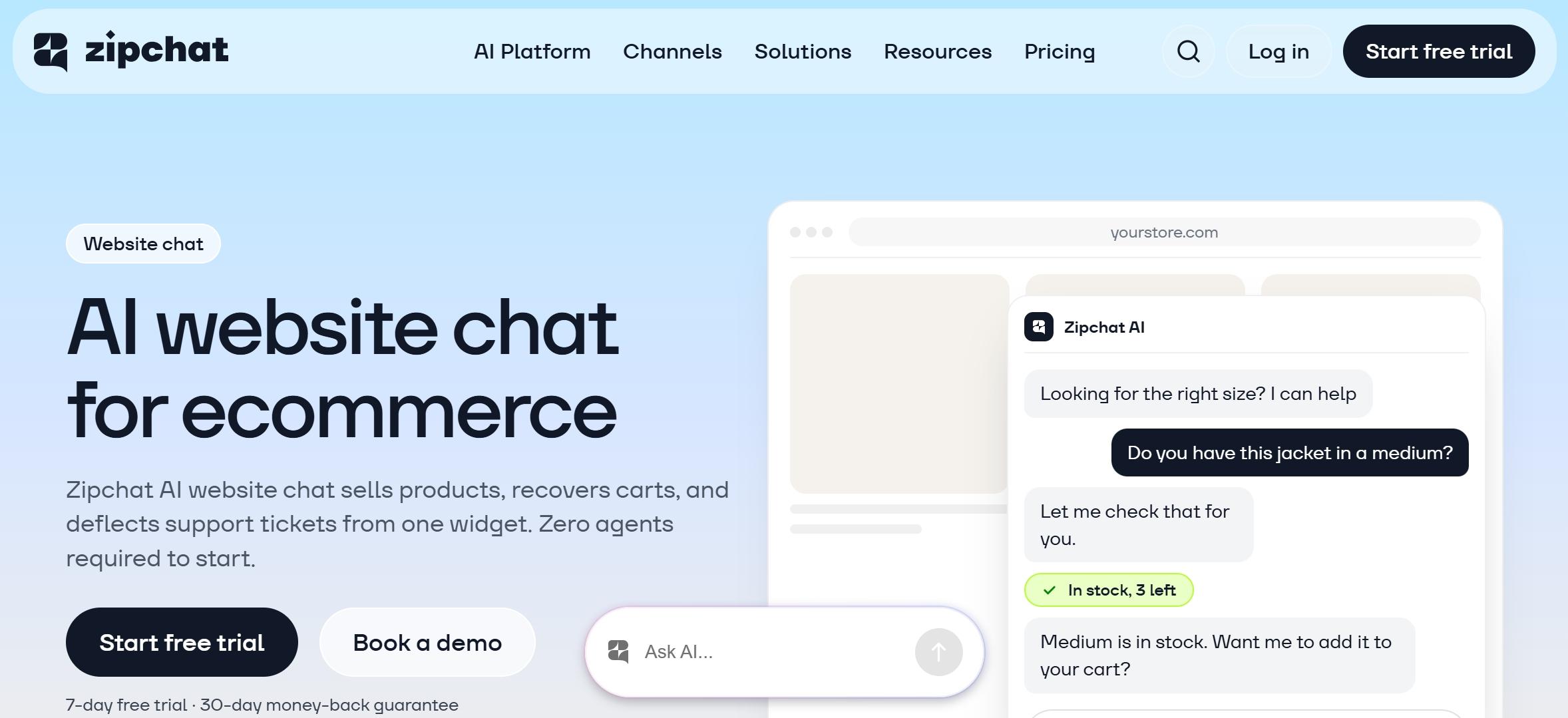
Zipchat is an AI customer engagement platform for ecommerce that answers support questions and sells at the same time. It auto-crawls your catalog, policies, and pages, then handles pre-sale questions, order tracking, and post-sale support with multilingual support across 95+ languages. It’s the tool built to recover revenue, not only deflect chats.
Key features:
- Auto-crawls your store to build the knowledge base, no manual FAQ upload required first.
- AI product recommendations and visual product matching from a customer photo.
- Order tracking and one-time Shopify discount code generation in chat.
- Web chat, WhatsApp, Instagram, Messenger, and email in one inbox.
- Unlimited team members on Growth and above, so headcount doesn’t raise the bill.
Pricing: Starter is $80/month, Pro $300/month, Scale $600/month, and Scale Plus $1,200, with a 7-day free trial and a 30-day money-back guarantee. AI replies are included in every plan, so there’s no separate per-resolution fee.
Rating: 4.8/5 on G2 and 4.8/5 on the Shopify App Store.
Pros:
- AI answers included.
- Unlimited seats on Growth and above.
- Fast catalog-based setup.
- Revenue attribution on chats.
Cons:
- No free plan, and it’s built for ecommerce and software support.
- Not as a heavy multi-department ticketing backbone.
Best for: Shopify, WooCommerce, and Magento stores that want AI answers without a per-seat penalty. See the full Zipchat vs Tidio comparison for a direct head-to-head.
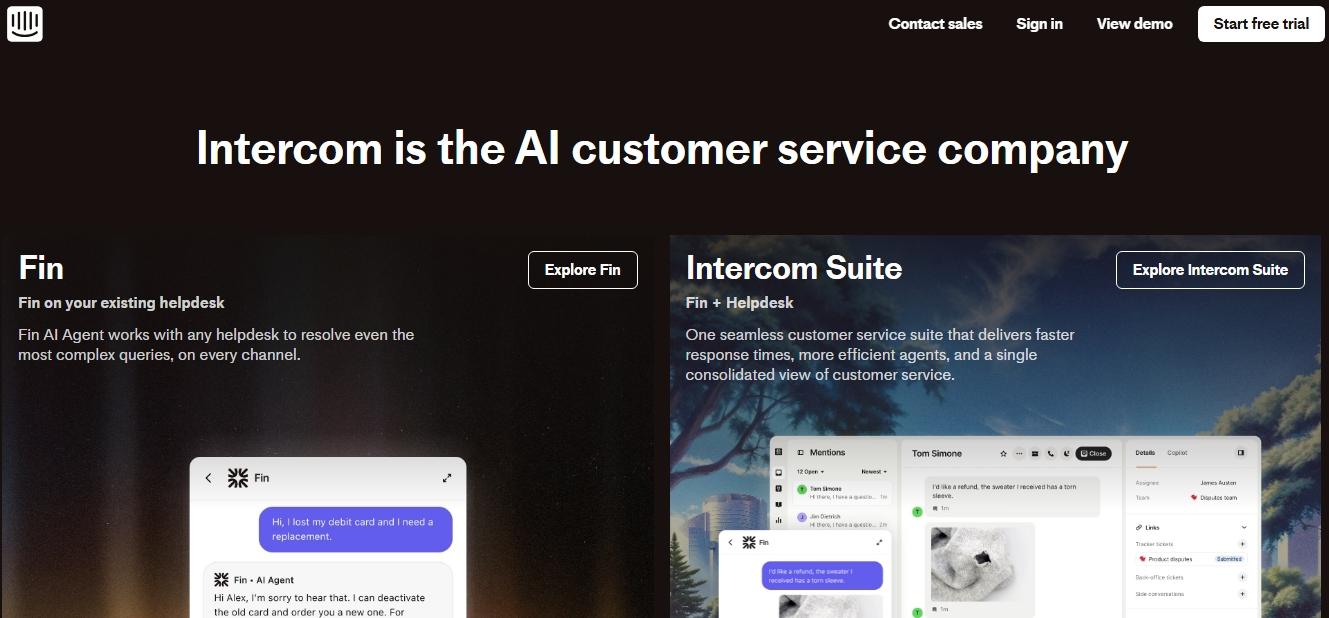
Intercom is a customer service platform with a strong AI agent, Fin, popular with product-led teams. It’s powerful and polished, though it isn’t ecommerce-native, so order and catalog workflows need setup.
Key features:
- Fin AI agent with high deflection on well-documented topics.
- Messenger, email, and help center in one workspace.
- In-app messaging that reaches customers inside your product, not just on the website.
- Workflow automation on higher tiers.
- Large app marketplace.
Pricing: Seats from $19 per seat per month on annual billing (Essential), rising to $85 (Advanced) and $132 (Expert), plus Fin at $0.99 per resolution with a 50-outcome monthly minimum. The seat-plus-outcome stack can climb fast at volume.
Rating: 4.5/5 on G2.
Pros:
- Excellent AI agent.
- Mature platform.
- Strong automation.
Cons:
- Costs get unpredictable at volume.
- It’s built for product-led support more than storefront selling.
Best for: product-led and hybrid teams that value Fin and don’t need ecommerce-native selling.
3. Richpanel, best AI-native ecommerce helpdesk

Richpanel is an AI-native helpdesk built for DTC and ecommerce brands, pairing an agent workspace with AI “Employees” that resolve tickets. It puts order context next to every conversation, so a small team can answer faster.
Key features:
- AI Employees included in the paid tiers, not gated behind enterprise.
- Self-service portal for returns, order status, and common requests.
- Multichannel inbox with ecommerce macros.
- Native Shopify order actions.
Pricing: Per-seat plans from $69 (Pro) to $99 (Pro Max) per agent per month. Budget for the model that matches your volume.
Rating: 4.7/5 on G2.
Pros:
- Strong ecommerce fit.
- AI in the paid tiers.
- Clean returns flow.
Cons:
- The two pricing models make the true monthly cost harder to predict below a few agents.
Best for: DTC brands that want AI resolution and a self-service portal in one ecommerce-focused tool.
4. Re:amaze, best for multi-store, multi-channel messaging
Re:amaze is a helpdesk and messaging platform built for stores and apps, with a native Shopify presence and channels across chat, email, social, SMS, and voice. It shines when you run several stores or channels and want one inbox for every customer interaction.
Key features:
- Unified inbox for chat, email, social, SMS, and VOIP.
- FAQ knowledge bases and chatbot automations.
- Multi-brand and multi-store support.
- Shopify app with order data.
Pricing: Per-seat Basic at $26.10 per month, Pro at $44.10, and Plus at $62.10.
Rating: 4.6/5.
Pros:
- Flexible pricing.
- Strong multi-store fit.
- Broad channels.
Cons:
- AI is lighter than the leaders here, and the flat plan caps conversations.
Best for: operators running multiple stores or channels who want one affordable inbox.
5. Crisp, best affordable all-in-one live chat swap
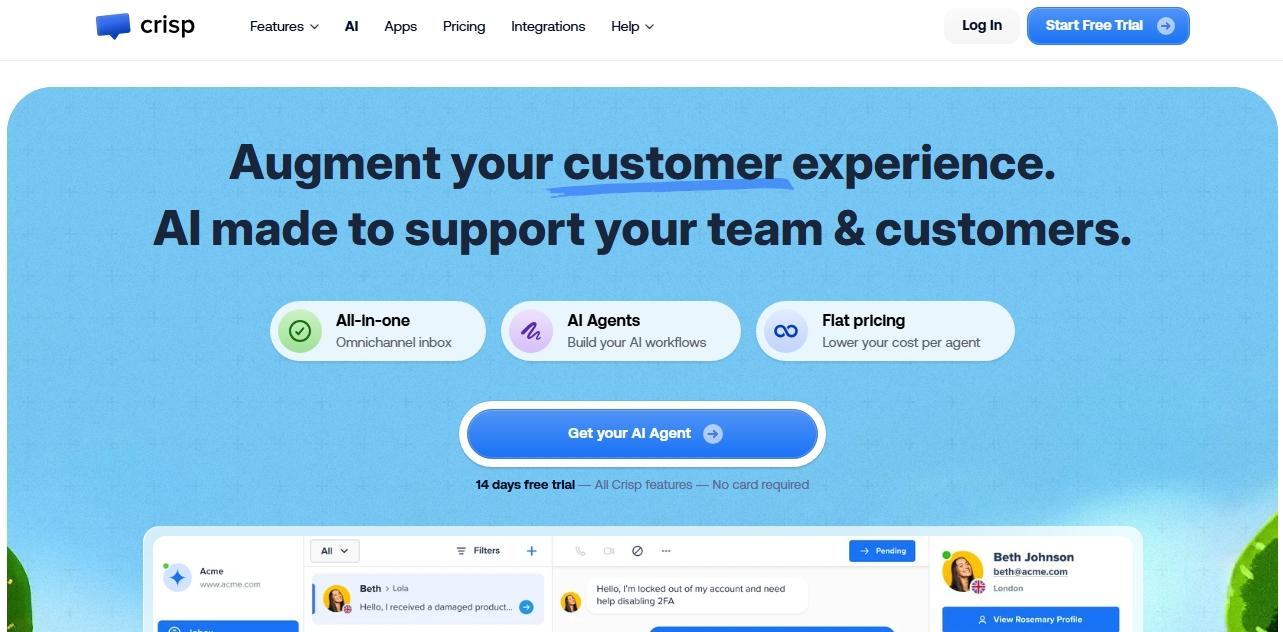
Crisp is a live chat and messaging tool that bundles a shared inbox, chatbot scenarios, and a help desk at a flat price. For a store that wants a direct like-for-like swap from Tidio’s live chat, Crisp is the closest match on feel and setup.
It also offers co-browsing, so agents can view a shopper’s screen and guide them in real time to enhance customer support.
Key features:
- Live chat widget with a shared team inbox.
- Chatbot scenario builder for basic automation.
- Email, social, and messaging channels in one place.
- Flat plans with seats included, not per-seat billing.
Pricing: Crisp’s paid pricing starts at $45 per workspace per month**.** It’s free for up to 2 seats, then Mini at $45/month (4 agents), Essentials at $95/month (10 agents), and Plus at $295/month (20+ agents). Included seats make team costs predictable.
Rating: 4.5/5 on G2.
Pros:
- Flat pricing with seats included.
- Quick setup.
- Broad channels.
Cons:
- AI answering is lighter than ecommerce-first tools.
- It lacks native product recommendations.
Best for: small stores that want an affordable, all-in-one live chat swap with predictable seat costs.
6. Help Scout, best for simple, human-first email support
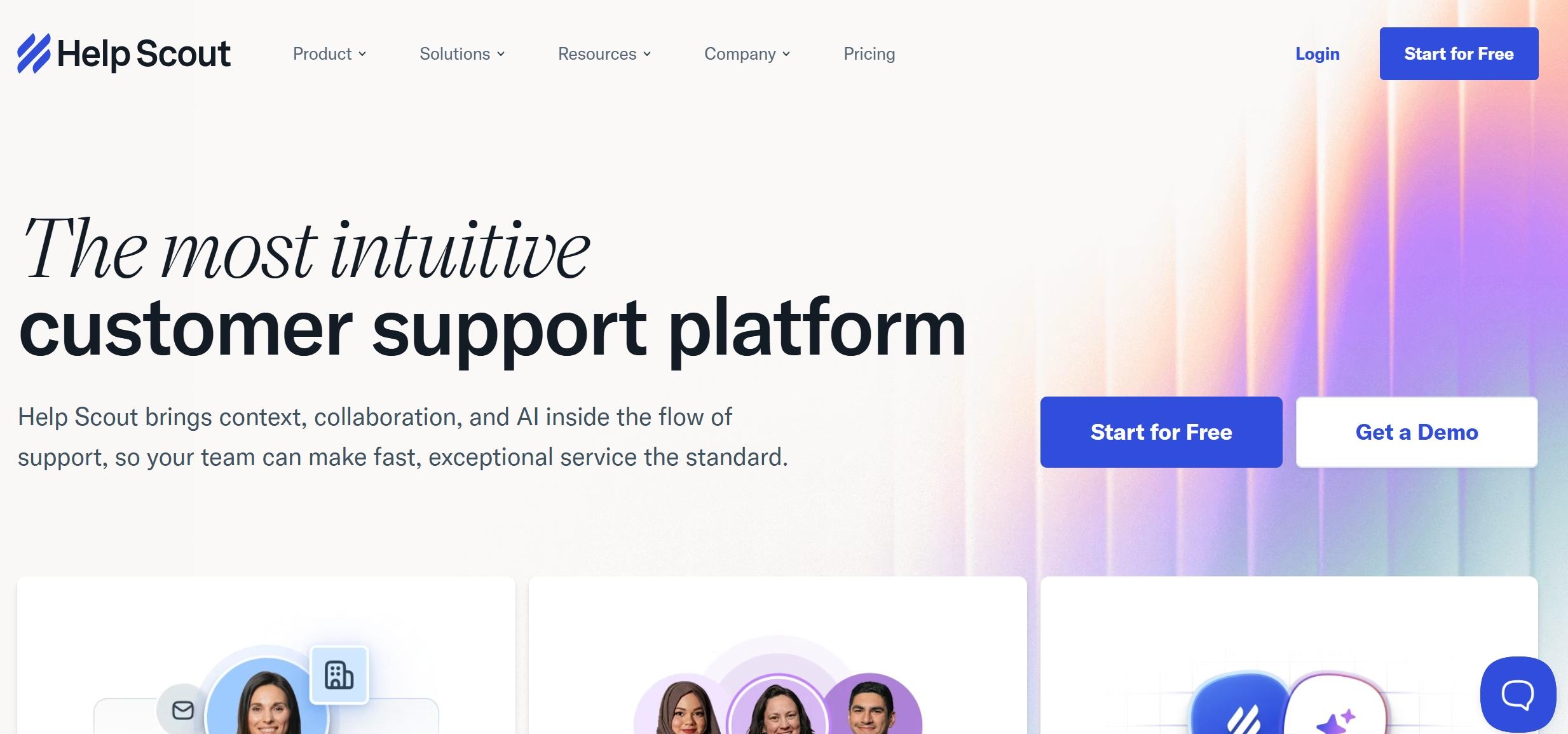
Help Scout is a clean, email-first support tool that teams pick for its simplicity. It leans on fast human support with light AI on top, rather than heavy automation.
Key features:
- Shared inbox with a personal, email-like feel.
- Docs knowledge base and Beacon widget.
- AI Answers and AI drafts.
- Straightforward reporting.
Pricing: Standard from $25 per user per month on annual billing, Plus at $45/month, and Pro at $75/month. AI is priced separately as an add-on: AI Answers costs $0.75 per resolution (pay-as-you-go, with a 3-month free trial and optional spending caps).
Rating: 4.4/5 on G2.
Pros:
- Easy to adopt.
- Clean inbox.
- Low starting price.
- Spend cap on AI.
Cons:
- Light ecommerce depth.
- Per-seat pricing climbs as the team grows.
Best for: small teams that want tidy email support over deep automation or selling.
7. Tawk.to, best free live chat for tiny budgets
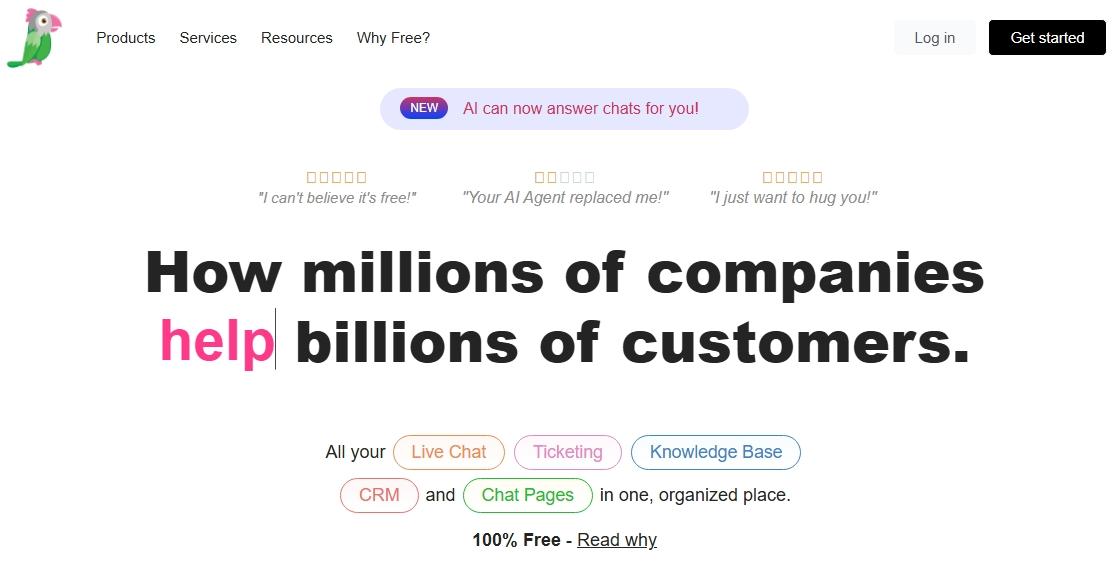
Tawk.to is a free live chat tool that lean stores use to answer visitors without a monthly fee. The core chat is genuinely free; the money shows up in AI Assist and paid add-ons.
Key features:
- Free live chat widget with unlimited agents.
- AI Assist for automated responses (paid tiers).
- Shared inbox and canned responses.
- Hired agents and branding removal as paid extras.
Pricing: Core live chat is free; removing branding and hiring agents cost extra.
Rating: 4.5/5 on Capterra.
Pros:
- Free core chat.
- Unlimited agents.
- No seat wall.
Cons:
- AI is basic and message-metered.
- Ecommerce features are thin.
- Branding removal is a paid extra.
Best for: small, budget-first stores that want live chat at no monthly cost and can live with light AI.
AI answer quality: beyond Tidio Lyro
The gap between these tools is how the AI builds its knowledge base, and whether it turns a question into a sale or just closes a ticket. Auto-crawl tools read your live store and stay current on their own. Manual-build tools, including Tidio Lyro, need you to write and update the content the AI answers from, which drags on both upkeep and customer satisfaction when answers go stale.
| | | |
|---|
| Tool | Knowledge base build | Catalog awareness | Multilingual handling |
| Zipchat | Auto-crawls site, catalog, policies; daily rescans on Pro+ | Reads product catalog; recommends and matches from a photo | 95+ languages, auto-detected |
| Intercom (Fin) | Ingests help center and docs; some auto-sync | Not ecommerce-native; needs setup | Strong, multiple languages |
| Richpanel | Trains on help content and order data | Ecommerce-aware with order context | Multiple languages |
| Re:amaze | FAQ and article-based automation | Shopify order data; lighter product AI | Supported |
| Crisp | Scenario builder plus help-desk content | Limited native catalog awareness | Supported |
| Help Scout | Docs-based AI Answers | Light ecommerce depth | Supported |
| Tidio (Lyro) | Manual knowledge base you build and maintain | Basic; relies on your content | Supported on paid Lyro |
The practical difference is upkeep. A store on Zipchat points the AI at its URL, and the catalog trains itself, with corrections when an answer misses. A store on Lyro writes the answers first, then keeps them current by hand as products and policies change. For a wider view, see the best AI chatbot for Shopify.
Tidio alternatives pricing and total cost compared
The cheapest Tidio alternative depends on your team size. Seat-based tools get more expensive as you add agents, and Tidio’s own jump from Growth to Plus is the sharpest example. A reply-based plan with unlimited seats holds a flat cost as the team grows.
Here’s a real total-cost scenario. Assume a store scaling its support team from 2 agents to 6 agents over a year, with a steady chat volume the AI can handle inside a mid plan.
| | |
|---|
| Stage | Tidio (plan + Lyro add-on, seat-limited) | Zipchat (reply-based, unlimited seats on Growth+) |
| 2 agents, light AI | Growth $49.17 + Lyro $32.50 = $81.67/month | Starter $80/month (750 AI replies, unlimited seats) |
| 4 agents, more AI volume | Growth strained; Lyro scales up with conversations | Starter $80/month, or Pro $300/month if replies grow |
| 6 agents, past included seats | Plus $300/month + Lyro on top | Pro $300/month, seats still unlimited |
| Cost at 6 agents | $300+/month | $300/month |
At 2 agents, Tidio’s sticker price looks lower. The story flips as you grow. Tidio’s structure forces the Growth-to-Plus jump once you pass the included seats, a documented 6x step from $49.17 to $300. Zipchat’s cost tracks AI reply volume, not seat count, so adding support agents costs nothing extra.
Use this formula to compare any two tools on the same basis:
Cost per agent = Total monthly tool cost / number of support agents

Tidio (6 agents):   $300 / 6 = ~$50 per agent
Zipchat (6 agents):  $300 / 6 = ~$50 per agent
The gap isn’t a rounding error. Seat-limited pricing grows with your team, while a reply-based plan decouples cost from headcount. On top of that, an AI that answers pre-purchase questions recovers sales a live-chat-only tool never counts.
How to choose the right Tidio alternative
Don’t pick on sticker price alone. Growing teams need consistent agent performance and clear reporting, so match the tool to your cost driver and the job you need done, not just the headline number.
| If your situation is… | Then prioritize… | Best fit here |
|---|
| Solo or small store, budget-first | Free or low flat cost, simple setup | Tawk.to, Crisp |
| Direct like-for-like live-chat swap | Flat pricing, seats included, quick setup | Crisp |
| Growing team, seat count is the cost driver | Reply-based pricing, unlimited seats | Zipchat |
| Pre-purchase questions cost you sales | AI that answers and recommends products | Zipchat |
| You want an AI answering from your store, not manual FAQs | Auto-crawl knowledge base | Richpanel, Zipchat |
| Product-led team wanting a proven AI agent | A mature AI agent plus workflow automation | Intercom |
| You run multiple stores or channels | A unified multi-store inbox | Re:amaze, Richpanel |
| Email is your main support channel | Simple, human-first inbox | Help Scout |
When Tidio is still the right choice
Keep Tidio when your team is tiny, fits inside the free or included tier, and you want a simple live-chat-first tool without AI at the center.
Tidio is a reasonable fit for a tiny store handling a light chat volume, where the free plan or Starter covers the need. Tidio’s Starter plan runs $24.17/month for 100 conversations, and it integrates with Shopify, WordPress, and WooCommerce, so most stores can install it in minutes.
It’s approachable, the widget sets up quickly, and a solo operator who mostly handles customer interactions by hand may never hit the seat wall or the Plus cliff.
The threshold is roughly this: if you have one or two people answering chat and you don’t need an AI that resolves questions on its own, Tidio’s simplicity earns its place. Once the team grows, or once you want AI answers included rather than added on, an alternative resolves more for less.
How to migrate from Tidio without losing history
Run the new tool in parallel before you cut over. A one-to-two-week overlap catches gaps with no customer impact.
- Export your Tidio saved replies, chatbot flows, and any help-center articles.
- Connect your store: catalog, order lookup, and policies to the new tool. On auto-crawl tools, point the AI at your URL and let it index.
- Rebuild your top 20 canned responses as AI training or saved replies.
- Run both tools in parallel for one to two weeks on a share of traffic.
- Migrate channels one at a time: web chat, then email, then social.
- Redirect your chat widget and support inbox to the new tool.
- Turn off Tidio seats and the Lyro add-on once quality holds steady.
Want the AI resolving questions during the overlap? A catalog-trained assistant can deflect support tickets with AI from day one, and automate ecommerce support across channels.
FAQ
What is the best Tidio alternative for Shopify?
Zipchat is the best pick for Shopify because it auto-crawls your store, answers in 95+ languages, and adds no per-seat penalty on Growth and above. It’s Built for Shopify certified, with native order lookup and in-chat discount creation.
Is there a cheaper alternative to Tidio?
It depends on team size. Tawk.to offers free core live chat, and Crisp starts at $45/month with seats included. For AI answers without a separate add-on, Zipchat starts from $64/month, billed annually, with a 7-day free trial, and AI replies included, so cost doesn’t jump as you add agents.
What is a good AI alternative to Tidio Lyro?
Look at how the AI builds its knowledge base. Lyro relies on a manual knowledge base you maintain. Zipchat and Richpanel build from your store content, so the AI stays current with fewer manual updates.
Why is Tidio expensive at scale?
Tidio caps operator seats on lower plans and jumps from Growth at $49.17/month to Plus at $300/month, a documented 6x step, plus Lyro AI billed separately.
Do Tidio alternatives work with WooCommerce and Magento?
Yes. Zipchat supports Shopify, WooCommerce, Magento, and Wix; Re:amaze and Richpanel cover Shopify and other platforms; Crisp and Help Scout install on any site via a snippet.
Verdict
For ecommerce, Zipchat is the top Tidio alternative because it includes AI answers, charges by reply volume rather than seats, and recovers revenue from chat, without Tidio’s Growth-to-Plus cliff. Crisp is the runner-up for stores that want a simple, affordable live-chat swap with predictable seat costs.
If the seat wall or the Lyro add-on is what’s pushing you to look, compare Zipchat pricing and start a 7-day free trial.