
A ManyChat alternative is any tool that automates WhatsApp, Instagram, and Messenger conversations in place of ManyChat’s flow builder. The real dividing line isn’t feature count. It’s flow-builder logic versus an AI agent that reads your product catalog and answers freely. Flow builders grow in maintenance cost with every branch you add. An AI agent grows in coverage without new flows. That difference decides which tool still fits when your store scales.
TL;DR
A ManyChat alternative is a WhatsApp and Instagram automation tool that answers shopper questions and recommends products without hand-building keyword flows. The category is shifting from flow-builder bots to AI agents that read your catalog. This guide ranks 7 alternatives on channels, AI answer quality, and cost. Top pick: Zipchat.
How we picked these ManyChat alternatives
We scored the best ManyChat alternatives in 2026 on five things an ecommerce operator cares about, not a generic marketer. Channel coverage came first: does it handle WhatsApp and Instagram DMs, not just Messenger? Then AI answer quality (catalog-aware AI agent versus rule-based flows), pricing model (per contact, per message, or per reply), setup effort, and ecommerce fit with Shopify, WooCommerce, and Magento.
Ratings are sourced from G2, Capterra, and the Shopify App Store. Every price is marked “as of” its check date, because WhatsApp and contact-based pricing shifted across the category in early 2026. Where a tool is strong, we say so. Where it’s weak, we say that too, including for Zipchat.
ManyChat alternatives compared at a glance
| | | | | |
|---|
| Tool | Best for | Channels | AI vs flow-builder | Starting price | Rating (source) |
| 1. Zipchat | AI-first WhatsApp and Instagram commerce | Website, WhatsApp, Instagram, Messenger, email | AI agent (reads catalog) | From $64/month, billed annually | 4.8/5 G2 |
| 2. Wati | WhatsApp Business API at scale | WhatsApp, Instagram, website | Flows plus AI add-on | $39/month | 4.6/5 G2 |
| 3. Respond.io | Omnichannel conversation management | WhatsApp, Instagram, Messenger, TikTok, more | Flows plus AI Agent | $79/month | 4.8/5 G2 |
| 4. Charles | WhatsApp-first DTC marketing | WhatsApp, Instagram | Journeys plus conversational AI | Quote-based | 4.8/5 G2 |
| 5. Interakt | Budget WhatsApp automation on Shopify | WhatsApp, Instagram | Templates and rules | $12/month | 4.2/5 |
| 6. Chatfuel | Like-for-like flow builder swap | Instagram, Messenger, WhatsApp | Flow builder plus Fuely AI | $23.99/month | 4.4/5 G2 |
| 7. Tidio | SMB live chat plus basic AI | Website, Instagram, Messenger, WhatsApp | Flows plus Lyro AI add-on | $24.17/month | 4.7/5 G2 |
Pricing and ratings as of July, 2026.
Why ecommerce brands outgrow ManyChat
Stores leave ManyChat for three reasons: the flow-builder maintenance ceiling, no native product or catalog understanding, and per-contact costs that climb with your list, not your sales.
ManyChat is a flow builder at heart. You map keywords to replies and branches to outcomes. That works for a giveaway or a quiz. It breaks when a shopper asks something you didn’t script, and every new product, promo, or policy means more branches to build and test. 73% of consumers say they’ll buy from a competitor when a brand is slow to respond on social, so each unscripted question a flow can’t answer is a sale at risk (SproutSocial, 2025).
The flow-builder maintenance ceiling
Each flow you add is a flow you have to maintain. A rule tree with 40 branches looks powerful on day one. Six months later it’s a liability: broken keyword matches, dead ends, and replies that contradict your latest return policy. Your maintenance load rises with catalog size, while answer coverage stays capped at whatever you thought to script.
An AI agent inverts that. It reads your catalog and pages once, then answers questions you never anticipated. Coverage scales without new flows. That’s the structural reason brands switch, and it’s the through-line of this whole list.
No native product or catalog understanding
ManyChat doesn’t read your product catalog the way an ecommerce AI does. It can send a product card you built, but it can’t reason about size, fit, compatibility, or “which of these two is better for sensitive skin.” Those are the pre-purchase questions that decide a sale.
An AI agent trained on your catalog answers them in the shopper’s words. It recommends products, checks stock, and tracks orders inside the same chat. Flow builders route; catalog-aware agents sell.
ManyChat bills by active contact, defined as any person you interact with in a billing month, regardless of message count. Essential starts at $14/month for 250 contacts, Pro at $29, Business at $69 for 7,500, and Advanced for $139. The free tier dropped to 25 active contacts after the March 2026 overhaul.
The trap is that your contact count grows faster than your genuine support volume. A viral Instagram post can add thousands of billable contacts who never buy. On top of that, AI features, WhatsApp, and SMS stack as separate costs, so real spend runs from roughly $100 to well over $1,000 a month.
ManyChat still scores 4.5 out of 5 on G2. This isn’t a quality problem. It’s a fit problem for stores that need answers, not just broadcasts.
The 7 best ManyChat alternatives
1. Zipchat, best for AI-first WhatsApp and Instagram commerce
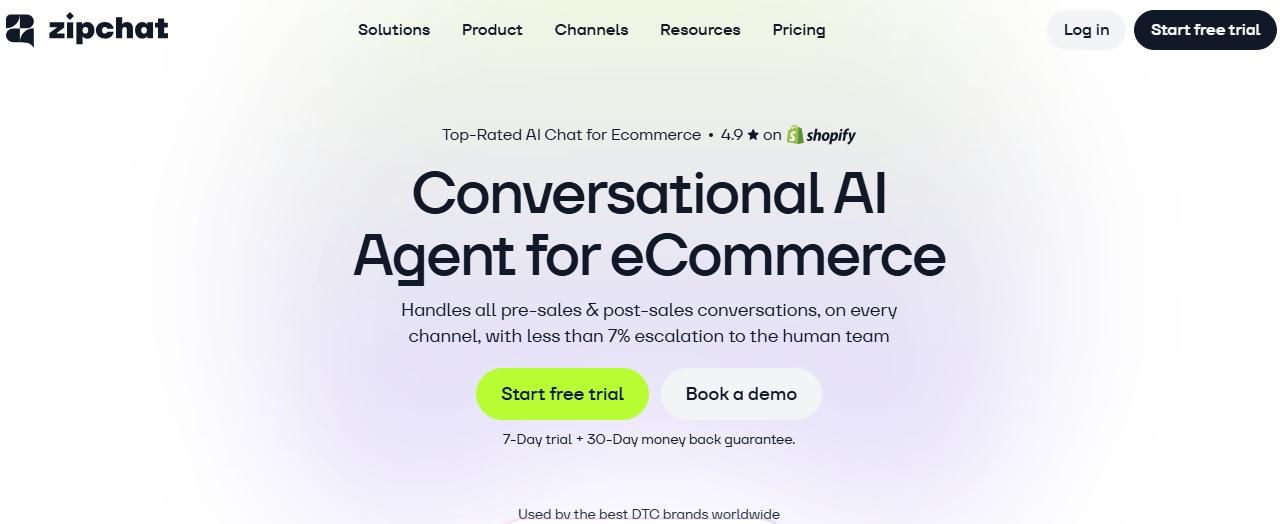
Zipchat is an all-in-one platform for ecommerce customer engagement that answers questions and sells across WhatsApp, Instagram, Messenger, website chat, and email. It crawls your catalog, policies, and pages, then handles pre-sale questions, product recommendations, order tracking, and cart recovery in 95+ languages. It’s the tool on this list built around an AI agent, not a flow builder.
Key features:
- AI agent that reads your catalog and answers freely, no keyword trees to maintain.
- WhatsApp reactive support plus one-off marketing campaigns with revenue analytics.
- Instagram DM and Messenger automation from the same knowledge base.
- Product recommendations and visual product matching from a customer photo.
- Order tracking and one-time Shopify discount codes generated in chat.
Pricing: Starter is $64/month billed annually ($80 monthly) with a 7-day free trial and a 30-day money-back guarantee. AI replies are included in each plan, so cost tracks the work the AI does, not the size of your contact list.
Rating: 4.8/5 on G2 and 4.8/5 on the Shopify App Store.
Pros:
- Catalog-aware answers with no flow maintenance.
- Reply-based pricing that doesn’t punish list growth.
- Fast setup that goes live in under 30 minutes.
Cons:
- It’s built only for ecommerce and software support, not for heavy top-of-funnel drip sequences or SMS-first campaign blasts.
Best for: Shopify, WooCommerce, and Magento stores where pre-purchase questions on WhatsApp and Instagram are costing sales. See WhatsApp AI support and marketing and Instagram DM automation for the channel detail.
2. Wati, best for WhatsApp Business API at scale
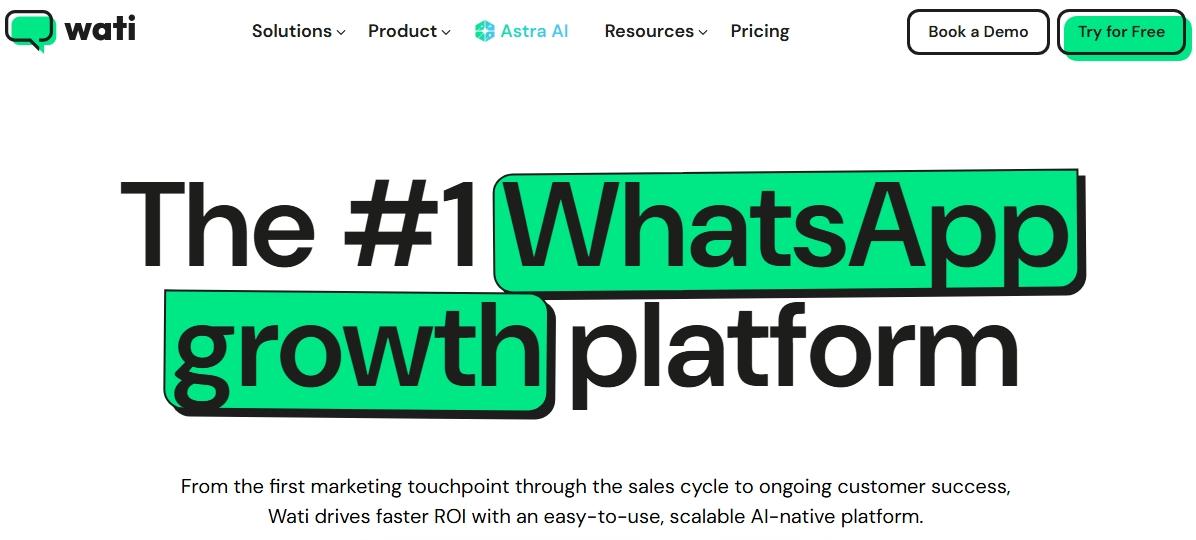
Wati is a WhatsApp Business API platform aimed at teams that run high-volume broadcasts and shared-inbox customer support. It’s strong on the WhatsApp side: templates, campaigns, and a chatbot builder, with an AI Co-pilot sold separately. It leans on flows and templates rather than a catalog-reading agent.
Key features:
- WhatsApp broadcasts, templates, and campaign scheduling.
- Shared team inbox with routing and assignment.
- No-code chatbot builder plus AI Co-pilot add-on.
- Shopify and Instagram integrations.
Pricing: Growth at $39/month, Pro at $79/month, and Business at $199/month. Meta’s per-message fees, a Wati markup, and add-ons for extra users, automations, and AI credits push real spend 30 to 50% above list.
Rating: 4.6/5 on G2.
Pros:
- Mature WhatsApp API tooling.
- Solid broadcasts.
- Familiar template workflow.
Cons:
- Costs layer up fast.
- AI sits behind add-ons, and it’s WhatsApp-first rather than a true multichannel agent.
Best for: teams whose core motion is WhatsApp broadcasting and shared-inbox support at volume.
3. Respond.io, best for omnichannel conversation management
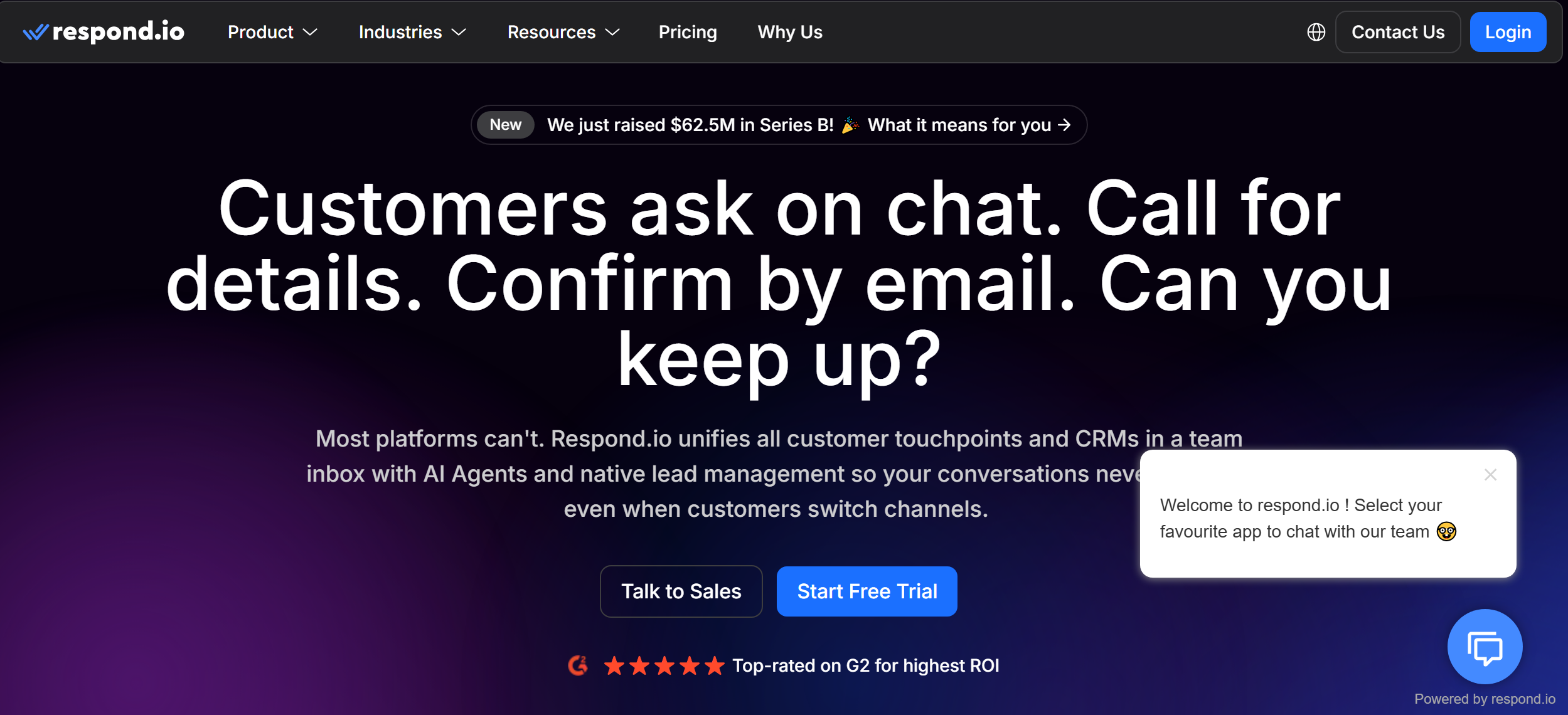
Respond.io is an omnichannel messaging platform that pulls WhatsApp, Instagram, Messenger, TikTok, and more into one inbox with a workflow builder and an AI Agent. It’s built for sales and support teams managing customer conversations at scale across many channels, not only WhatsApp.
Key features:
- One inbox for WhatsApp, Instagram, Messenger, TikTok, and web chat.
- Visual workflow automation plus an AI Agent on higher tiers.
- Broadcast messaging and advanced reporting.
- Developer API and webhooks.
Pricing: Starter at $79/month, Growth at $159/month, and Advanced at $279, with a 7-day free trial.
Rating: 4.8/5 on G2.
Pros:
- Broadest channel coverage here.
- Strong automation.
- Capable AI Agent.
Cons:
- The AI Agent and broadcasts sit on higher tiers.
- The active-contact model repeats the pricing pattern brands leave ManyChat to escape.
Best for: multi-channel teams that need one inbox across WhatsApp, Instagram, TikTok, and Messenger.
4. Charles, best for WhatsApp-first DTC marketing
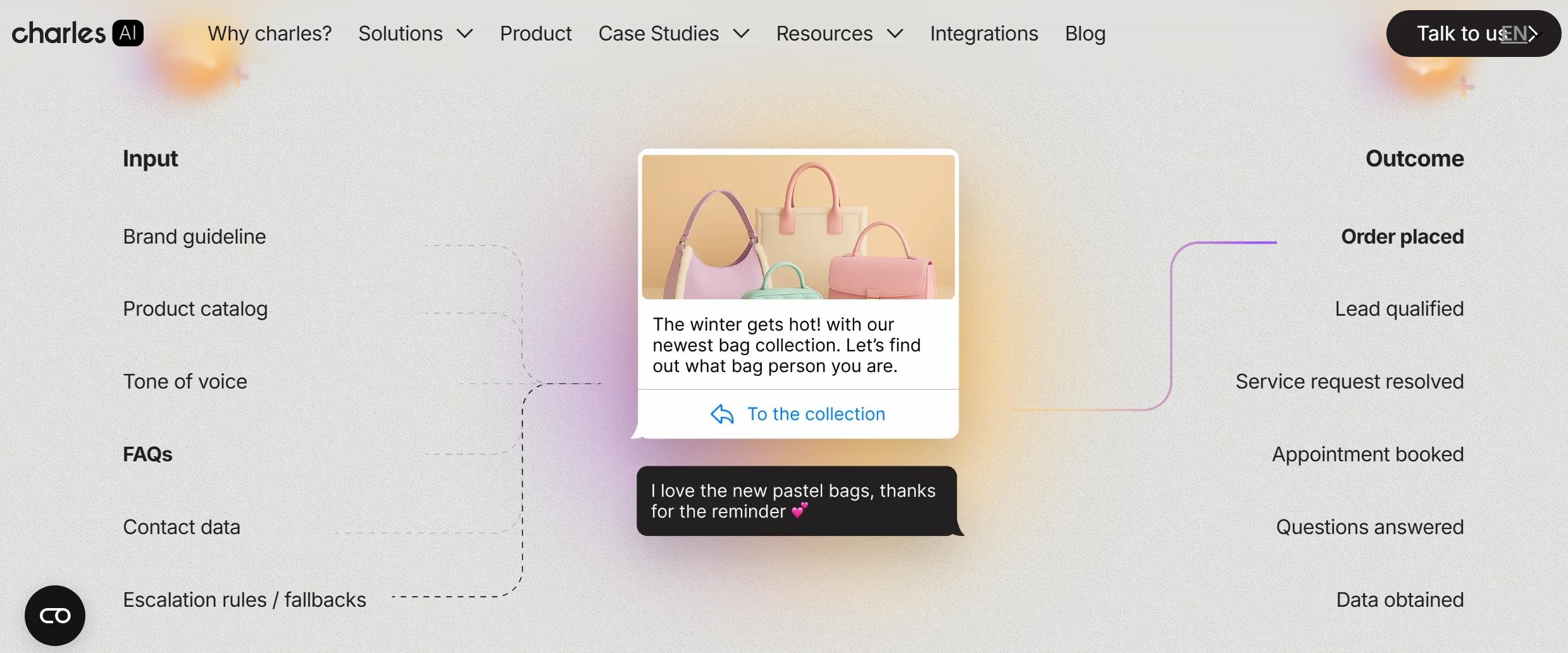
Charles is a conversational commerce platform for DTC brands, best known in European markets for WhatsApp marketing journeys and newsletters. It blends campaign journeys and marketing automation with conversational AI, and it’s aimed at brands that treat WhatsApp as a primary revenue channel.
Key features:
- WhatsApp marketing journeys, newsletters, and opt-in tools.
- Conversational AI for replies and product discovery.
- Deep Shopify and Klaviyo integrations.
- Campaign analytics tied to revenue.
Pricing: Not fully public. Market estimates put entry around hundreds of dollars, plus variable message and service fees, with mid-sized DTC brands often spending well into four figures monthly. Budget for a quote, not a self-serve plan.
Rating: 4.8/5 on G2.
Pros:
- Purpose-built for WhatsApp revenue.
- Strong journey tooling.
- Good ecommerce integrations.
Cons:
- Opaque, quote-based pricing that gets expensive.
- A marketing-first focus over reactive catalog support.
Best for: established DTC brands making WhatsApp a core marketing channel and willing to pay for it.
5. Interakt, best budget WhatsApp automation for Shopify
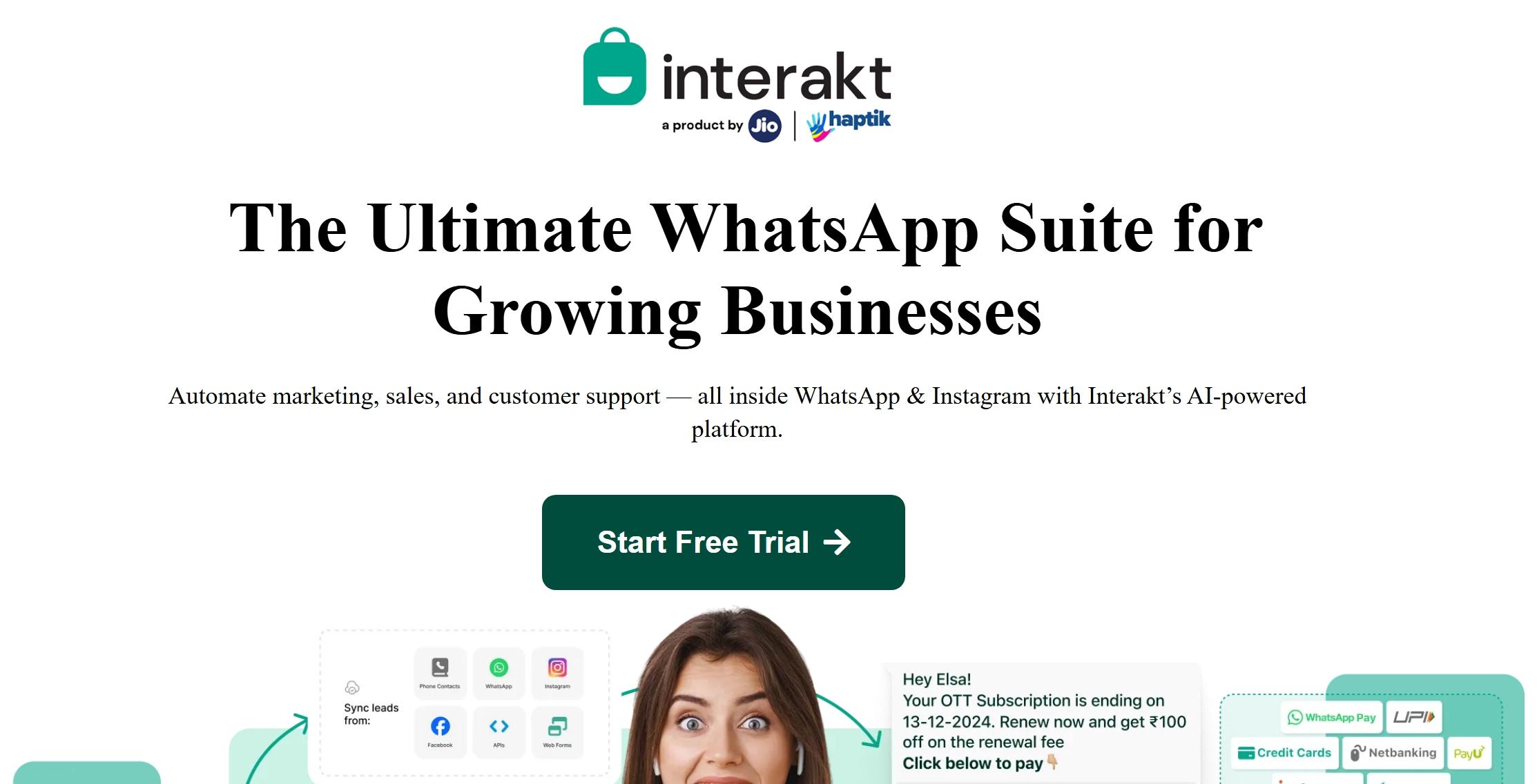
Interakt is a WhatsApp Business API tool with a strong Shopify presence and a low entry price. It automates order confirmations, shipping alerts, and cart recovery triggered by Shopify events, plus WhatsApp and Instagram messaging. It’s template- and rules-driven rather than a catalog-reading agent.
Key features:
- Shopify-triggered order, shipping, and COD messages.
- WhatsApp and Instagram automation.
- Shared inbox and template campaigns.
- Free Shopify app integration.
Pricing: Starter is $12/month, Growth is $55/month, and Advanced is $69/month.
Rating: 4.2/5 on Shopify App Store, G2, and Capterra. Reviews are polarized: strong on automation, weaker on support responsiveness.
Pros:
- Cheapest real entry point here.
- Deep Shopify triggers.
- Solid WhatsApp basics.
Cons:
- Bimodal reviews on support.
- Automation stays rule-based rather than AI-native.
Best for: cost-sensitive Shopify stores that want event-triggered WhatsApp messaging on a budget.
6. Chatfuel, best like-for-like flow builder swap

Chatfuel is the closest like-for-like ManyChat swap: a visual flow builder for Instagram, Messenger, and WhatsApp, now with a Fuely AI layer bundled in. If you like ManyChat’s model but want different pricing or AI, this is the direct comparison. Chatfuel is best for simple Facebook Messenger bots, where a visual flow and a handful of triggers cover the whole job.
Key features:
- Visual flow builder for Instagram DMs, Messenger, and WhatsApp.
- Fuely AI for automated replies and product answers.
- Comment-to-DM and story-reply triggers.
- Shopify integration.
Pricing: Free trial available; paid plans start from $49/month.
Rating: 4.4/5 on G2.
Pros:
- Familiar flow-builder model.
- Good Instagram triggers.
- AI now bundled.
Cons:
- Still flow-first, so the maintenance ceiling remains.
- Conversation caps raise cost as you scale.
Best for: teams that want a ManyChat-style flow builder with different pricing and native Instagram automation.
7. Tidio, best for SMB live chat plus basic AI
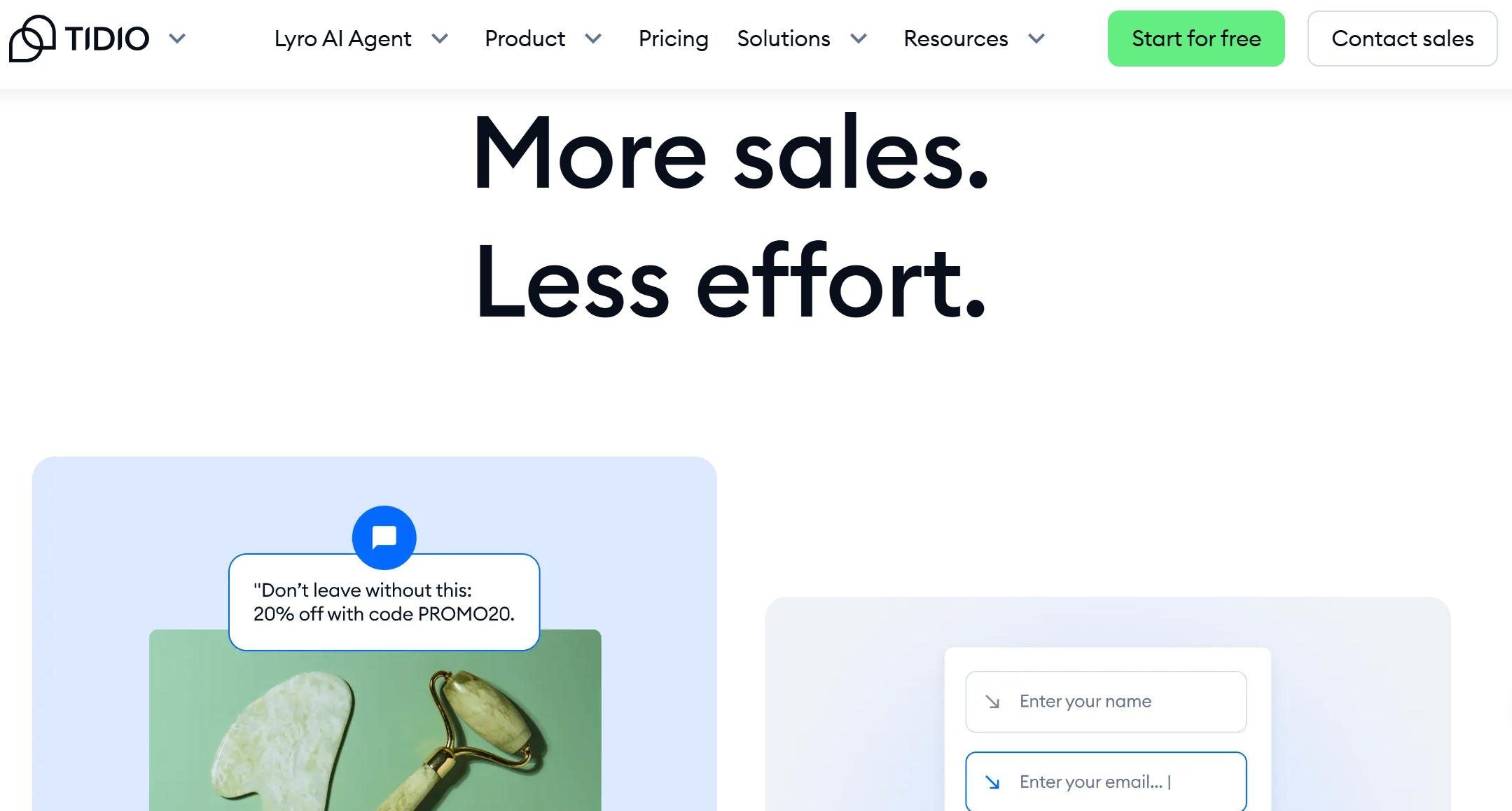
Tidio is a website live chat and chatbot tool for small businesses, with the Lyro AI assistant sold as an add-on. It covers website chat plus Instagram, Messenger, and WhatsApp, but it’s live-chat-first rather than a WhatsApp automation specialist.
Key features:
- Website live chat with a visual flow builder.
- Lyro AI for automated conversations.
- Instagram, Messenger, and WhatsApp connections.
- Free plan for getting started.
Pricing: Free plan available; paid plans start with Starter at $24.17/month, Growth at $49.17/month, with a steep jump to Plus at $300/month. Lyro AI is a separate add-on from about $32.50/month per 50 conversations.
Rating: 4.7/5 on G2.
Pros:
- Easy setup.
- Free tier.
- Clean live chat.
Cons:
- AI is billed separately and adds up fast.
- There’s a steep jump between Growth and Plus plans.
- WhatsApp and Instagram are secondary to website chat.
Best for: small stores that want website live chat with light AI and a low starting cost.
Flow-builder bot vs AI agent: what actually changes
A flow-builder bot follows rules you script and scales in maintenance cost. An AI agent reads your catalog and scales in answer coverage. That single difference drives setup time, answer quality, and how cost behaves as you grow.
| | |
|---|
| Dimension | Flow-builder bot (ManyChat-style) | AI agent (Zipchat-style) |
| Setup | Build keyword trees and branches by hand | Crawl catalog and pages, live in under 30 minutes |
| Maintenance | Rises with every product, promo, and policy | Rescans content; no per-branch upkeep |
| Answer coverage | Capped at what you scripted | Handles unscripted questions freely |
| Product recommendations | Pre-built cards you assemble | Catalog-aware, reasons about fit and stock |
| Cost scaling | Per active contact, grows with your list | Per reply |
The takeaway: flow builders reward small, stable use cases. AI agents reward stores with growing catalogs and questions they can’t fully predict.
Pricing and total cost compared
The cheapest ManyChat alternative depends on your model. Per-contact and per-message tools get more expensive as your audience and sends grow. Reply-based tools hold a flat monthly cost regardless of how big your contact list gets.
Here’s a worked scenario. Assume a store with 20,000 monthly active contacts across WhatsApp and Instagram, where the AI actually handles about 2,500 conversations a month.
| | |
|---|
| Cost line | ManyChat (per active contact) | Zipchat (reply-based plan) |
| Base plan | Business $69/month (7500 contacts) | Pro $300/month (3000 AI replies) |
| Contact overage | 12500 x ~$0.025 = ~$313/month | None (not billed per contact) |
| AI and channel add-ons | Extra (AI) | WhatsApp |
| Estimated total | ~$380+/month and rising with the list | ~$300/month, flat |
Use this formula to compare any two tools on the same basis:
Per-contact model:  cost = base plan + (active contacts - included) x per-contact fee
Per-reply model:    cost = flat plan fee (AI replies included), independent of contact count

At 20,000 contacts, 2,500 conversations:
ManyChat:  ~$380 / 2,500 = ~$0.15 per conversation, before AI add-ons
Zipchat:   $300  / 2,500 = ~$0.12 per conversation, and flat as contacts grow
The gap widens as you scale. Double your list to 40,000 contacts, and the per-contact bill roughly doubles again, while the reply-based plan doesn’t move unless the AI handles more conversations. A big list of browsers who never ask a question costs you nothing on a per-reply model and real money on a per-contact one.
How to choose the right ManyChat alternative
Don’t choose on template count. Every tool here can send a WhatsApp broadcast. The real differences show up in answer quality and cost model, and in how each handles day-to-day customer communication, so match the tool to the job you need done.
| | |
|---|
| If your situation is… | Then prioritize… | Best fit here |
| Shoppers ask product questions you can’t script | A catalog-aware AI agent, not flows | Zipchat |
| WhatsApp broadcasting is your core motion | Mature WhatsApp API and campaign tooling | Wati, Charles |
| You manage many channels in one place | A true omnichannel inbox | Respond.io |
| You want a like-for-like flow builder | A visual builder with Instagram triggers | Chatfuel |
| Budget is tight and you’re on Shopify | Low entry price with Shopify triggers | Interakt |
If catalog-aware answers matter most, prioritize an AI agent. If you only send broadcast blasts, a flow builder or WhatsApp API tool can be enough. If WhatsApp marketing revenue is the core, weight campaign analytics heavily. See WhatsApp marketing campaigns for how the reactive and campaign sides fit together.
When ManyChat is still the right choice
Keep ManyChat when your use case is scripted, social-first, and not built on product Q&A. Below certain thresholds, a flow builder is the simpler tool.
ManyChat still fits simple keyword giveaways, comment-to-DM growth plays, basic lead qualification flows, and creator or non-ecommerce accounts running Instagram and Messenger funnels. If your automation is a handful of stable flows, an AI agent is more than you need.
The threshold is roughly this: if most conversations are pre-scripted lead capture or giveaways with few product questions, ManyChat’s flow builder does the job. Once shoppers start asking about fit, stock, compatibility, and order status in their own words, a catalog-aware agent resolves far more without new flows. For the wider category, see our roundup of the best Shopify chatbot apps in 2026 and how to automate WhatsApp on Shopify.
FAQ
What is the best ManyChat alternative for ecommerce?
Zipchat is the best pick for ecommerce. It’s an AI agent that reads your catalog and answers freely across WhatsApp, Instagram, Messenger, and website chat, then recommends products and recovers carts. Unlike ManyChat’s flow builder, it handles unscripted questions and bills per reply, not per contact.
Is there a free ManyChat alternative?
Yes, with limits. Tidio has a free tier for website chat, and ManyChat’s own free plan now caps at 25 contacts. Chatfuel offers a 7-day trial but no permanent free plan. Zipchat has no free plan; it offers a 7-day free trial and a Starter plan from $64/month, billed annually.
What is the difference between ManyChat and an AI chatbot?
ManyChat is a flow-builder bot: it follows keyword rules and branches you script. An AI chatbot, or AI agent, reads your product catalog and pages, then answers questions freely, including ones you never scripted. Flow builders route; AI agents understand and sell.
Which ManyChat alternative works best for WhatsApp marketing?
For high-volume WhatsApp broadcasts, Wati and Charles are strongest on campaign tooling. Zipchat pairs one-off WhatsApp campaigns with reactive catalog-aware support in one tool, so it covers both marketing sends and the product questions that follow.
Can I use a ManyChat alternative for Instagram DMs?
Yes. Zipchat, Chatfuel, Interakt, Respond.io, and Tidio all automate Instagram Business DMs. Zipchat and Respond.io answer DMs with AI from the same knowledge base used on other channels, so replies stay consistent across Instagram, WhatsApp, and your website.
Verdict
For ecommerce, Zipchat is the top ManyChat alternative because it replaces flow maintenance with a catalog-aware AI agent that answers and sells across WhatsApp and Instagram, on a flat, reply-based plan. Respond.io is the runner-up for teams that need the broadest omnichannel inbox.
If scripted flows are capping what your bot can answer, start a 7-day free trial and see how many chats turn into orders.