
Cross-border fashion breaks tools that work fine at home. Language gaps, size mismatches, surprise duties, and off-market imagery all hit at once. This guide ranks the 9 Shopify apps that close those gaps, then adds the operational layer most listicles skip: landed cost, DDP versus DDU, and the duty rules changing in 2026.
The short version
Selling fashion across a second border adds four costs domestic tools ignore: in-language support, region-correct sizing, full landed cost shown before checkout, and return logistics priced per country. The global cross-border ecommerce market is on track to hit USD 636.34 billion in 2026, up from USD 551.23 billion in 2025 (Precedence Research, 2025). Top pick for multilingual conversations: Zipchat. Top pick for localized photography: Ayna.
What you will learn
- Why selling fashion across borders breaks your domestic playbook
- The 9 Shopify apps that close the biggest cross-border gaps
- A comparison of pricing, ratings, and core fit
- How landed cost actually works (with the formula and the 2026 duty changes)
- DDP vs DDU, presentment vs settlement currency, and EU return rules
- A pick-by-problem table so you know which app to add first
- Where each app falls short, and what to fix before installing
- Where cross-border AI is heading in 2027
How we picked these 9 apps
Each app on this list cleared four standards.
- Cross-border value, not generic ecommerce upside. Each tool removes a friction that only shows up when you sell into a second country.
- Native or well-supported Shopify integration. No janky plugins, no developer-required builds for a basic install.
- Public pricing or transparent quote process. Enterprise tools are flagged as such.
- Verified ratings or production usage in fashion. Either a meaningful Shopify App Store rating or documented use by fashion brands at scale.
Quick comparison
| # | App | Cross-border job | Pricing | Rating | Free option |
|---|
| 1 | Zipchat AI | Multilingual AI sales and support | From $64/month, billed annually, 7-day trial | 4.9/5 | No free plan |
| 2 | Ayna | AI fashion photoshoots, localized imagery | From $0.60/image, 3 plans | 4.8/5 | Free trial: 120 credits / 12 images |
| 3 | Shopify Markets | Currencies, domains, duties at checkout | Included; Managed Markets 3.25% + 1.5% FX | n/a | Included with Shopify |
| 4 | Weglot | Full storefront translation | From ~$17/month | 4.6/5 | Free plan, 1 lang / 2K words |
| 5 | Global-e | Landed-cost checkout, local payments | Enterprise / revenue share | n/a | No |
| 6 | Easyship | International shipping rates and labels | Free + $29/month + | 4.0/5 | Free plan |
| 7 | Kiwi Sizing | Cross-region fit recommendations | From $6.99/month | 4.8/5 | Free plan |
| 8 | Klaviyo | Geo-segmented email and SMS | Free under 250 contacts; custom | 4.7/5 | Free plan |
| 9 | Loox | Photo and video reviews | From $9.99/month | 4.9/5 | 7-day trial |
Why cross-border fashion needs a different stack
A storefront that performs at home rarely performs the same abroad without help. Three things break first.
Language. Most shoppers will not buy when they cannot read the product details, and a translated checkout button is not enough.
Trust. A new-market customer has never heard of your brand, so social proof and clear answers carry more weight than they do at home.
Cost clarity. Unexpected duties and shipping fees are a leading reason carts get abandoned, and cross-border orders pile customs charges on top.
The fix is not one mega-tool. It is a focused stack where each app removes a specific point of friction. Here are the nine worth knowing in 2026, starting with customer conversations and working through imagery, checkout, shipping, sizing, retention, and proof.
1. Zipchat AI: for multilingual customer conversations
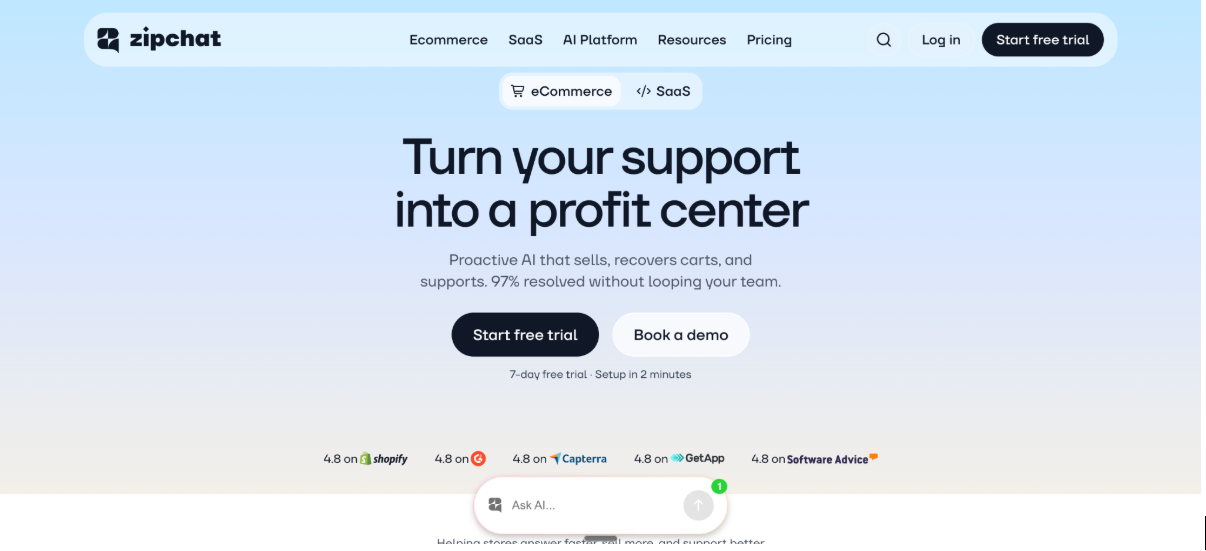
Cross-border problem. Fashion shoppers want to know how fabric feels, whether sizing runs true, and what returns cover. Most of those questions hit when no one is on the support desk, and the customer is in a different timezone.
In a CSA Research study of 8,709 consumers across 29 countries, 76% said they prefer buying products with information in their own language, and 40% said they would never buy from a site in another language (CSA Research, 2020).
What it does. Zipchat AI is an agentic AI sales and support agent built for Shopify. It trains on your catalog, policies, and FAQs on install, then answers shopper questions, recommends products, recovers hesitating carts, generates unique Shopify discount codes on demand, and tracks orders, all across website chat, WhatsApp, Instagram DMs, Messenger, and email.
Why it matters for cross-border. One knowledge base serves every channel and every market. Zipchat detects and replies in any language natively through multilingual AI customer support, with no separate setup per region. It can read a photo a shopper sends and advise on sizing, or recommend by color and seasonal palette, the way a trained associate would. Proactive triggers like scroll depth and exit intent recover a shopper who would otherwise leave silently.
Where it falls short. Volume questions need the right plan tier, so price the expected reply volume before launch. WhatsApp campaigns need Meta template approval before they go out, which adds a few days at launch.
Pricing. Starts from $64/month, billed annually, with a 7-day trial and a 30-day money-back guarantee. No free plan. Rated 4.9/5 on the Shopify App Store.
Best fit. Any fashion brand with live international traffic and a high volume of pre-purchase questions on fabric, fit, or shipping.
2. Ayna: for localized product photography
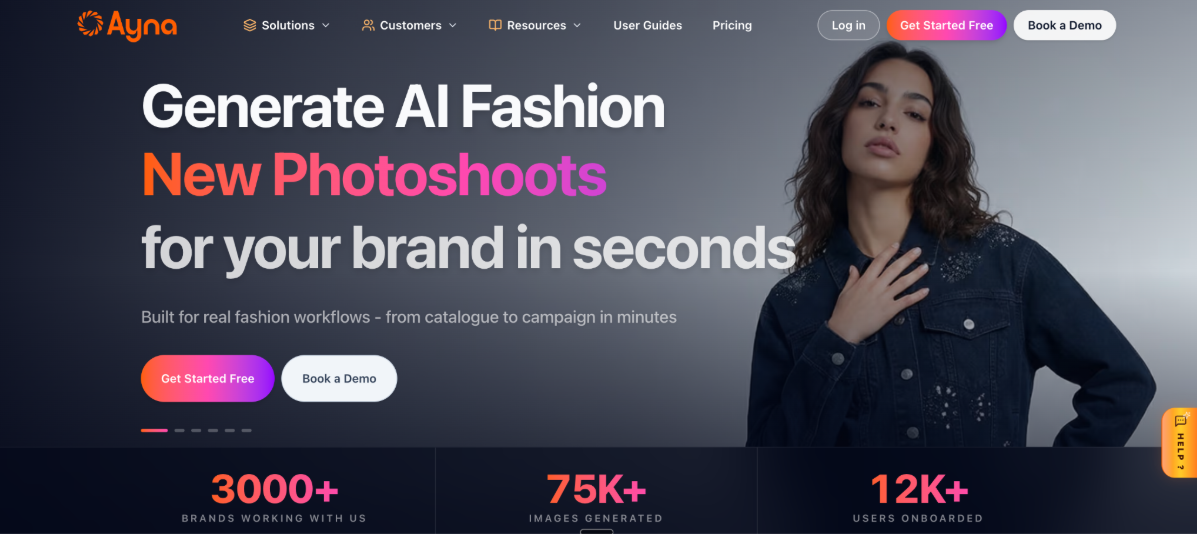
Cross-border problem. Imagery is the first thing a new-market shopper judges, and one set of US-shot photography rarely lands the same way in Southeast Asia, the Gulf, or Western Europe. Traditional studio shoots run $85 to $250 per SKU. For an 80-SKU seasonal drop, that is $6,800 to $20,000 before you produce a single market variant.
What it does. Ayna is an AI fashion photoshoot platform. Upload a flat-lay, mannequin, or basic on-model shot and generate catalog-ready on-model imagery, choosing models, poses, accessories, and backgrounds. The same garment can be styled for different markets without booking a new shoot per region, and bulk generation handles seasonal drops and marketplace variations.
Why it matters for cross-border. Brands cut production cost by 70% versus traditional lifestyle shoots and ship images 10x faster, while seeing a 1.6x lift in CTR on product listings. 3,000+ fashion brands globally use Ayna to refresh catalogs and produce market-appropriate imagery without booking new shoots per region.
Where it falls short. Ayna is built for fashion apparel today, not for other product categories like footwear or jewelry yet. There is no public API; the workflow runs inside the Ayna app.
Pricing. Free trial: 120 credits (12 images). Three plans from $0.60 per image. Enterprise pricing for 150+ images. Rated 4.8/5 on the Shopify App Store.
Best fit. D2C and growing fashion brands running seasonal drops, refreshing catalogs across markets, or scaling marketplace listings without booking fresh shoots per region.
3. Shopify Markets, for cross-border foundations
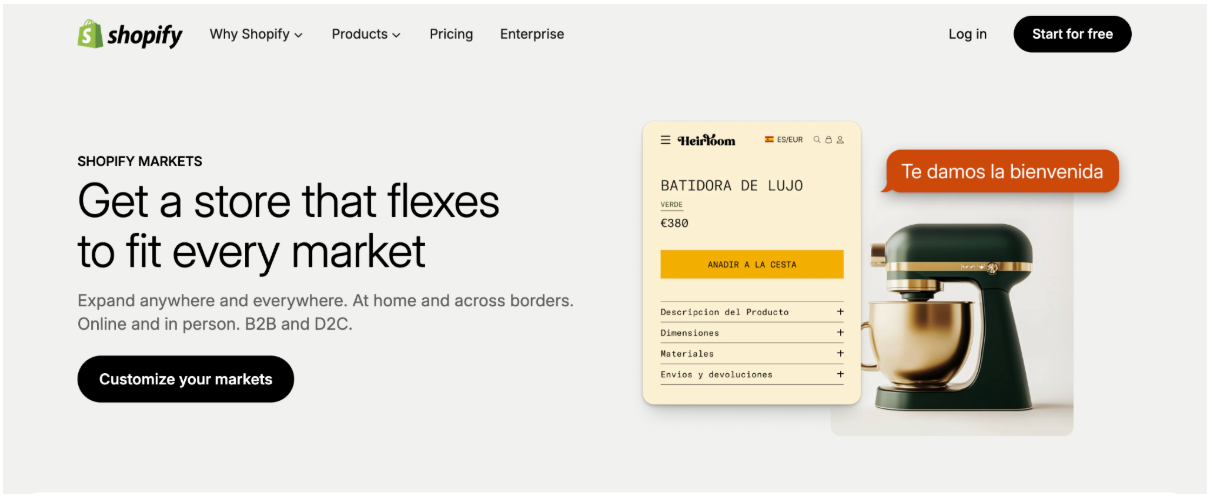
Cross-border problem. Showing the wrong currency, the wrong domain, or surprising a customer with a duties bill after delivery costs you the sale and often the customer. Extra costs at checkout (shipping, tax, fees) are the single biggest cart abandonment trigger, cited by 39% of shoppers who leave a cart for reasons other than browsing (Baymard Institute, 2025).
What it does. Shopify Markets is the native layer for selling into multiple countries from one store. Local currencies, country-specific domains, pricing, duties, and import taxes show at checkout. Translate and Adapt handles localized content for each market, and adaptive pricing adjusts international prices to include duties, taxes, and currency conversion.
Why it matters for cross-border. Showing the landed price at checkout, not after delivery, removes the worst surprise in cross-border buying. Managed Markets goes further and guarantees the duty and tax amount, so if customs charges differ, Shopify covers the gap.
Where it falls short. The free version is foundational, not enough on its own for serious cross-border. Managed Markets adds a 3.25% fee plus a 1.5% currency conversion fee on top of normal Shopify Payments processing, so margin math matters.
Pricing. Included with every Shopify plan. Managed Markets: 3.25% per order + 1.5% FX, no monthly minimum.
Best fit. Every Shopify fashion brand selling into more than one country. The other apps on this list sit on top of this foundation.
4. Weglot: for full storefront translation
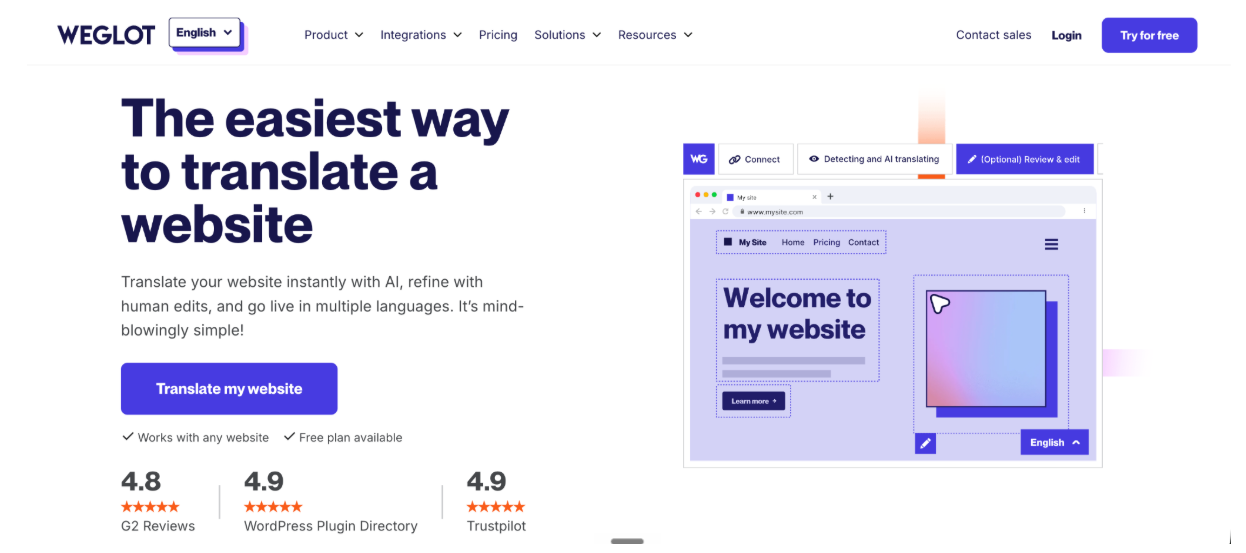
Cross-border problem. Most shoppers prefer to buy in their own language, and many will not buy at all from a site they cannot read. A translated checkout button is not enough; product copy, policy pages, and email confirmations all need to land in-language.
What it does. Weglot translates your entire Shopify storefront into multiple languages, auto-detects each visitor’s language, and creates SEO-friendly translated URLs that get indexed by Google in each market. It pairs instant machine translation with the option to refine wording by hand, so brand-critical copy reads naturally.
Why it matters for cross-border. It is the fastest way to a fully localized storefront without rebuilding the site. The indexed translated URLs also bring in local organic search traffic.
Where it falls short. Pricing is tiered by translated word count and number of languages, so a large catalog in many languages can scale quickly. The free plan covers only one language and around 2,000 words.
Pricing. Free plan (1 language, 2,000 words). Paid plans from around $17/month with a 14-day free trial. Rated 4.6/5 on the Shopify App Store.
Best fit. Brands that want a localized storefront live in days, not months, and need the SEO upside of indexed translated pages.
5. Global-e: for landed-cost checkout
Cross-border problem. A customer who pays $90 at checkout and then gets a $35 customs bill at the door is unlikely to come back, even if the product was great. Unexpected duties and taxes are a leading cause of negative cross-border post-purchase sentiment.
What it does. Global-e is a cross-border checkout and localization platform offering landed cost (duties plus taxes calculated upfront), 100+ currencies, local payment methods, and international shipping and returns. Larger fashion brands use it as their cross-border front end.
Why it matters for cross-border. Customers see and pay the full landed cost at checkout, so nothing arrives with a surprise customs charge. That is a delivered-duty-paid (DDP) model, and it protects both conversion and post-purchase loyalty.
Where it falls short. Enterprise-oriented. Setup is heavier than a Shopify app install, and pricing is typically revenue-share, so it suits brands already moving meaningful international volume.
Pricing. Enterprise pricing, revenue share. No free tier; contact sales.
Best fit. Established fashion brands with steady cross-border volume that have outgrown Shopify Markets’ duty handling.
6. Easyship: for transparent international shipping
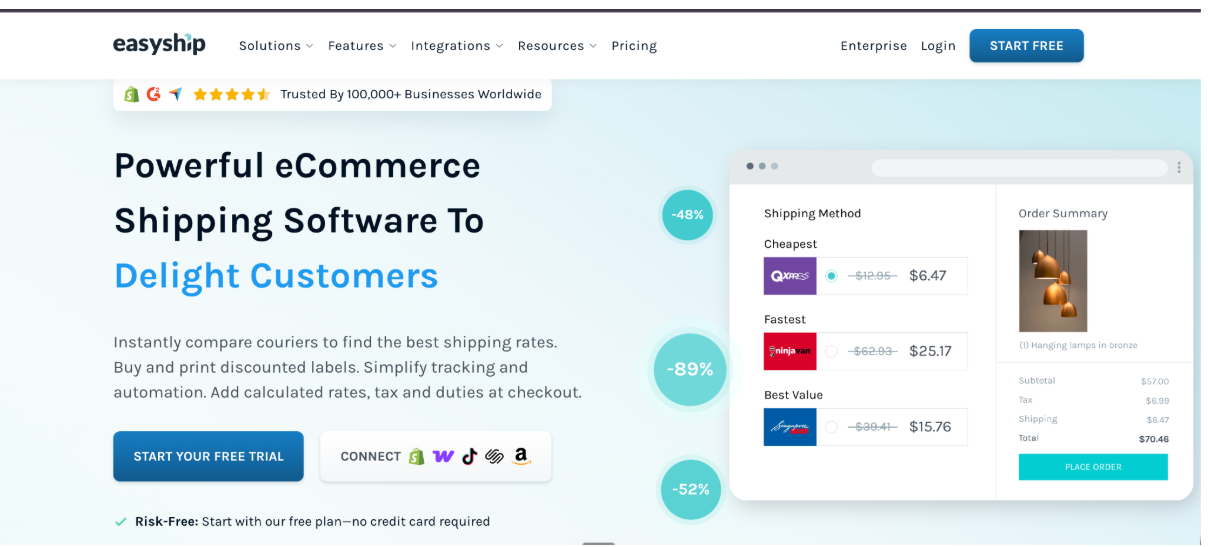
Cross-border problem. International shipping rates are not just expensive; they are unpredictable. A US-priced shipping label that looks fine in checkout can blow up your margins on a Europe-to-Asia route, and a customer who sees a $40 shipping line on a $90 dress tends to bounce.
What it does. Easyship connects your store to 250+ couriers, including USPS, UPS, DHL, and global regional players. It compares live rates, generates labels, estimates duties and taxes, and provides branded tracking. Rules-based automation handles label generation and customer notifications.
Why it matters for cross-border. Rate comparison across many couriers usually lowers the shipping number you show customers. Pre-calculated tax and duty estimates at checkout keep the price you display in line with what the customer actually pays.
Where it falls short. Some merchants report billing complexity and slower support on edge cases. The free plan is useful for testing, but not enough for sustained volume.
Pricing. Free plan available. Plus from $29/month. Scale from $99/month. Enterprise plans available. Rated 4.0/5 on the Shopify App Store.
Best fit. Fashion brands shipping physical orders worldwide that want couriers in real competition and need duties calculated up front.
7. Kiwi Sizing: for fit across regions
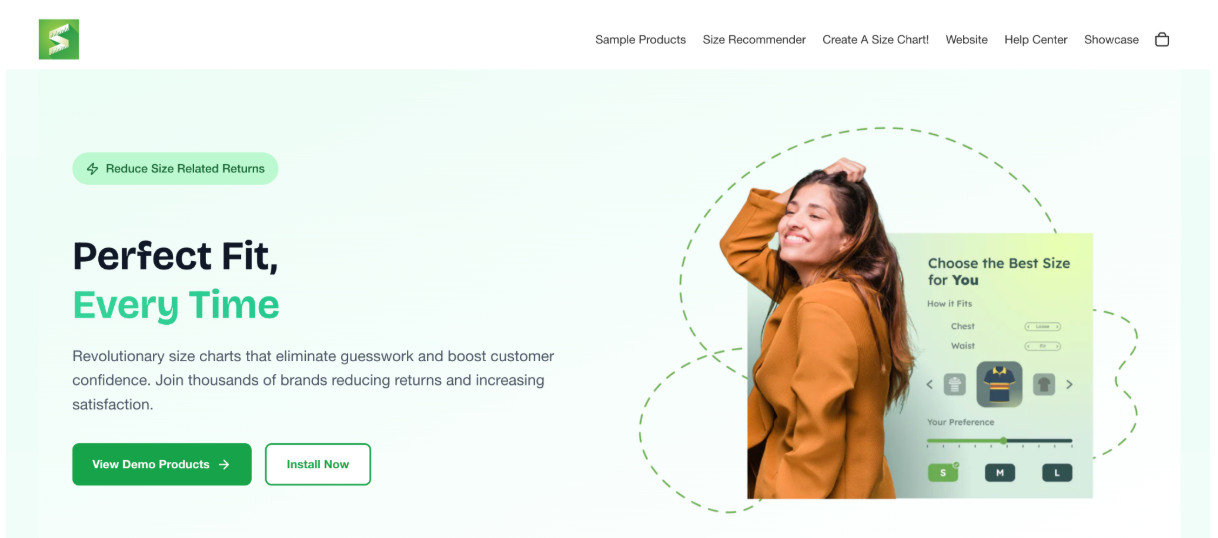
Cross-border problem. US, UK, and EU sizing systems do not line up, and a shopper unsure of their size often does not buy, or buys two and returns one. Fit and sizing consistently rank as the leading reason for fashion returns. Consumers returned $849.9 billion in goods in 2025, with clothing and shoes topping the online return list (NRF 2025 Retail Returns Landscape, 2025).
What it does. Kiwi Sizing creates custom size charts and fit recommendations, converts between US, UK, EU, and other regional systems automatically, and suggests a single size based on a shopper’s height, weight, and fit preference rather than handing them a range.
Why it matters for cross-border. It removes the biggest single returns driver in fashion, which compounds in cross-border because returns shipping is slow and expensive.
Where it falls short. The AI size recommender lives on the higher Ultimate tier; the free plan is basic charts only. Some users have flagged friction in exporting chart data.
Pricing. Free plan available (2 customizable charts). Paid plans from $6.99/month. Rated 4.8/5 on the Shopify App Store.
Best fit. Apparel and footwear brands with fit-related return rates above around 15%, or inconsistent sizing across product lines.
8. Klaviyo: for retention across markets
Cross-border problem. Acquisition costs are higher abroad. New-market customers often need a few touches before they buy a second time, and a generic flow built for the US home market does not move sales in France or Japan.
What it does. Klaviyo is an email and SMS marketing platform with deep Shopify data sync. Built-in segmentation, automated flows (welcome, abandoned cart, browse abandonment, post-purchase), and an AI Marketing Agent that reads your site and builds branded campaigns from a short brief. Predictive analytics scores churn risk, customer lifetime value, and likely next-order date.
Why it matters for cross-border. Segmentation by country, language, and behavior means a customer in France gets a flow written for France, not a generic blast. Predictive analytics surface which markets are quietly retaining well, and which need attention.
Where it falls short. Pricing scales with profile count, not active subscribers, so a large dormant list gets expensive fast. The platform has a meaningful learning curve.
Pricing. Free plan up to 250 contacts. Paid pricing scales with list size; custom on request. Rated 4.7/5 on the Shopify App Store.
Best fit. Fashion brands moving past broadcast campaigns into behavior-triggered, market-segmented flows.
9. Loox: for visual social proof in new markets

Cross-border problem. A shopper in a new market has zero brand familiarity to rely on. A logo and a glossy hero shot will not close them. Real customers showing the product on real bodies, especially in formats that look like the customer’s own market, will.
What it does. Loox collects and displays photo and video reviews from real customers, with referral and upsell features. Reviews can be filtered and surfaced per market, and the widget catalog covers product pages, popups, carousels, and reviews-as-ads.
Why it matters for cross-border. Photo and video reviews from real buyers in the customer’s region close the trust gap that no amount of brand polish solves on its own.
Where it falls short. Higher-volume stores hit pricing cliffs on the Scale tier ($35 per additional 300 orders). Full Klaviyo integration is locked to the Unlimited tier.
Pricing. Free start. Beginner $9.99/month. Scale from $34.99/month. Unlimited $299.99/month. Rated 4.9/5 on the Shopify App Store with 7,000+ reviews.
Best fit. Brands entering new markets cold that need visual proof to convert first-time international buyers.
The cross-border operational layer most apps assume you understand
Apps handle the storefront. They do not absolve you of the compliance and cost mechanics underneath. Get these four right or the apps above paper over a leaking P&L.
What is landed cost, and how do you calculate it?
Landed cost is the total a cross-border order costs a customer once it clears customs, not just the product price. It stacks the product, freight, duties, taxes, and platform fees into one number the customer pays before checkout. Showing it upfront is the single biggest lever on cross-border conversion.
The formula is simple to state and easy to underestimate:
Landed cost = product cost + international shipping + duties + VAT/GST + import and handling fees
Each input moves independently by destination. Duties depend on the product’s HS code, VAT or GST depends on the country, and shipping depends on the lane and courier. A €60 dress into Germany and the same dress into Canada produce two different landed costs and two different margins.
Tools that calculate landed cost automatically include Global-e, Easyship, Avalara, and Zonos. Zonos prices its landed-cost calculation at $2 plus 10% of the duties, taxes, and import fees it computes, comparable to what Easyship and Global-e build into their pricing (Zonos, 2026).
DDP vs DDU: who pays the duty, and when
DDP (delivered duty paid) means the merchant collects duties and taxes at checkout and the order arrives with nothing owed. DDU (delivered duty unpaid) means the courier collects duties from the customer at delivery, which is the surprise-bill scenario that kills repeat purchase.
| Model | Who pays duty | When | Cross-border effect |
|---|
| DDP (delivered duty paid) | Merchant collects at checkout | Before shipment | Higher checkout price, no surprises, better retention |
| DDU (delivered duty unpaid) | Customer pays courier | At delivery | Lower checkout price, surprise bill, abandoned deliveries |
For fashion, DDP is the safer default in most markets. The buyer commits to one number and the parcel does not get held at the border.
The 2026 de-minimis changes you cannot ignore
De-minimis thresholds (the value below which imports clear duty-free) are tightening in 2026, which changes the landed-cost math on low-value fashion orders.
| Region | What changed | Effect on fashion orders |
|---|
| United States | $800 de-minimis exemption removed | Low-value parcels that shipped duty-free now incur duty |
| European Union | IOSS handles VAT on imports under €150 | VAT collected at checkout, not at the border |
| European Union | Flat €3 customs duty on IOSS shipments under €150 (from July 1 2026) | A predictable per-parcel duty replaces case-by-case treatment (FlavorCloud, 2026) |
The US change matters most for sub-$800 fashion orders that used to clear free. The EU flat €3 duty from July 1 2026 is small per parcel but should be modeled into the landed cost on every IOSS shipment under €150.
Currency: presentment vs settlement, and the FX markup hiding in your P&L
Presentment currency is what the customer sees and pays. Settlement currency is what you receive after conversion. The gap between them is an FX markup, and it is a real line in your cross-border P&L, not a rounding error.
Show prices in the local presentment currency to protect conversion. Then account for the conversion fee on settlement (Shopify Managed Markets charges 1.5% FX, for example) so the margin you booked at checkout survives to your bank account. Skipping this step is how a profitable-looking order arrives 1.5% to 3% thinner than planned.
Returns: the EU 14-day right and per-country return cost
EU consumers have a statutory 14-day right of withdrawal on most online orders, with no reason required. You cannot opt out of it when selling into the EU, so a return policy is not a marketing choice there, it is a compliance requirement.
Return cost is also priced per country. Reverse logistics from Japan back to a US warehouse costs more, and takes longer, than a domestic return. Model the return shipping lane, not a single global return rate, and lean on sizing tools (Kiwi Sizing) and clear imagery (Ayna) to cut the return rate at the source.
How to choose your cross-border stack
You do not need all nine on day one. Start with the friction that is costing you the most.
| Problem | Start with | Threshold to add |
|---|
| Pre-purchase questions going unanswered in other languages | Zipchat AI | Any brand with live international traffic |
| Imagery that does not land in new markets | Ayna | Brands running seasonal drops or new-region expansion |
| Wrong currency or surprise duties at checkout | Shopify Markets | Any Shopify store selling into 2+ countries |
| Site only readable in English | Weglot | Brands expanding to non-English markets |
| Established cross-border volume, duty handling outgrown | Global-e | Brands past meaningful international revenue |
| International shipping rates eating margin | Easyship | Brands shipping physical goods to 3+ countries |
| Sizing-driven returns from international customers | Kiwi Sizing | Apparel return rate above ~15% |
| Generic email flows, low repeat-rate in new markets | Klaviyo | Brands with email list and segmentation goals |
| New-market shoppers bouncing on trust | Loox | Brands entering new geographies cold |
For brands testing a new market. Start with the free or low-cost tiers. Shopify Markets is included. Weglot, Easyship, Kiwi, and Klaviyo all have meaningful free plans. Ayna has a free trial of 120 credits (12 images), and Zipchat runs a 7-day trial with a 30-day money-back guarantee. This lets you validate before committing the budget.
For brands past $100K monthly cross-border revenue. Imagery, conversation, and landed-cost handling become core infrastructure. Ayna, Zipchat, and either Shopify Markets duties or Global-e return more than they cost at this stage.
For brands selling heavily through WhatsApp or Instagram in new markets. Zipchat’s multichannel coverage matters more here than on any other channel mix. One knowledge base runs Instagram DMs, WhatsApp marketing, and website chat, so replies stay consistent.
When these apps alone will not fix the problem
Each tool has a precondition. Skipping it produces underwhelming results that look like the tool failing.
Ayna needs decent source images. A blurry flat-lay produces a blurry on-model output.
Zipchat mirrors your store content. Thin product descriptions and missing policy pages produce incomplete answers in any language.
Shopify Markets is foundational, not magical. You still need to pick markets, set regional pricing, and decide your duty strategy.
Weglot translates what is there. Off-brand source copy gets translated into off-brand copy in five more languages.
Global-e is a heavy implementation. Plan a 4 to 8 week launch and stakeholder alignment up front.
Easyship is rate-comparison, not negotiation. Your shipping math improves but it does not replace volume-discount conversations with carriers.
Kiwi Sizing reflects the size data you enter. Inconsistent charts across product lines produce inconsistent fit picks.
Klaviyo’s predictive analytics need around six months of purchase history before forecasts get useful.
Loox needs review volume. A new store with zero reviews will not get the social-proof lift just from installing the app.
Where cross-border AI is heading in 2027
The nine apps here are best-in-category specialists today. The near-term direction is fewer apps, more agents.
Content and commerce are merging. Imagery generation, listing copy, and on-model variation are starting to share a workflow rather than living in separate tools.
Chat is shifting from reactive to predictive. Agents that detect intent and reach out, rather than waiting to be messaged, are already in early adoption.
Localization is moving from per-market setup to automatic. Adaptive pricing, AI translation, and per-region imagery are starting to operate as one localization layer, not three separate configurations.
Landed cost is becoming a checkout default, not an add-on. As de-minimis thresholds tighten, duty and tax calculation is moving from an optional app into the core checkout, so the surprise-bill model fades.
Attribution and forecasting are converging. Cross-border ad budgets, inventory forecasts, and ROI signals are starting to live in a single dashboard that can act, not just report.
Brands building their cross-border stack in 2026 will benefit most when these layers consolidate, provided the pieces they pick today are open enough to ride that consolidation.
Conclusion
Selling fashion internationally in 2026 rewards brands that treat each market as its own storefront, not a translated afterthought. The nine apps here each remove one real point of friction: language, imagery, checkout, shipping, sizing, trust, and retention. The operational layer underneath, landed cost, DDP, de-minimis changes, and per-country returns, decides whether those tools protect margin or just hide a leak. Build the stack in the order your data asks for, model the landed cost honestly, and the cross-border market becomes a repeatable process instead of a guess.
FAQs
Which Shopify app should a fashion brand add first when going international?
Start with Shopify Markets. It is the native foundation for selling into multiple countries, handling currencies, regional domains, and duties at checkout. Once that base is live, layer translation, conversations, and imagery tools based on where your own data shows the most friction. Most brands add a multilingual support agent like Zipchat next, since pre-purchase questions block conversion fastest.
AI closes two expensive gaps. Conversational AI like Zipchat answers shopper questions in any language instantly, can read a photo to advise on sizing, and recovers carts, so a customer abroad is never left stuck. AI photography platforms like Ayna generate market-appropriate product imagery without a new physical shoot per region, keeping catalogs fresh and locally relevant.
Why do international shoppers abandon carts more often?
Unexpected costs are the main driver. Extra costs such as shipping, tax, and fees are the top non-browsing abandonment reason, cited by 39% of shoppers (Baymard Institute, 2025). Cross-border orders add customs duties on top, so tools that show full landed cost at checkout, such as Shopify Markets, Global-e, or Easyship, directly protect conversion.
What is the difference between DDP and DDU for fashion orders?
DDP (delivered duty paid) means you collect duties and taxes at checkout, so the parcel arrives with nothing owed. DDU (delivered duty unpaid) means the courier bills the customer at delivery, the surprise-charge scenario that kills repeat purchase. For fashion, DDP is the safer default: the buyer commits to one landed-cost number and the parcel does not get held at the border.
How much budget should a Shopify fashion brand set aside for these apps?
Several of the apps here have meaningful free or low-cost tiers (Shopify Markets, Weglot, Easyship, Kiwi, Klaviyo). A realistic growth-stage starting budget is $200 to $400 per month, covering Zipchat (from $64/month, billed annually), Kiwi Ultimate, Klaviyo, and Loox Beginner, plus Ayna image packs as you produce content. Global-e earns its place once cross-border volume is established.