
Most stores don’t leave Freshdesk because it stopped answering tickets. They leave because they signed up for a simple helpdesk and watched it drift toward IT service management, while the per-seat bill climbed with every hire. Freshworks now pours much of its energy into Freshservice, its ITSM product, so store-specific workflows sit further from the center of the roadmap.
TL;DR
A Freshdesk alternative is a helpdesk built for stores, not IT teams, that automates ecommerce tickets and sells without charging per agent. This guide ranks 7 of them on cost model, Shopify fit, and revenue lift. Top pick: Zipchat, for turning pre-purchase questions into sales on a plan with unlimited team members.
How we picked these Freshdesk alternatives
We scored each tool on six things a store owner cares about, not a generic IT buyer. Ecommerce fit led: native Shopify, WooCommerce, or Magento support, order lookup, and product knowledge. Then pricing model (seat, reply, or per-resolution), AI quality, setup time, and Shopify depth. Setup complexity can vary by support platform depending on the scale of operations.
Customer satisfaction reporting is important in ecommerce support platforms, so we scored reporting depth too. Ratings come from G2 and Capterra, accessed July 5, 2026, and every price is marked “as of” its check date because seat and AI pricing shifted across the category in early 2026. Where a tool is strong, we say so. Where it’s weak, we say that too, Zipchat included.
Freshdesk alternatives compared at a glance
| | | | | | |
|---|
| Rank | Tool | Best for | Pricing model and starting price | Ecommerce / Shopify fit | AI automation | G2 rating |
| 1 | Zipchat | Turning pre-purchase questions into revenue | Reply-based, from $64/month, billed annually | Built for Shopify; WooCommerce, Magento | AI replies included, no per-resolution fee | 4.8/5 |
| 2 | Re:amaze | Multi-store, multi-channel messaging | Per-seat or flat, from $26.10/month | Strong (Shopify app) | AI responses and FAQ automation | 4.6/5 |
| 3 | Help Scout | Simple, human-first email support | Per-user + AI add-on, from $25/user/month | Light (email-led) | AI Answers at $0.75 per resolution | 4.4/5 |
| 4 | Intercom | Product-led teams wanting Fin AI | Seat + per-resolution, seats from $19/seat/month | Moderate (not ecommerce-native) | Fin at $0.99 per resolution | 4.5/5 |
| 5 | Gorgias | Shopify-native ticket routing | Ticket-based, from $10/month | Strong (Shopify-native) | AI Agent at ~$0.90 to $1.00 per resolution | 4.6/5 |
| 6 | Zendesk | Enterprise support operations | Per-seat + resolution, seats from $19/agent/month | Moderate (via integrations) | AI agents at ~$1.50 to $2.00 per resolution | 4.3/5 |
| 7 | Tidio | SMB live chat plus basic AI | Tiered, free plan then from $24.17/month | Light to moderate | Lyro AI as paid add-on | 4.7/5 |
Why ecommerce teams switch from Freshdesk
Two forces do most of the pushing: per-agent seats that grow with every hire, and Freshworks’ center of gravity shifting toward ITSM.
Start with the seats. Freshdesk’s Growth plan runs $19 per agent per month on annual billing, Pro sits at $55, and Enterprise at $89; the Omni bundles start around $29. There’s a free tier with a limited number of agents, which is genuinely useful for a lean team.
The catch shows up the moment you want real automation: Freddy AI lives in paid add-ons, so the cheap seat isn’t the cost you actually pay once the AI is doing the work. Add a fourth or fifth agent and the monthly bill tracks your headcount, not the value you’re getting.
Then there’s the drift. Freshworks sells Freshservice for IT service management, and that suite is where much of the product investment now points. For a store, the practical effect is that ecommerce-specific workflows, native order actions, in-chat discounts, catalog-aware answers, lag behind what a Shopify-first tool ships. You end up bending an IT-leaning helpdesk toward selling shoes or supplements, which it wasn’t built to do.
Freshdesk still earns a 4.4 out of 5 on G2 across 3,700+ reviews, so this isn’t a quality complaint. It’s a fit problem. A general ticketing tool answers your emails. It doesn’t recover the sale a hesitating shopper abandons at 11pm.
The 7 best Freshdesk alternatives
1. Zipchat, best for ecommerce stores that want automation plus pre-sale revenue
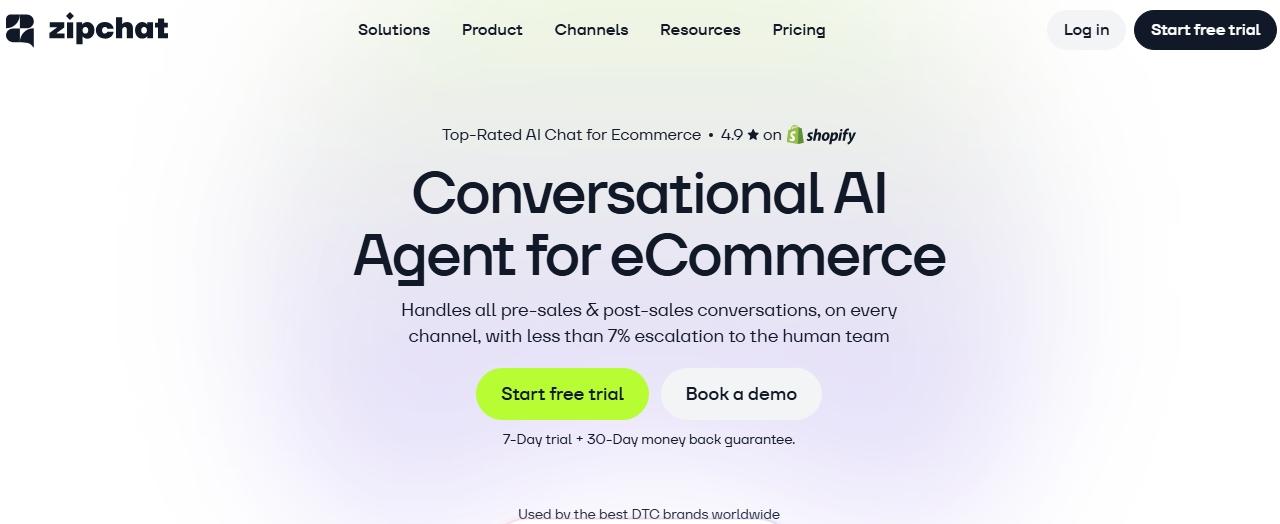
Zipchat is an AI customer-engagement platform for ecommerce that resolves support tickets and sells at the same time. It reads your catalog, policies, and pages, then handles pre-sale questions, order tracking, and post-sale requests in 95+ languages. Of everything here, it’s the one built primarily to recover revenue, where the rest mostly close tickets.
Key features:
- Built for Shopify Certified, plus WooCommerce, Magento, and Wix.
- AI product recommendations and visual product matching from a customer photo.
- Order tracking and one-time Shopify discount code generation in chat.
- WhatsApp, Instagram, Messenger, and email in one inbox.
- Catalog-based setup that goes live in under 30 minutes, no Help Center required first.
Pricing: Starter is $80/month with unlimited team members, and Pro at $300/month adds more replies and training pages, with a 7-day free trial and a 30-day money-back guarantee.
Rating: 4.8/5 on G2 and 4.8/5 on the Shopify App Store.
Pros:
- Fast catalog-based setup.
- Revenue attribution on chats.
- Unlimited team members from Growth up.
Cons:
- It’s built for ecommerce and software support, so it won’t replace a heavy multi-queue agent desk for a non-ecommerce support organization.
Best for: Shopify, WooCommerce, and Magento stores where pre-purchase questions are quietly costing sales. See the Zipchat vs Freshdesk comparison for a direct head-to-head.
2. Re:amaze, best for multi-store, multi-channel messaging
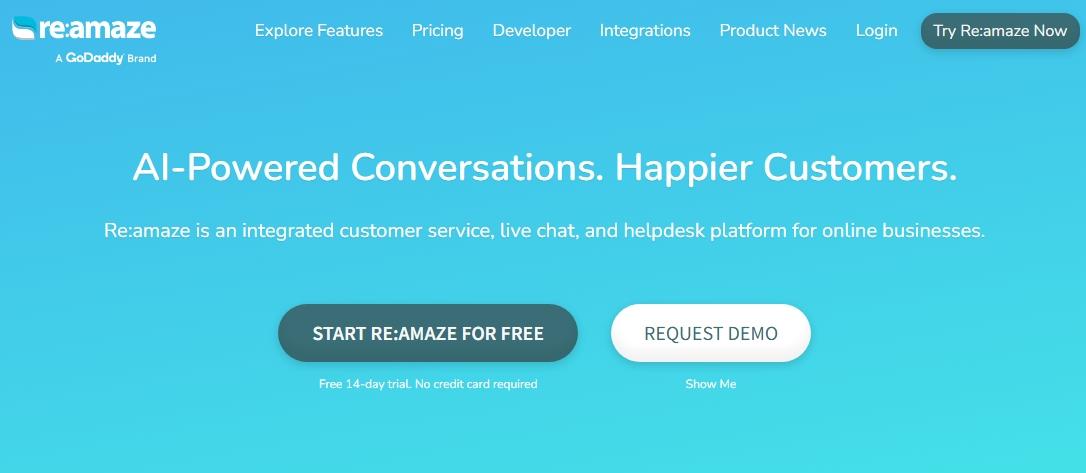
Re:amaze is a helpdesk and messaging platform for websites, stores, and apps, with a native Shopify presence and multi-channel support across chat, email, social, SMS, and VOIP. It’s at its best when you run several stores and want one inbox to hold them all.
Key features:
- Unified inbox for chat, email, social, SMS, and VOIP.
- FAQ knowledge bases and chatbot automations.
- Multi-brand and multi-store support.
- Shopify app with order data.
Pricing: per-seat Basic at $26.10 per user per month, Pro at $44.10, and Plus at $62.10.
Rating: 4.6/5 on G2.
Pros:
- Flexible pricing.
- Strong multi-store fit.
- Broad channels.
Cons:
- AI is lighter than the leaders here.
- The flat plan caps conversations.
Best for: operators running multiple stores or channels who want one affordable inbox.
3. Help Scout, best for simple, human-first email customer support
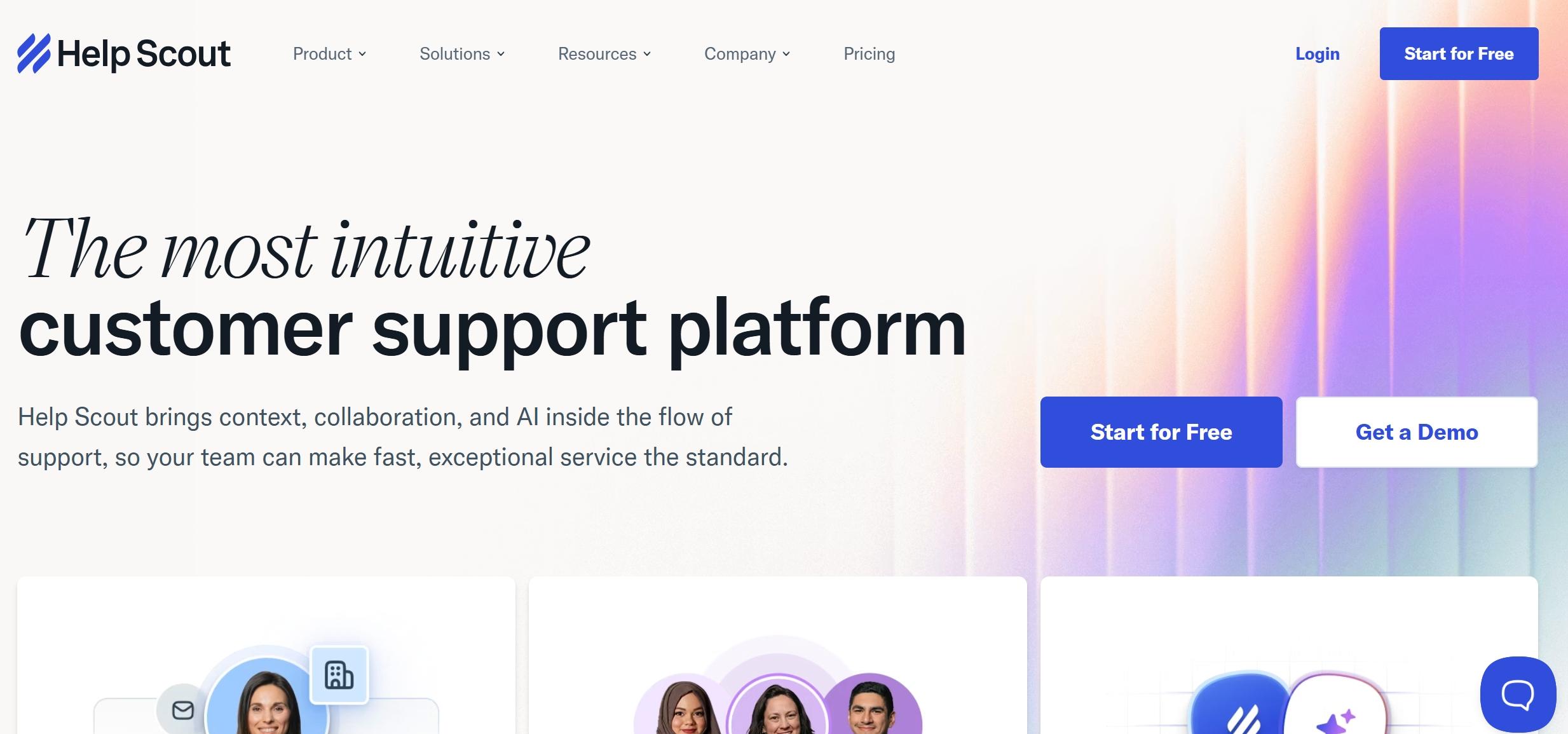
Help Scout is a clean, email-first support tool teams pick for its simplicity. Less heavy automation, more fast human replies with light AI on top. A small team can be live the same day.
Key features:
- Shared inbox with a personal, email-like feel.
- Docs knowledge base and Beacon widget.
- AI Answers and AI drafts.
- Straightforward reporting.
Pricing: Standard from $25 per user per month on annual billing, with a free trial and AI Answers at $0.75 per resolution.
Rating: 4.4/5 on G2.
Pros:
- Easy to adopt.
- Clean inbox.
- Low starting price.
Cons:
- Light ecommerce depth.
- Per-seat jumps as the team grows past Standard.
Best for: small teams that want tidy email support over deep automation or selling.
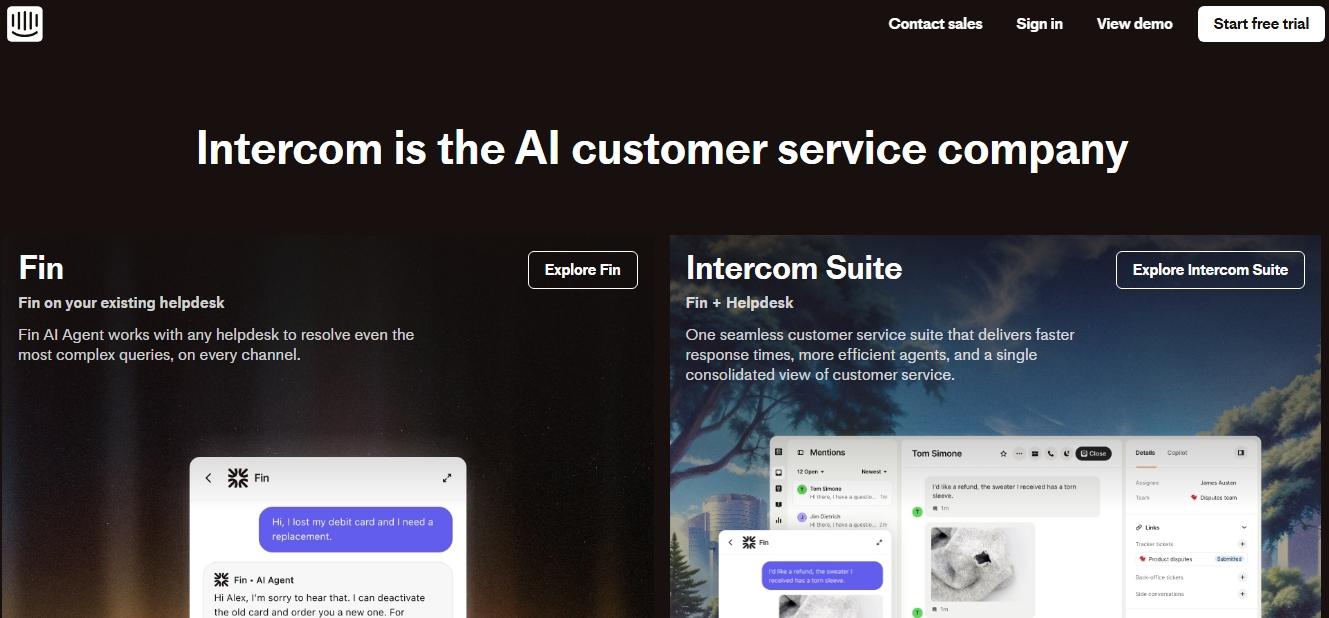
Intercom is a customer-service suite with a strong AI agent, Fin, and a following among product-led teams. It’s capable. It also isn’t ecommerce-native, so order and catalog workflows take setup, and the cost model rhymes with the one you’re leaving.
Key features:
- Fin AI agent with high deflection on well-documented topics.
- Messenger, email, and help center in one workspace.
- Workflow automation on higher tiers.
- Large app marketplace.
Pricing: Intercom’s Essential plan costs $19 per seat per month, rising to $85 (Advanced) and $132 (Expert), plus Fin at $0.99 per resolution. The seat-plus-resolution stack repeats the per-agent pattern that pushes stores off Freshdesk in the first place.
Rating: 4.5/5 on G2.
Pros:
- Excellent AI agent.
- Mature platform.
- Strong automation.
Cons:
- Costs get unpredictable at volume.
- It’s built for product-led support more than storefront selling.
Best for: product-led and hybrid teams that value Fin and don’t need ecommerce-native selling.
5. Gorgias, best for Shopify-native ticket routing
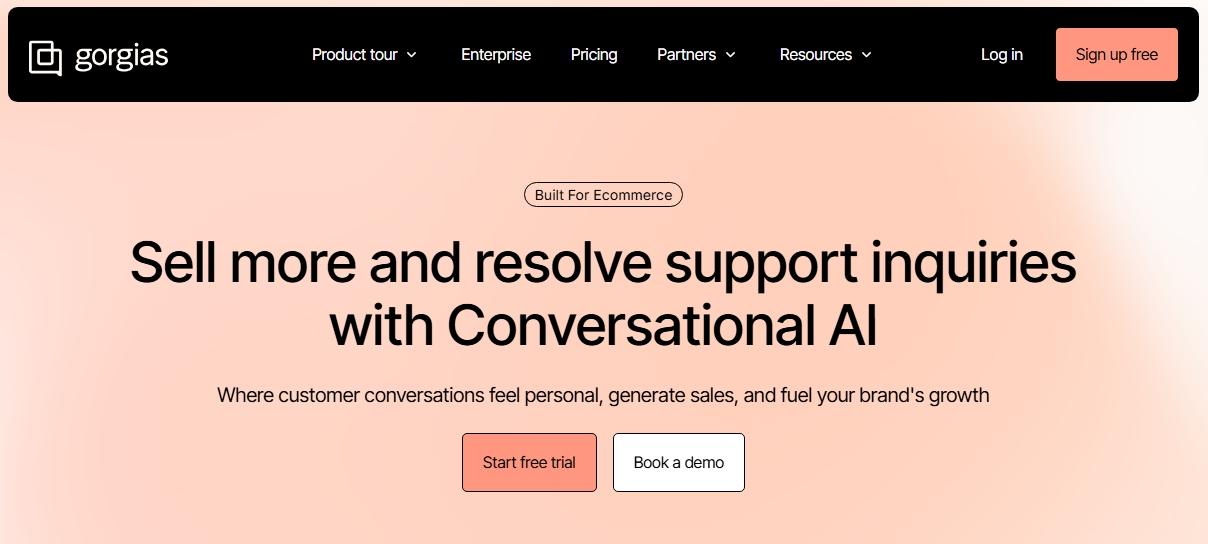
Gorgias is a Shopify-native helpdesk with deep order actions inside the ticket view. It’s a real ecommerce tool, not a general desk retrofitted for stores. The trade-off is billing: ticket-based tiers plus AI resolution fees can stack, and it leans on deflection more than pre-purchase selling.
Key features:
- Native Shopify refunds and order edits inside the ticket.
- Rules and macros for routing.
- AI Agent for automated resolutions.
- Social and chat channels.
Pricing: Starter around $10/month for 50 tickets (without AI agent), Basic $50, Pro from $300/month on annual billing for 2,000 tickets. AI Agent adds roughly $0.90 to $1.00 per resolved conversation, and one resolved ticket can count against both AI usage and your ticket cap.
Rating: 4.6/5 on G2.
Pros:
- Deep Shopify actions.
- Mature routing.
- Real ecommerce focus.
Cons:
- Ticket caps with overage fees.
- AI resolutions that can bill twice.
Best for: Shopify stores that want native ticket actions and accept usage-based billing.
6. Zendesk, best for enterprise support operations
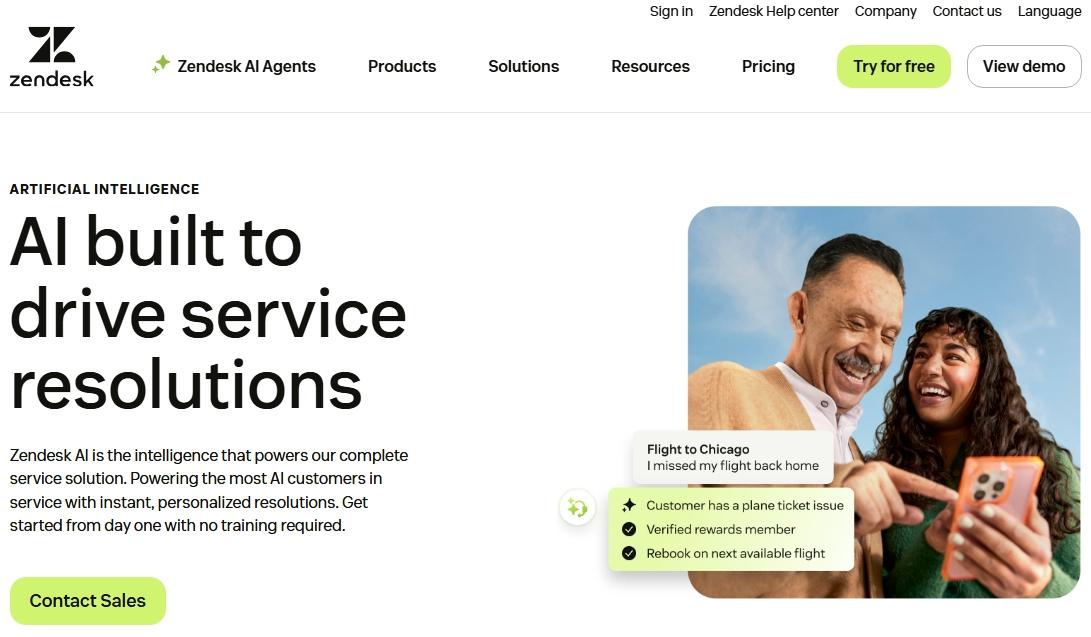
Zendesk is the enterprise end of the category: powerful, mature, and priced for it. If you’re leaving Freshdesk to escape complexity and cost, Zendesk isn’t the escape. If you’re leaving because you’ve outgrown Freshdesk’s depth, it’s the obvious step up.
Key features:
- Multichannel agent workspace with strong routing and SLAs.
- AI agents for automated resolution.
- Deep reporting through Explore.
- Large app marketplace.
Pricing: Support Team from $19 per agent per month, Suite Team at $55 per agent per month, and Suite Professional at $115 per agent on annual billing. AI agents billed roughly $1.50 to $2.00 per automated resolution. Seats scale with headcount, and resolution overages auto-bill.
Rating: 4.3/5 on G2.
Pros:
- Enterprise-grade routing.
- Deep reporting.
- Broad integrations.
Cons:
- Seat-plus-resolution pricing climbs fast.
- It’s not ecommerce-native.
Best for: large, multi-brand support orgs with strict SLAs, not lean stores watching the bill.
7. Tidio, best for SMB live chat plus basic AI
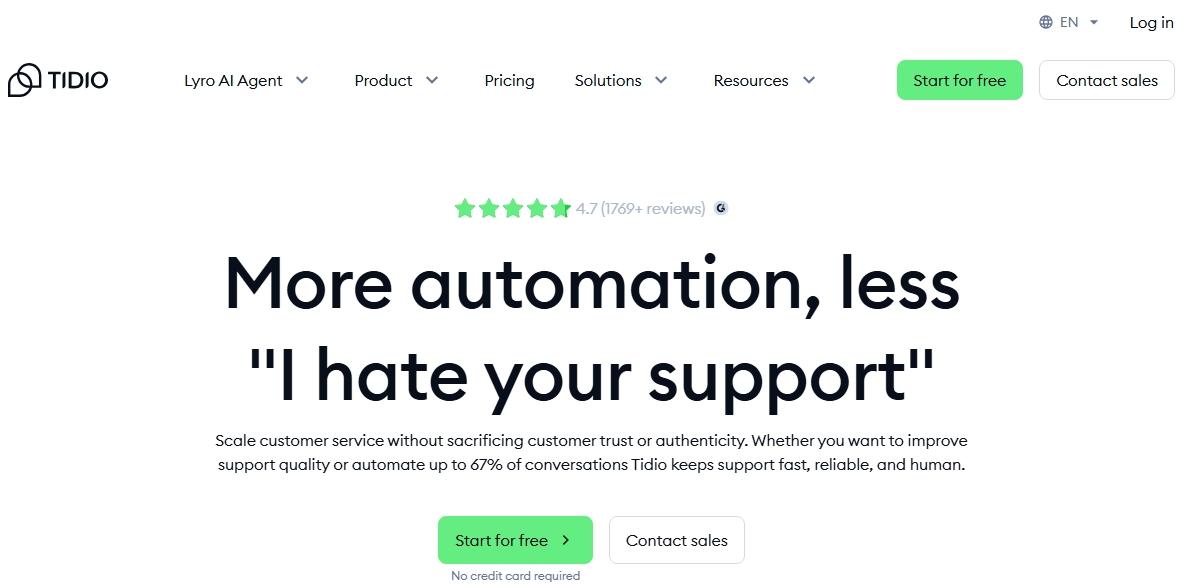
Tidio is a live chat and chatbot tool aimed at small businesses, with the Lyro AI assistant sold as an add-on. It’s approachable and cheap to start. The plan structure is where costs get lumpy.
Key features:
- Live chat with a simple builder.
- Lyro AI for automated conversations.
- Flows automation.
- Free tier for getting started.
Pricing: free plan, then Starter at $24.17/month and Growth at $49.17/month, with a large gap to Plus at $749/month. Lyro AI is a paid add-on from about $32.50/month.
Rating: 4.7/5 on G2.
Pros:
- Easy setup.
- Low entry price.
- Free tier.
Cons:
- Steep jump between tiers.
- AI billed separately.
- Pressure to upgrade near usage limits.
Best for: small stores that want live chat with light AI and a low starting cost.
Freshdesk alternatives pricing and total cost compared
The cheapest option depends on your model. Customer support tools bill in three ways: per seat, per ticket, or per reply. Per-seat tools like Freshdesk get more expensive with every hire, before you even add the AI. A reply-based plan holds a flat monthly cost no matter how many tickets the AI resolves or how big your team gets.
Picture a growing store with 4 support agents. On Freshdesk Pro at $55 per agent, that’s $220/month in seats alone, and Freddy AI sits on top as a paid add-on. Hire a fifth agent, and it’s $275. A sixth, $330. The number climbs with your team, not with the work the AI does.
| | |
|---|
| Cost line | Freshdesk (per-seat) | Zipchat (reply-based plan) |
| Seats (4 agents) | 4 x $55 = $220/month | Included (unlimited team members on every plan) |
| AI automation | Freddy AI add-on, billed separately | 3,000 AI replies included |
| Plan fee | Seats above + AI add-on | $300/month (Pro) |
| Cost when you add agents | Rises with every hire | Flat, regardless of team size |
Use this formula to compare the two as your team grows:
Freshdesk monthly = (agents x seat price) + AI add-on
  4 agents:  4 x $55 = $220  + Freddy AI add-on
  6 agents:  6 x $55 = $330  + Freddy AI add-on
  8 agents:  8 x $55 = $440  + Freddy AI add-on

Zipchat monthly = flat plan fee (unlimited team members)
  4 agents:  $300 (Pro)
  6 agents:  $300 (Pro)
  8 agents:  $300 (Pro)
The point isn’t that Freshdesk is expensive on day one. It’s cheap on day one. The point is direction: a per-seat model ties your support cost to headcount, so scaling the team scales the bill. A non-seat plan breaks that link. And a tool that answers pre-purchase questions recovers sales a ticket-only helpdesk never records.
Best Freshdesk alternative for Shopify
For Shopify, pick a tool with a native app, order lookup, in-chat discount creation, and catalog-based setup. Zipchat is Built for Shopify certified, creates one-time discount codes, and tracks orders inside the chat, with no middleware.
Native Shopify support matters because it kills the integration layer. The AI should read your catalog, pull up an order from an email and order number, and mint a discount to save a wavering buyer, all without a developer. On Shopify Plus, a checkout-page presence lets the AI answer during the final step, where hesitation quietly kills conversions.
Re:amaze also ships a native Shopify app with order data, and it’s strong. The difference is intent. That tool routes and resolves tickets. Zipchat adds a pre-purchase layer that recommends products and recovers carts on top of resolving support. If you want the wider setup picture, see the Shopify integration details.
How to choose a Freshdesk alternative
Match the tool to your actual cost driver and the job you need done, not to a feature checklist.
| | |
|---|
| If your situation is… | Then prioritize… | Best fit here |
| You need IT service management | Dedicated ITSM, not an ecommerce desk | That’s Freshservice territory, not this list |
| You run a store and pay per agent | Ecommerce-native automation on a non-seat model | Zipchat |
| Pre-sale questions leak revenue | An AI that answers and recommends products | Zipchat |
| You run multiple stores or channels | A unified multi-store inbox | Re:amaze |
| You want simple, human-first email support | A clean shared inbox with light AI | Help Scout |
For a broader look across the category, see our guide to ecommerce support automation.
When Freshdesk is still the right choice
Keep Freshdesk when your needs point toward IT and internal service, not storefront selling. Past a few thresholds, staying put beats switching.
Freshdesk still fits teams that genuinely need combined helpdesk plus ITSM, especially if you’re already running or evaluating Freshservice. Heavy internal-ticketing use across departments is another sign to stay. And if you’ve built deep automations, SLAs, and reporting inside the Freshworks suite, the switching cost can outweigh the savings.
Here’s the rough threshold. If support is a multi-team operation with strict internal SLAs and you’re invested in the Freshworks stack, the depth earns its keep. If support is mostly ecommerce tickets and pre-sale questions from shoppers, an ecommerce-first tool resolves more and costs less. Read our full Freshdesk review for the complete picture on where it wins.
How to migrate off Freshdesk
Run the new tool alongside Freshdesk before you cut over. A two-week overlap catches the gaps with zero customer impact.
- Export your tickets, canned responses, and knowledge base articles from Freshdesk.
- Connect your store: catalog, order lookup, and policies to the new tool.
- Rebuild your top 20 canned responses as AI training or saved replies.
- Run both tools in parallel for two weeks on a slice of traffic.
- Migrate channels one at a time: chat, then email, then social.
- Redirect your support inbox and widget to the new tool.
- Turn off Freshdesk seats once volume and quality hold steady.
A catalog-trained assistant can start resolving tickets during the overlap, no mature Help Center required first.
FAQ
What is the best Freshdesk alternative for ecommerce?
Zipchat is the best pick because it resolves tickets and sells, with Built for Shopify support and no per-agent fee from Growth up. Re:amaze is a strong runner-up for operators running several stores from one inbox.
Is there a cheaper alternative to Freshdesk?
Yes. Freshdesk’s per-seat pricing rises with every hire, and useful AI sits in paid add-ons. Reply-based tools like Zipchat start from $64/month with AI replies included, and Pro at $240/month covers unlimited team members with no per-agent charge, both billed annually.
Why are ecommerce teams leaving Freshdesk?
Per-agent seat billing that scales with headcount, and Freshworks’ shift toward ITSM (Freshservice), which leaves store-specific workflows underweighted.
What is the best Freshdesk alternative for Shopify?
Zipchat, which is Built for Shopify certified. Native order lookup and in-chat discount creation let the AI resolve tickets and convert shoppers without middleware or a developer.
Is Freshdesk good for a small Shopify store?
Its free tier suits a lean team handling basic email tickets. Once you need real automation or pre-sale selling, an ecommerce-native tool does more per dollar than Freshdesk plus AI add-ons.
Verdict
For ecommerce and Shopify, Zipchat is the top Freshdesk alternative because it resolves tickets and recovers revenue on a plan with unlimited team members, not per-agent seats plus AI add-ons. Re:amaze is the runner-up for operators who want one affordable inbox across several stores and channels.
If pre-purchase questions are costing you sales, start a 7-day free trial and see how many chats turn into orders.