
Most stores don’t leave Zendesk because it can’t answer tickets. They leave because the bill grows faster than the value, and because the AI only starts working after months of setup. This list scores each Zendesk alternative for ecommerce businesses on two axes competitors ignore: total switching cost, and the revenue a pre-purchase AI layer recovers that a pure helpdesk never touches.
TL;DR
A Zendesk alternative is a support or customer service platform that resolves tickets and often sells, without Zendesk’s per-agent seats plus per-resolution AI billing. This guide compares 8 alternatives for ecommerce and Shopify on cost model, ecommerce fit, and revenue lift. Top pick: Zipchat, for turning pre-purchase questions into sales.
How we picked these Zendesk alternatives
We evaluated each tool on six things that matter to an ecommerce buyer, not a generic help desk shopper. Ecommerce fit came first: native Shopify, WooCommerce, or Magento support, order lookup, and product knowledge.
Then pricing model (seat, reply, or per-resolution), AI resolution quality, setup time, and revenue impact beyond deflection. Ecommerce support software should also include integrations with marketing tools and review platforms, so we weighed each tool’s connector library as part of ecommerce fit.
Ratings are sourced from G2 and Capterra, accessed July 7, 2026. Every price is marked “as of” its check date, because seat and AI-resolution pricing changed across the category in early 2026. Where a tool is strong, we say so. Where it’s weak, we say that too, including for Zipchat.
Zendesk alternatives compared at a glance
| | | | | |
|---|
| Tool | Best for | Pricing model and starting price | Ecommerce / Shopify fit | AI resolution approach | G2 rating |
| 1. Zipchat | Turning pre-purchase questions into revenue | Reply-based plan, from $64/month, billed annually | Built for Shopify; WooCommerce, Magento | AI replies included in plan, no per-resolution fee | 4.8/5 |
| 2. Richpanel | AI-native ecommerce helpdesk | Custom pricing | Strong (DTC-focused) | AI Employees in base Pro tier | 4.7/5 |
| 3. Intercom | Product-led teams wanting Fin AI | Seat + per-resolution, seats from $19/seat/month | Moderate (not ecommerce-native) | Fin at $0.99 per resolution | 4.5/5 |
| 4. Freshdesk | Affordable multichannel ticketing | Per-agent seat, from $19/agent/month | Moderate (via integrations) | Freddy AI add-ons | 4.4/5 |
| 5. Re:amaze | Multi-store, multi-channel messaging | Per-seat or flat, from $26.10/user/month | Strong (Shopify app) | AI responses and FAQ automation | 4.6/5 |
| 6. Help Scout | Simple, human-first email support | Per-user + AI add-on, from $25/user/month | Light (email-led) | AI Answers at $0.75 per resolution | 4.4/5 |
| 7. Gorgias | Shopify-native ticket routing | Ticket-based, from $10/month | Strong (Shopify-native) | AI Agent at ~$0.90 to $1.00 per resolution | 4.6/5 |
| 8. Tidio | SMB live chat plus basic AI | Tiered, free plan then from $24.17/month | Light to moderate | Lyro AI as paid add-on | 4.7/5 |
Why ecommerce brands switch from Zendesk
Three costs push stores off Zendesk: per-agent seats that scale with headcount, per-resolution AI billing that auto-charges overages, and an AI that needs months of data before it performs.
Zendesk Suite Professional runs $115 per agent per month on annual billing, and Suite Team starts at $19 per agent, as of July 7, 2026. Every new hire adds a seat, so your cost tracks your team size, not the value the tool delivers.
On top of seats, Zendesk’s AI agents bill per automated resolution once you pass a small monthly allotment. Per-resolution fees run roughly $1.50 to $2.00, and overages auto-bill without prior warning. A 20-agent team resolving 3,000 tickets a month can spend $6,000 to $8,000 all-in.
Then there’s the cold start. Zendesk’s automation needs a mature Help Center and a body of historical resolved tickets before it deflects reliably. New stores get little value on day one, and the reporting lag on automated-resolution attribution makes the bill hard to predict early.
Zendesk still scores 4.3 out of 5 on G2 across 6,707 reviews, so this isn’t a quality problem. It’s a fit and cost problem for stores. For the full picture, read our full Zendesk review.
The 8 best Zendesk alternatives
1. Zipchat, best for turning pre-purchase questions into revenue
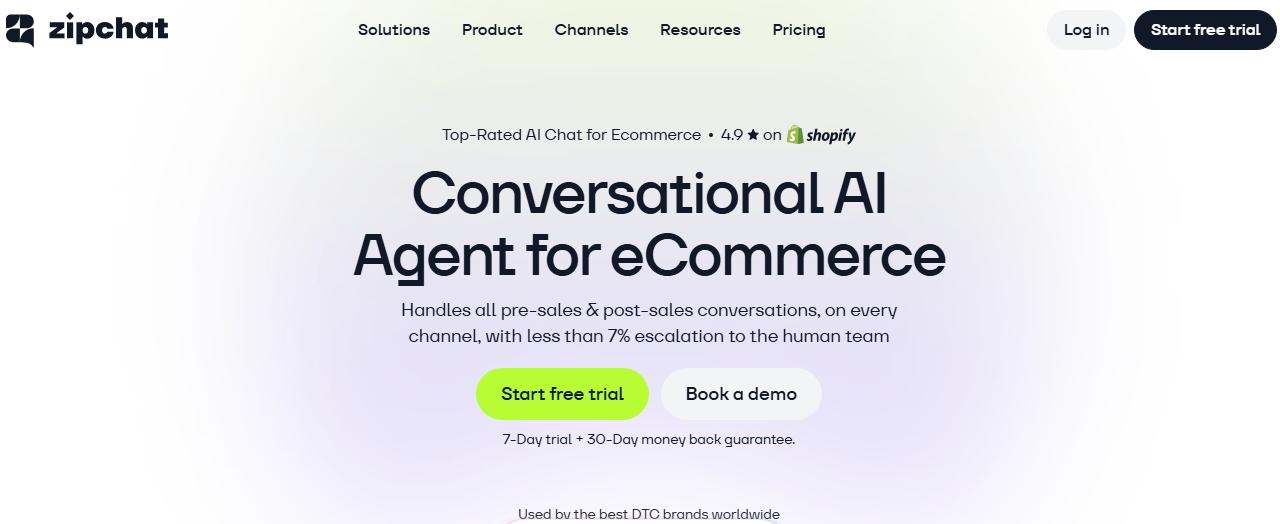
Zipchat is an AI customer-engagement platform for ecommerce that answers support tickets and sells at the same time. It reads your catalog, policies, and pages, then handles pre-sale questions, order tracking, and post-sale support requests in 95+ languages. It’s the only tool here built primarily to recover revenue, not only to deflect tickets.
Key features:
- Built for Shopify certified, plus WooCommerce, Magento, and Wix.
- AI product recommendations and visual product matching from a customer photo.
- Order tracking and one-time Shopify discount code generation in chat.
- WhatsApp, Instagram, Messenger, and email in one inbox.
- Catalog-based setup that goes live in under 30 minutes, no Help Center required first.
Pricing: Starter is $64/month billed annually ($80 monthly), with a 7-day free trial and a 30-day money-back guarantee. AI replies are included in each plan, so there’s no separate per-resolution fee.
Rating: 4.8/5 on G2 and 4.8/5 on the Shopify App Store.
Pros:
- Fast catalog-based setup.
- Revenue attribution on chats.
- Multilingual support.
Cons:
- Built for ecommerce and software support.
- Not as a heavy multi-department ITSM or enterprise ticketing backbone.
Best for: Shopify, WooCommerce, and Magento stores where pre-purchase questions are costing sales.
2. Richpanel, best AI-native e-commerce helpdesk
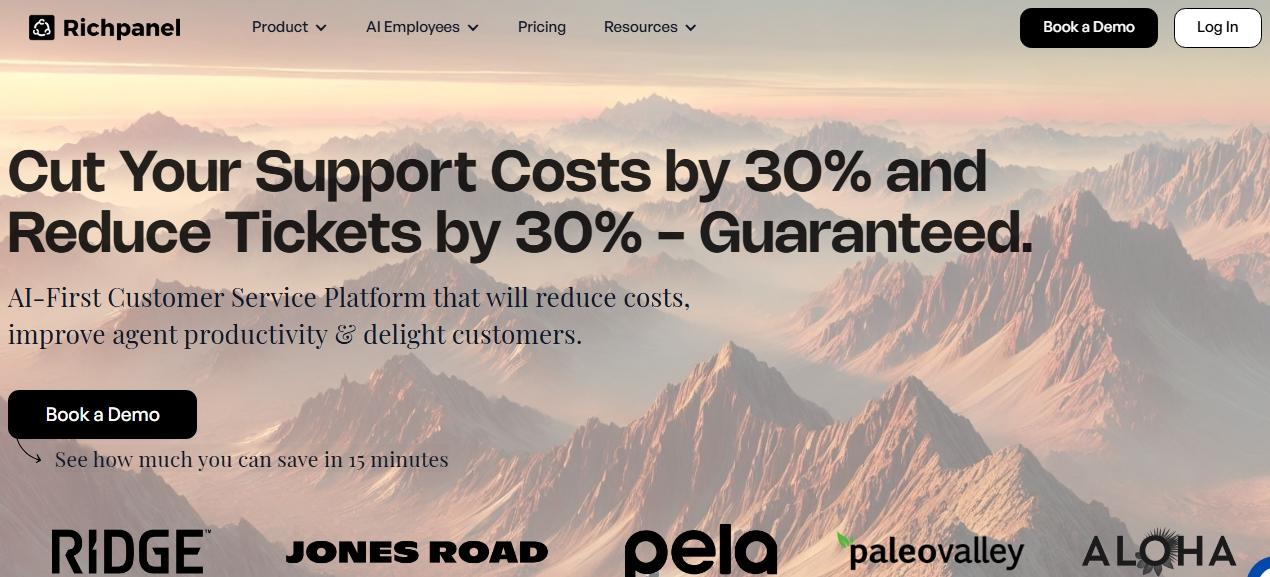
Richpanel is an AI-native helpdesk built for DTC and ecommerce brands, combining an agent workspace with AI “Employees” that resolve tickets. It gives a small team one place to manage customer interactions, putting order context next to every conversation to speed up human replies.
Key features:
- AI Employees included in the base Pro tier, not gated behind enterprise.
- Self-service portal for returns, order status, and common requests.
- Multichannel inbox with ecommerce macros.
- Native Shopify order actions.
Pricing: Custom-based.
Rating: 4.7/5 on G2.
Pros:
- Strong ecommerce fit.
- AI in the base paid tier.
- Clean returns flow.
Cons:
- The split agent-plus-portal billing makes the true monthly cost harder to predict.
Best for: DTC brands that want AI resolution and a self-service portal in one ecommerce-focused tool.
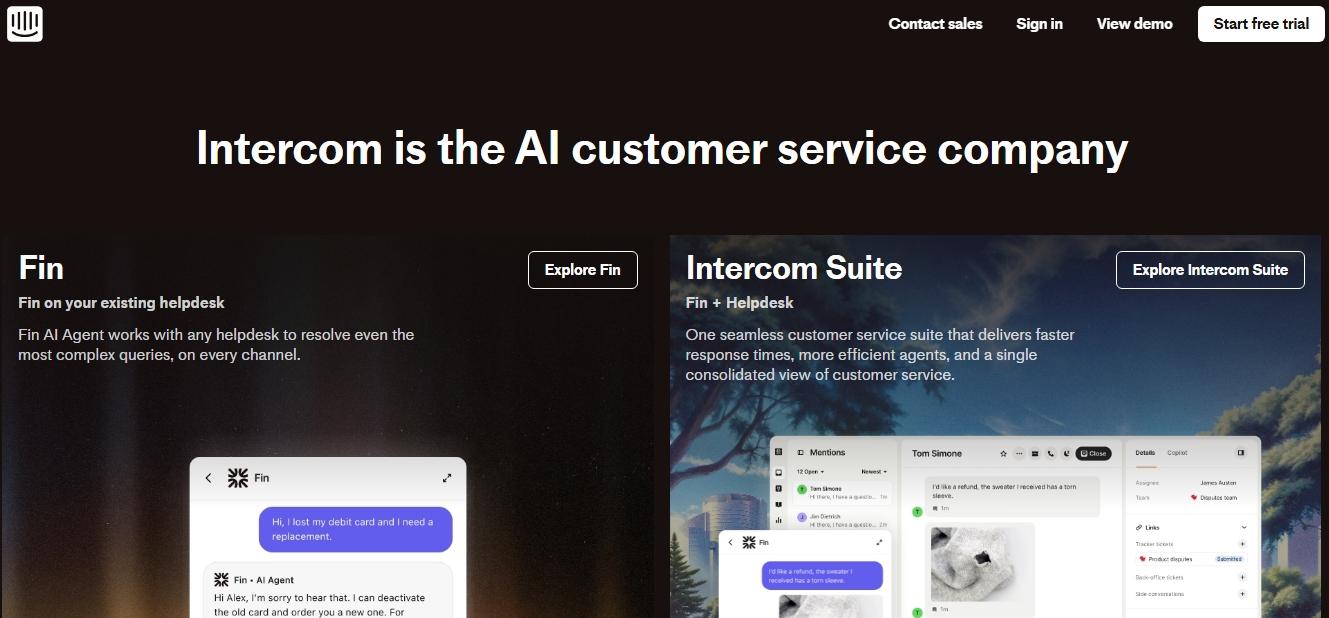
Intercom is a customer-service suite with a strong AI agent, Fin, popular with product-led teams. It’s powerful, though it isn’t ecommerce-native, so order and catalog workflows need setup.
Key features:
- Fin AI agent with high deflection on well-documented topics.
- Messenger, email, and help center in one workspace.
- Workflow automation on higher tiers.
- Large app marketplace.
Pricing: seats from $19 per seat per month on annual billing (Essential), rising to $85 (Advanced) and $132 (Expert), plus Fin at $0.99 per resolution. The seat-plus-resolution stack mirrors the Zendesk cost pattern.
Rating: 4.5/5 on G2 across 3,200+ reviews.
Pros:
- Excellent AI agent.
- Mature platform.
- Strong automation.
Cons:
- Costs get unpredictable at volume.
- Built for product-led support more than storefront selling.
Best for: product-led and hybrid teams that value Fin and don’t need ecommerce-native selling.
4. Freshdesk, best affordable multichannel ticketing
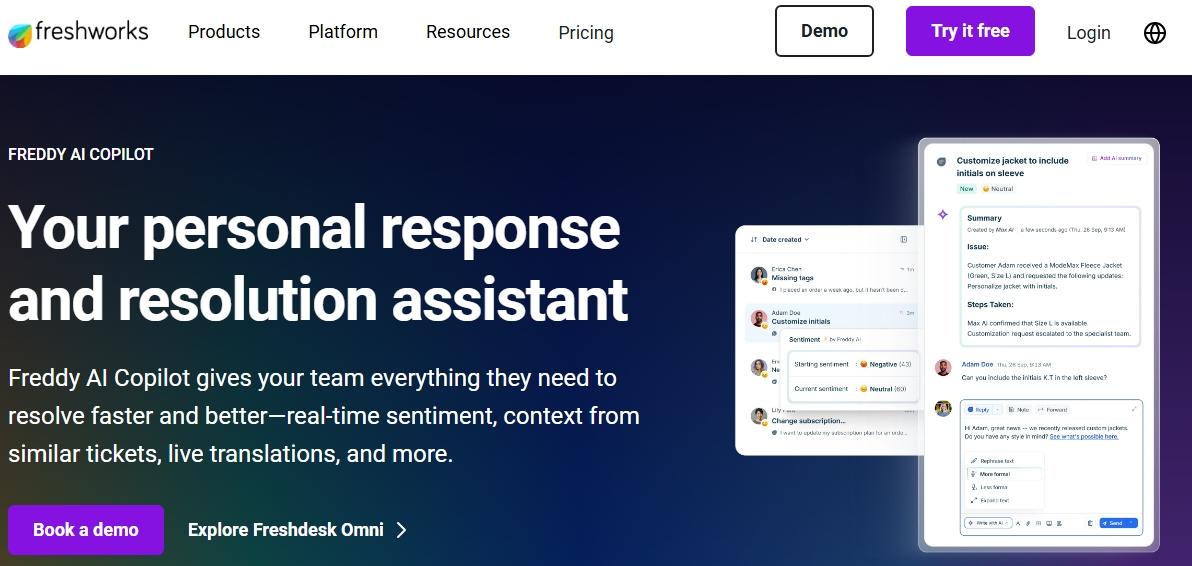
Freshdesk is a well-known Zendesk competitor with a lower entry price and a familiar ticketing model. It’s a solid general help desk, though ecommerce features come through integrations rather than native depth. Freshdesk offers a free tier that suits small ecommerce teams, which makes it an easy place to start before you commit to a paid plan.
Key features:
- Multichannel ticketing across email, chat, and social.
- Freddy AI copilot and AI agent as add-ons.
- Freddy AI can auto-solve queries in over 20 languages.
- Automations and SLA management.
- Large integration library.
Pricing: Free plan available, paid plans from $19 per agent per month (Growth), Pro at $55, and Enterprise at $89. The AI features sit in paid add-ons.
Rating: 4.4/5 on G2 across 3,700+ reviews.
Pros:
- Affordable seats.
- Mature ticketing.
- Wide integrations.
Cons:
- Seat-based.
- Useful AI lands in add-ons that raise the real price.
Best for: teams that want classic ticketing at a lower seat price than Zendesk.
5. Re:amaze, best for multi-store, multi-channel messaging
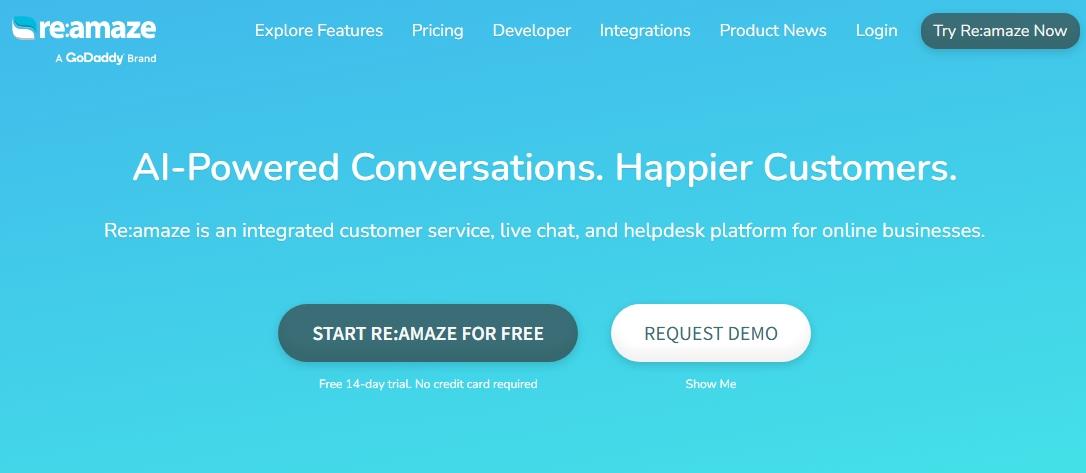
Re:amaze is a helpdesk and messaging platform built for websites, stores, and apps, with a native Shopify presence and multichannel support across chat, email, social, and SMS. It shines when you run several stores or channels and want one inbox.
Key features:
- Unified inbox for chat, email, social, SMS, and VOIP.
- FAQ knowledge bases and chatbot automations.
- Multi-brand and multi-store support.
- Shopify app with order data.
Pricing: Starts from $26.10 per user per month (Basic), Pro at $44.10, and Plus at $62.10.
Rating: 4.6/5 on G2 across 140 reviews.
Pros:
- Flexible pricing.
- Strong multi-store fit.
- Broad channels.
Cons:
- AI is lighter.
- The flat plan caps conversations.
Best for: operators running multiple stores or channels who want one affordable inbox.
6. Help Scout, best for simple, human-first email support
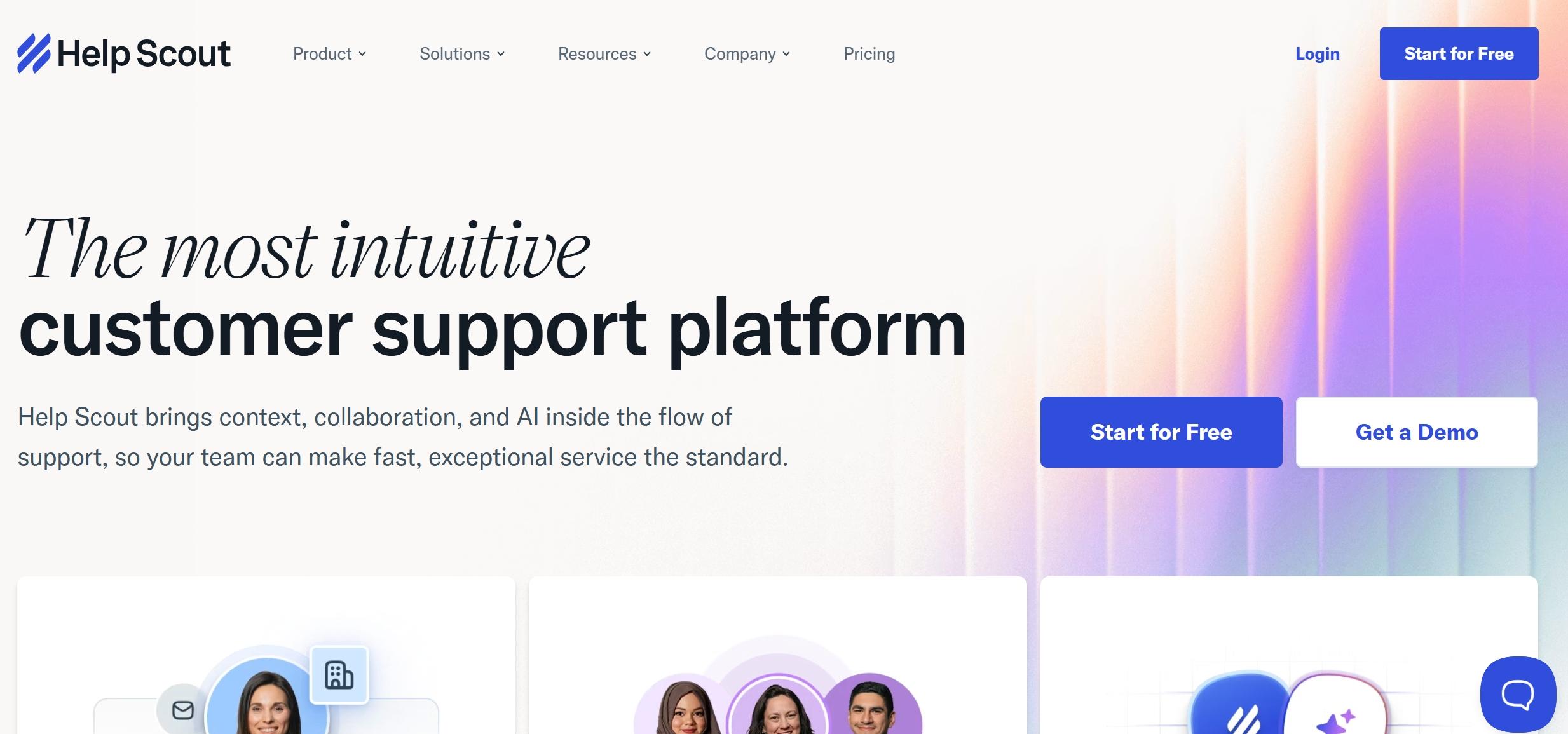
Help Scout is a clean, email-first support tool that teams pick for its simplicity. It’s less about heavy automation and more about fast, human replies with light AI on top.
Key features:
- Shared inbox with a personal, email-like feel.
- Docs knowledge base and Beacon widget.
- AI Answers and AI drafts.
- Straightforward reporting.
Pricing: Standard from $25 per user per month, with a free tier and AI Answers at $0.75 per resolution.
Rating: 4.4/5 on G2.
Pros:
- Easy to adopt.
- Clean inbox.
- Low starting price.
Cons:
- Light ecommerce depth.
- Per-seat jumps as the team grows past its Standard tier.
Best for: small teams that want tidy email support over deep automation or selling.
7. Gorgias, best for Shopify-native ticket routing
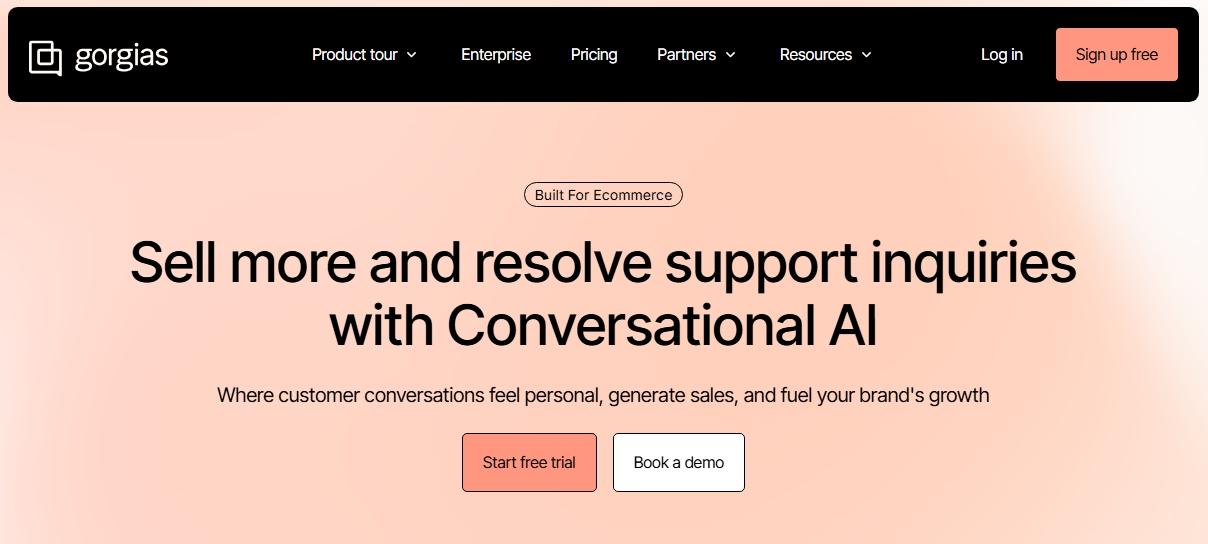
Gorgias is a Shopify-native helpdesk with deep order actions inside the ticket view. It’s capable, but its ticket-based billing and AI resolution fees can stack up, and it leans on deflection rather than pre-purchase selling.
Key features:
- Native Shopify, refunds, and order edits in the ticket.
- Rules and macros for routing.
- AI Agent for automated resolutions.
- Social and chat channels.
Pricing: Starter around $10/month for 50 tickets, Basic $50, Pro $300/month for 2,000 tickets, and Advanced $750/month for 5000 tickets. AI Agent adds roughly $0.90 to $1.00 per resolved conversation, and a resolved ticket can count against both AI usage and your ticket limit.
Rating: 4.6/5 on G2.
Pros:
- Deep Shopify actions.
- Mature routing.
Cons:
- Ticket caps with overage fees.
- AI resolutions that can be billed twice.
Best for: Shopify stores that want native ticket actions and accept usage-based billing.
8. Tidio, best for SMB live chat plus basic AI
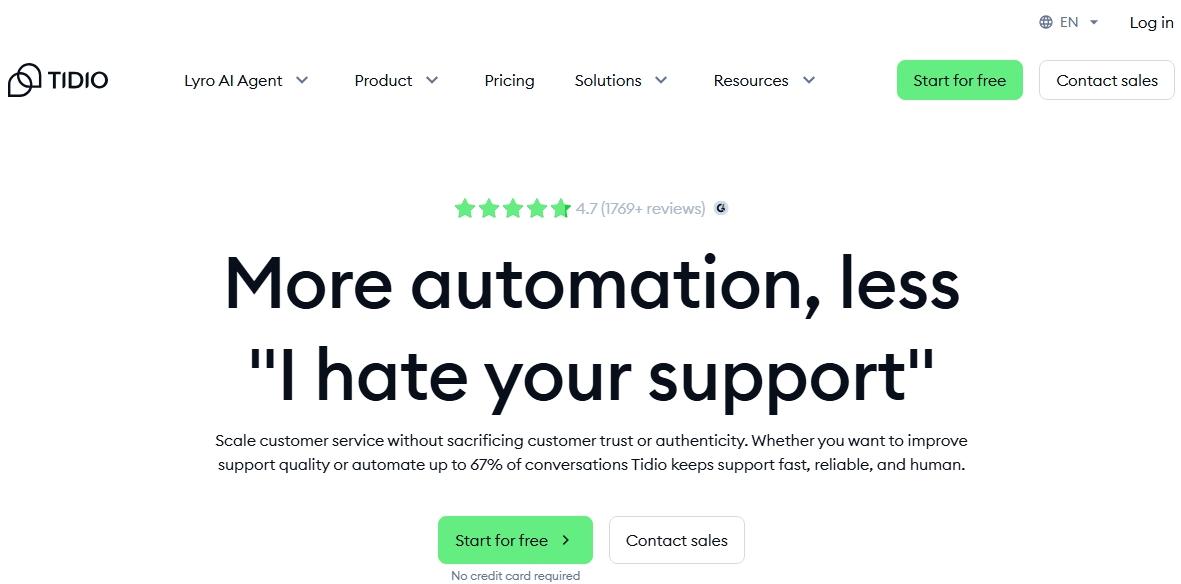
Tidio is a live chat and chatbot tool aimed at small businesses, with the Lyro AI assistant sold as an add-on. It’s approachable, but the plan structure and AI pricing make scaling costs jump.
Key features:
- Live chat with a simple builder.
- Lyro AI for automated conversations.
- Flows automation.
- Free tier for getting started.
Pricing: free plan available, then Starter at $24.17/month and Growth at $49.17/month, with a large gap to Plus at $749/month. Lyro AI is a paid add-on from about $32.50/month.
Rating: 4.7/5 on G2 across 1,906 reviews.
Pros:
- Easy setup.
- Low entry price.
- Free tier.
Cons:
- Steep jump between tiers.
- AI billed separately.
- Forced upgrades near usage limits.
Best for: small stores that want live chat with light AI and a low starting cost.
Zendesk alternatives pricing and total cost compared
The cheapest Zendesk alternative depends on your model. Seat-plus-resolution tools (Zendesk, Intercom) get more expensive as tickets and headcount rise. Reply-based tools (Zipchat) hold a flat monthly cost regardless of how many tickets the AI resolves.
Here’s a real total-cost scenario. Assume a 5-agent store handling 2,000 tickets a month, with AI resolving 40% of them (800 resolutions). A small monthly allotment of resolutions is included before overage billing starts, so only about 750 of those 800 are billable on Zendesk.
| | |
|---|
| Cost line | Zendesk (seat + resolution) | Zipchat (reply-based plan) |
| Seats | 5 x $115 = $575/month | Included (unlimited team members on Pro) |
| AI resolutions | ~750 billable x $1.50 = ~$1,125/month | Included in plan |
| Plan fee | Included above | $300/month (Pro, 3,000 AI replies) |
| Estimated total | ~$1,700/month | $300/month |
Use this formula to compare any two tools on the same basis:
Cost per resolution = Total monthly tool cost / resolutions handled

Zendesk:  $1,700 / 2,000 = $0.85 per resolution
Zipchat:  $300  / 2,000 = $0.15 per resolution
The gap isn’t a rounding error. Seat-plus-resolution pricing grows with both your team and your ticket volume, while a reply-based plan decouples cost from resolution count. On top of that, an AI that answers pre-purchase questions recovers sales a pure helpdesk never counts.
Best Zendesk alternative for Shopify stores
For Shopify, prioritize a tool with a native app, order lookup, in-chat discount creation, and checkout-page presence. Zipchat is Built for Shopify certified and creates one-time discount codes and tracks orders inside the chat.
Native Shopify support matters because it removes middleware. The AI should read your catalog, look up an order with an email and order number, and generate a discount to close a hesitant buyer, without a developer. On Shopify Plus, a checkout-page presence lets the AI answer during the final step, where doubt kills conversions.
Gorgias and Re:amaze also offer native Shopify apps with order data. The difference is intent: those tools route and resolve tickets, while Zipchat adds a pre-purchase layer that recommends products and recovers carts. For a wider view of the category, see the best AI chatbot for Shopify.
How to choose a Zendesk alternative
Don’t pick on deflection alone. Match the tool to the cost driver and the job you need done.
| | |
|---|
| If your situation is… | Then prioritize… | Best fit here |
| Pre-purchase questions cost you sales | An AI that answers and recommends products | Zipchat |
| Seat count is your main cost driver | A reply or resolution model, not per-agent seats | Zipchat, Help Scout |
| You run multiple stores or channels | A unified multi-store inbox | Re:amaze, Richpanel |
| You want AI resolution in the base tier | Included AI, not add-ons | Richpanel, Zipchat |
| You run heavy multi-department internal ticketing | Enterprise ITSM depth | Keep enterprise ticketing (see below) |
When Zendesk is still the right choice
Keep Zendesk when your needs are enterprise support operations, not storefront selling. Above certain thresholds, its depth earns its cost.
Zendesk still wins for large, multi-brand support organizations with complex SLA and routing rules. It fits teams with deep ITSM needs, advanced workforce management, and heavy internal-ticketing workflows across departments. If you’ve already invested in Sunshine or Explore and rely on that reporting, switching costs may outweigh savings.
The threshold is roughly this: if support is a multi-team operation with strict SLAs and internal routing, enterprise ticketing is worth it. If support is mostly ecommerce tickets and pre-sale questions, an ecommerce-first alternative resolves more for less.
Keeping Zendesk doesn’t mean choosing between the two. Zipchat integrates with Zendesk, so you can keep your existing ticketing backbone for complex support cases while Zipchat handles pre-sale questions and product recommendations on the storefront, then hands off any conversation that needs a human agent.
How to switch off Zendesk without downtime
Run the new tool in parallel before you cut over. A two-week overlap catches gaps with zero customer impact.
- Export your macros, saved replies, and Help Center articles from Zendesk.
- Connect your store: catalog, order lookup, and policies to the new tool.
- Import articles and rebuild your top 20 macros as AI training or saved replies.
- Run both tools in parallel for two weeks on a subset of traffic.
- Migrate channels one at a time: chat, then email, then social.
- Redirect your support inbox and widget to the new tool.
- Turn off Zendesk seats once volume and quality hold steady.
Want the AI to start resolving tickets during the overlap? A catalog-trained assistant can resolve support tickets automatically from day one, no mature Help Center required.
FAQ
What is the best Zendesk alternative for ecommerce?
Zipchat is the best pick for ecommerce because it resolves tickets and sells, with Built for Shopify support. Richpanel is the runner-up as an AI-native ecommerce helpdesk.
Is there a cheaper alternative to Zendesk?
Yes. Zendesk’s seat-plus-resolution pricing scales with team size and ticket volume, while reply-based tools like Zipchat start from $64/mo, billed annually, with AI replies included and no per-resolution fee.
Why do ecommerce brands leave Zendesk?
Three reasons: per-agent seats that scale with headcount, per-resolution AI billing that auto-charges overages, and an AI that needs a mature Help Center and history before it deflects well.
What is the best Zendesk alternative for Shopify?
Zipchat, which is Built for Shopify certified. Native order lookup and in-chat discount creation let the AI resolve and convert without middleware or a developer.
Can a Zendesk alternative do more than deflect tickets?
Yes. A pre-purchase AI layer answers product questions and recommends items during browsing, recovering sales that a deflection-only helpdesk never measures.
Verdict
For ecommerce and Shopify, Zipchat is the top Zendesk alternative because it resolves tickets and recovers revenue on a flat, reply-based plan, not per-agent seats plus per-resolution fees. Richpanel is the runner-up for stores that want an AI-native helpdesk with a self-service portal.
If pre-purchase questions are costing you sales, start a 7-day free trial and see how many chats turn into orders.