





How it works See how Zipchat reads your code and answers technical questions.
Use Cases
See all use casesIndustries
View all industriesCapabilities
See all capabilitiesUse Cases
See all use casesIndustries
View all industriesCapabilities
See all capabilitiesYour AI agent live in under 1 hour
No code. Trained on your catalog. Converts on every channel.
Start free trial Book a demoThis article was written by Elogy Team of Elogy and contributed to the Zipchat blog as part of our partnership program. First published: March 2, 2026.
Two fulfillment partners may appear similar on the surface, offering the same integrations, automation tools, and delivery promises. Yet beneath that parity often sit very different operating models.
As e-commerce matures, structural choices such as warehouse placement, automation depth, carrier strategy, returns infrastructure, and software architecture increasingly shape the customer experience, influencing everything from delivery reliability to return economics as much as branding or pricing.
Rather than comparing shipping times alone, businesses should examine where inventory intelligence sits, how much operational control remains in-house, how costs evolve as volumes grow, and how easily the logistics model adapts to new markets or sales channels.
The most effective fulfillment strategy is rarely the one with the longest feature list, but the one whose underlying structure mirrors the way a business intends to grow.
Understanding these differences allows merchants to ask more meaningful questions before comparing individual providers.
The strategic importance of e-commerce fulfillment
Today, fulfillment has become a strategic growth lever. The right third-party logistics (3PL) partner combines software, infrastructure, and operational expertise to reshape how brands scale by improving visibility, performance, and cost control rather than simply reducing workload.
First, proximity to customers turns geography into a competitive asset. Positioning inventory closer to demand shortens delivery windows, reduces last-mile costs, and improves conversion by aligning delivery expectations with real-world execution.
Second, automation and data intelligence transform fulfillment into a continuous feedback loop. Integrated platforms surface real-time performance signals, from stock imbalances to delivery exceptions, enabling merchants to respond faster and make smarter commercial decisions.
Third, carrier optimisation introduces solidity into the logistics model. By orchestrating multiple shipping partners instead of relying on a single provider, brands gain flexibility to adjust routes, manage regional disruptions, and balance speed with cost as market conditions shift.
With these structural advantages in mind, the following five European fulfillment partners stand out not only for their operational capacity, but for how their underlying models shape long-term scalability.
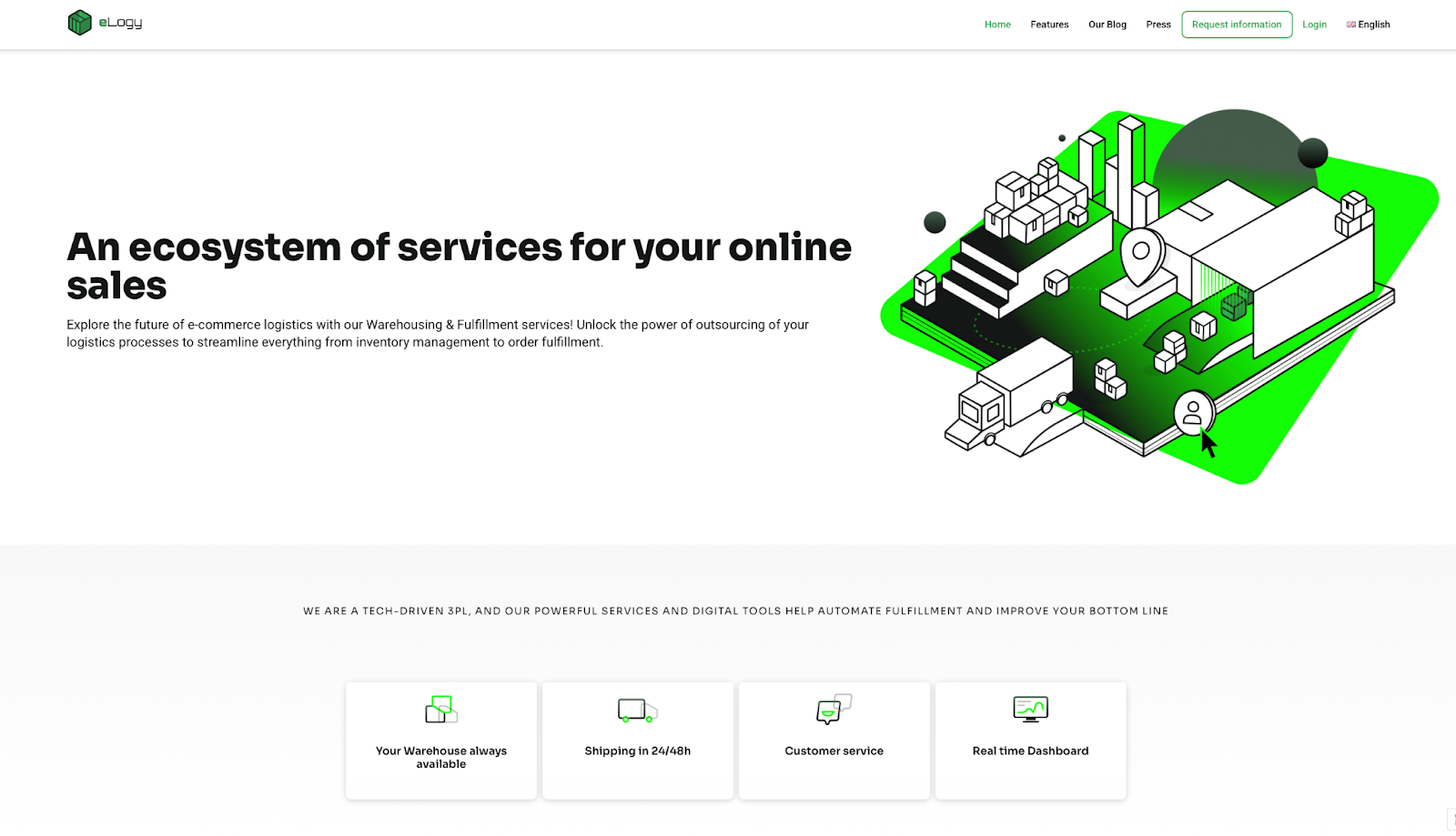
Headquartered in Rome and operating across a growing European network, the company combines physical warehousing with a proprietary digital platform that connects shipping, analytics, customer support, and day-to-day fulfillment workflows. Inventory is positioned near major demand clusters while algorithmic routing tools continuously adjust courier selection and delivery flows based on performance signals.
Strategic European Network
Warehouses across Italy, Spain, and Eastern Europe allow brands to shorten delivery distances and navigate regional fragmentation more efficiently. The emphasis is on proximity to demand rather than reliance on a single central hub.
AI-Driven Logistics
Through its SmartShip™ layer, courier selection is dynamically adjusted according to destination, parcel characteristics, and carrier reliability trends. Predictive inventory monitoring tracks sales velocity to reduce stock imbalances before they disrupt fulfilment.
Integrated Sales and Customer Operations
Beyond logistics, the platform incorporates customer-care workflows, including call-centre tooling, messaging channels such as WhatsApp, and automated retention mechanisms, extending fulfillment into the broader post-purchase experience.
Cash-On-Delivery Infrastructure
Native COD management, with tracking and reconciliation built into the system, reflects a strategic focus on Southern and Eastern European markets where alternative payment preferences remain significant.
Flexible Deployment Models
Brands can adopt Elogy as a fully outsourced logistics partner or layer its software and carrier orchestration onto existing warehouse operations, positioning it as both infrastructure and operational interface.
Elogy’s strength lies in its ecosystem approach, which reflects the growing importance of integrated logistics management in modern e-commerce. By aligning physical infrastructure with advanced software, this logistics partner allows brands to move beyond isolated fulfillment tasks and instead manage inventory, delivery performance, and post-purchase interactions as interconnected drivers of growth. The result is clearer operational insight, stronger delivery performance, and a more cohesive link between logistics execution and long-term strategic planning.
The model appears particularly aligned with:
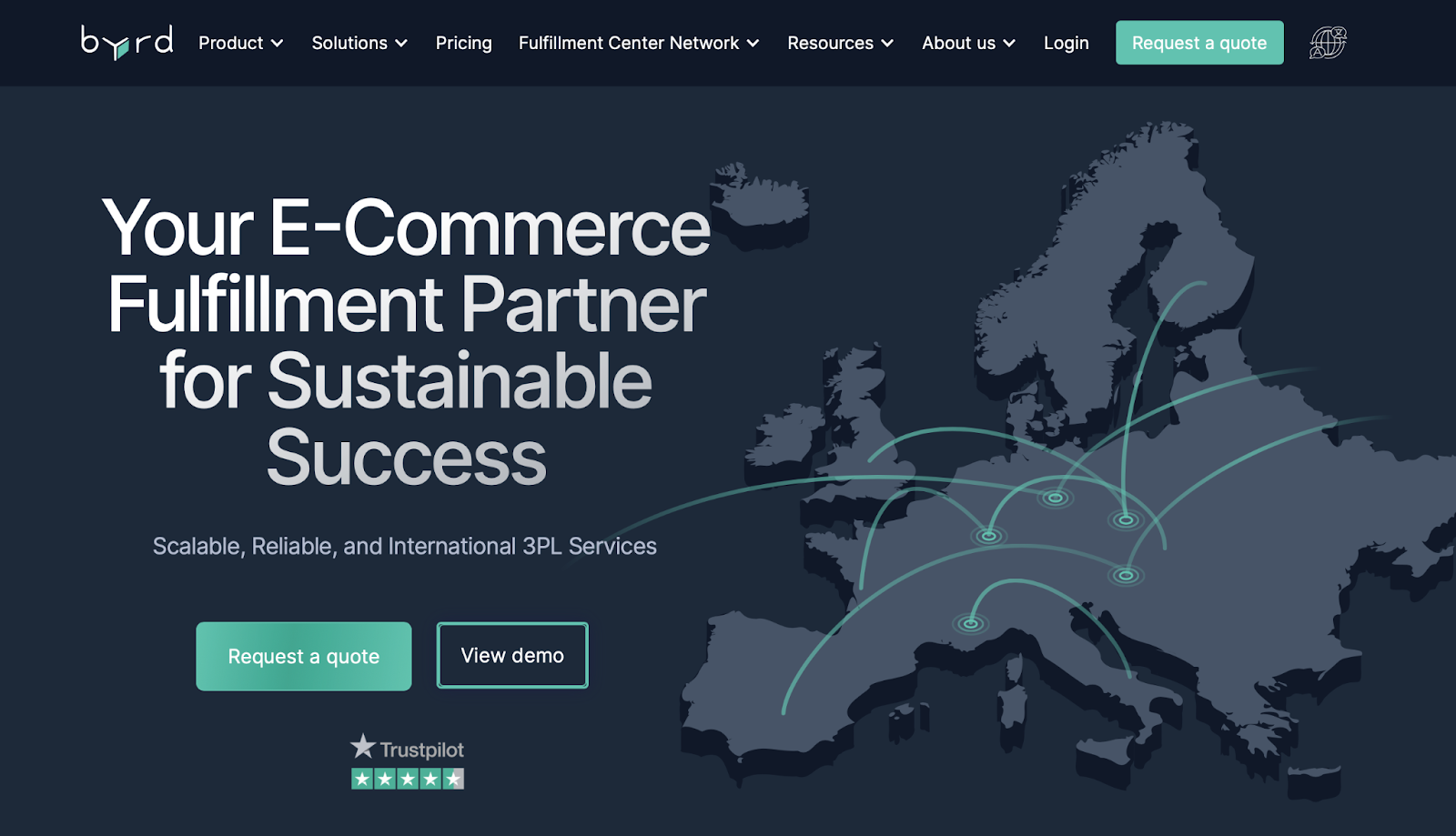
Byrd is a tech-enabled e-commerce fulfillment partner and third-party logistics (3PL) provider that specializes in helping businesses scale across the UK and Europe. It provides a scalable and tech-enabled solution designed to help retailers of all sizes, from startups to large enterprises, manage their logistics with less effort.
Pan-European Warehouse Network
Fulfillment centres across Germany, France, Austria, the UK, and other regions allow inventory distribution close to key markets.
Cloud-Based Logistics Dashboard
The “Click & Ship” platform centralises inventory management, order tracking, and fulfillment workflows with seamless integrations to Shopify, Amazon, WooCommerce, and other systems.
Brand-Focused Experience
Custom packaging options and self-service returns portals help maintain brand identity and improve customer satisfaction.
Byrd’s primary advantage is scalability. Its distributed network enables brands to test new European markets quickly, making it particularly relevant for cross-border growth strategies.
The model appears particularly aligned with:
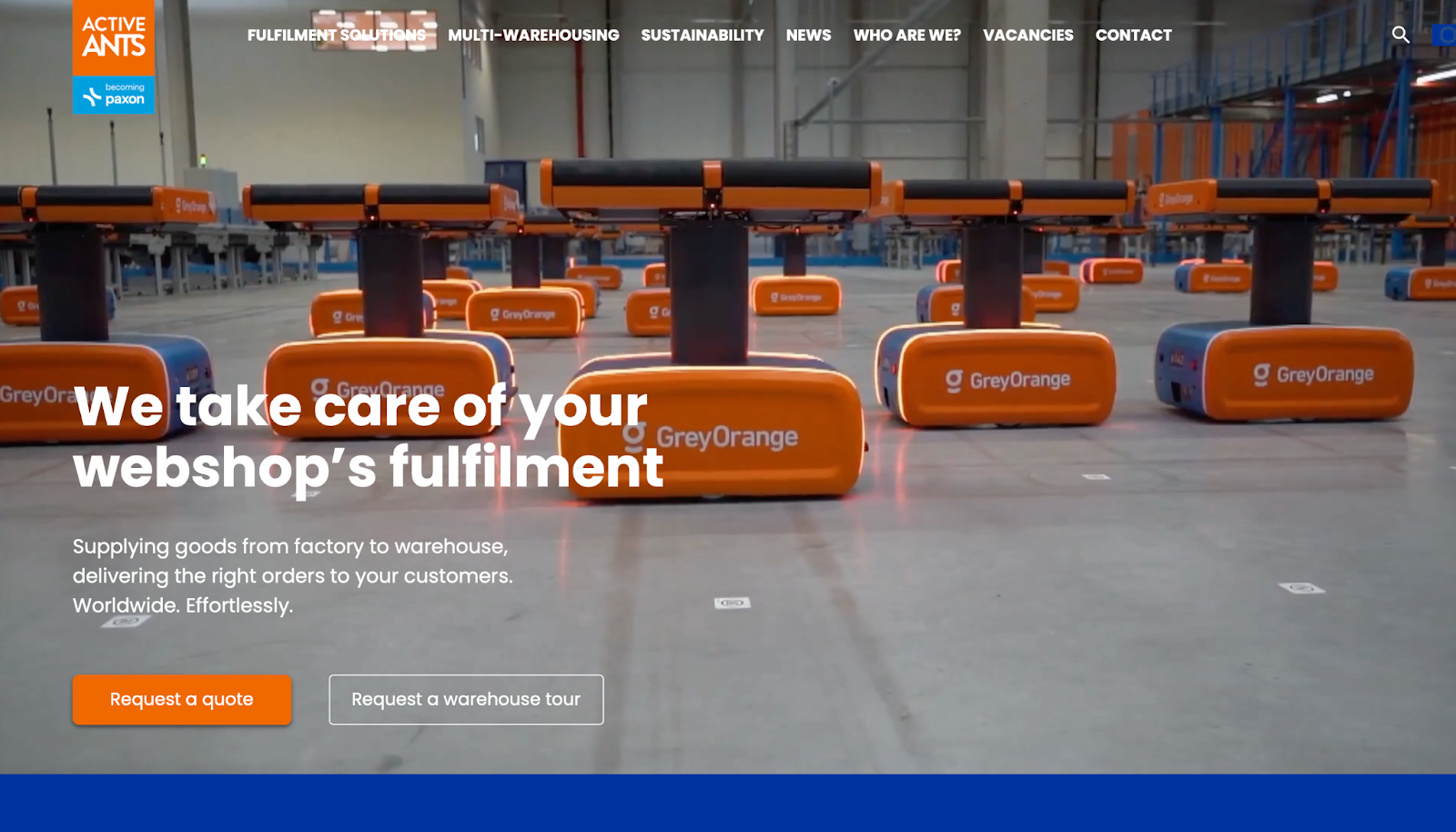
Active Ants is an international e-fulfillment partner that manages the entire supply chain for webshops, from the moment goods leave the factory to the final delivery to customers worldwide. Thanks to heavy investment in robotics and warehouse automation, its infrastructure is built around technology, enabling high-volume order processing with impressive efficiency.
Robotic Automation
Goods-to-person picking systems enable robots to automatically retrieve products, increasing speed and reducing human error.
AutoStore System
They utilize AutoStore for compact, efficient, and dust-free storage. This system is also theft-preventive and environmentally friendly.
Good-to-Person Picking
Instead of people walking through aisles, robots bring items directly to workstations. This "good-to-person" model ensures high-volume picking per hour with minimal errors.
Automated Packaging
Their packaging process is fully automated and sustainable. The system creates custom-sized boxes that fit the contents perfectly, which eliminates the need for filling material like plastic or paper.
Active Ants’ robotics-driven infrastructure is best suited to brands whose growth depends on operational efficiency at scale. Its automation-first infrastructure favours merchants with predictable product catalogues and steady order volumes, where standardisation drives lower handling costs and higher fulfilment accuracy.
The model appears particularly aligned with:
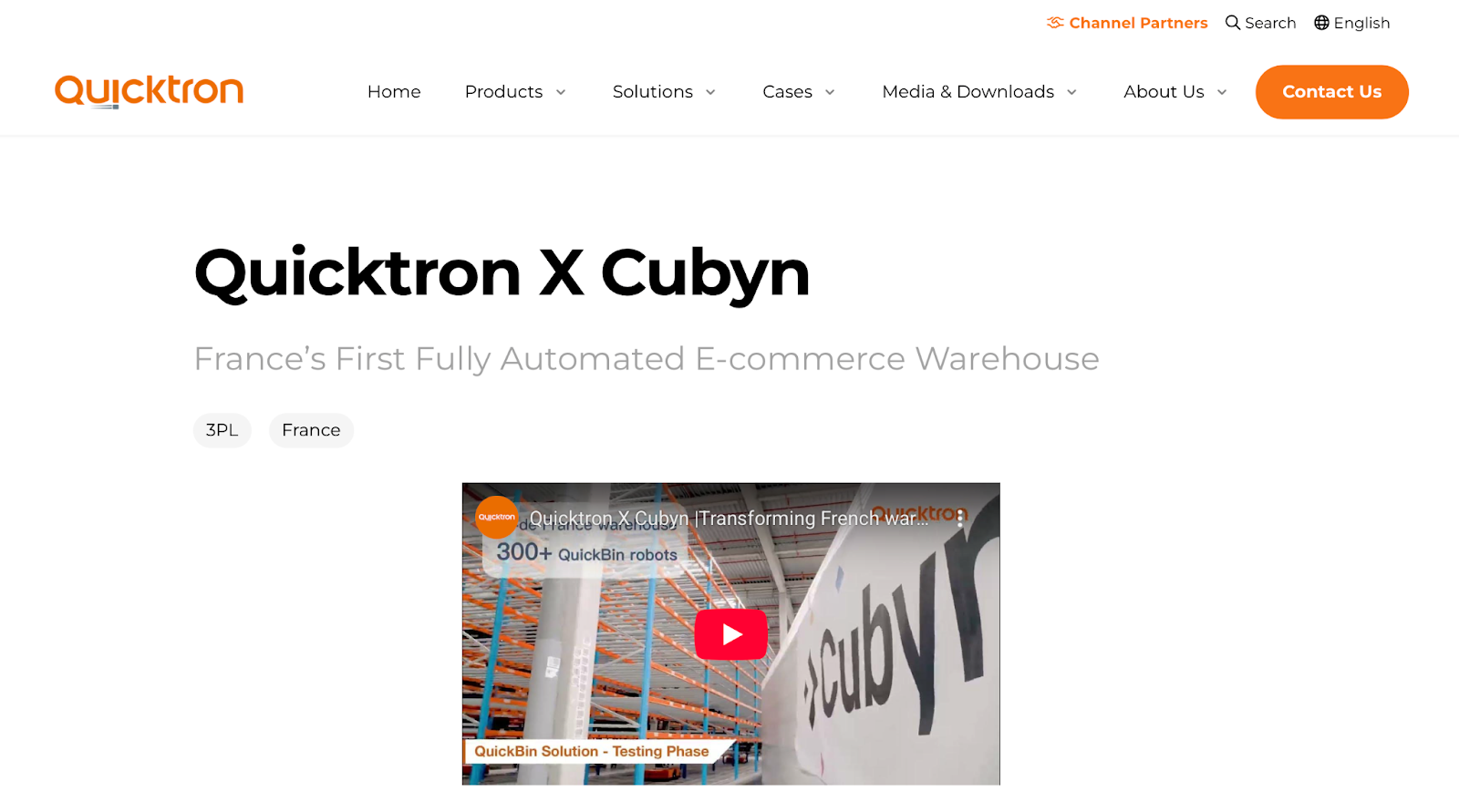
The partnership between robotics provider Quicktron and Paris-based logistics company Cubyn has produced one of Europe’s most advanced automated warehouses. By integrating autonomous mobile robots with Cubyn’s logistics software, the facility achieves significant gains in speed, accuracy, and sustainability.
Large-Scale Robotics Deployment
Hundreds of mobile robots operate within a 5,000 sqm automated area, supported by advanced warehouse control systems.
System Integration
The solution utilizes Quicktron’s QuickBin system, which seamlessly integrates Quicktron’s Robotic Control System (RCS) with Cubyn’s own Warehouse Management System (WMS)
Strategic Storage Intelligence
The system uses intelligent algorithms to store goods dynamically; high-demand items are strategically placed in the bottom and front rows of racks to accelerate picking speeds and overall efficiency
Sustainability Achievements
The automated solution reduced energy consumption by 90% and carbon emissions.
The model appears particularly aligned with:
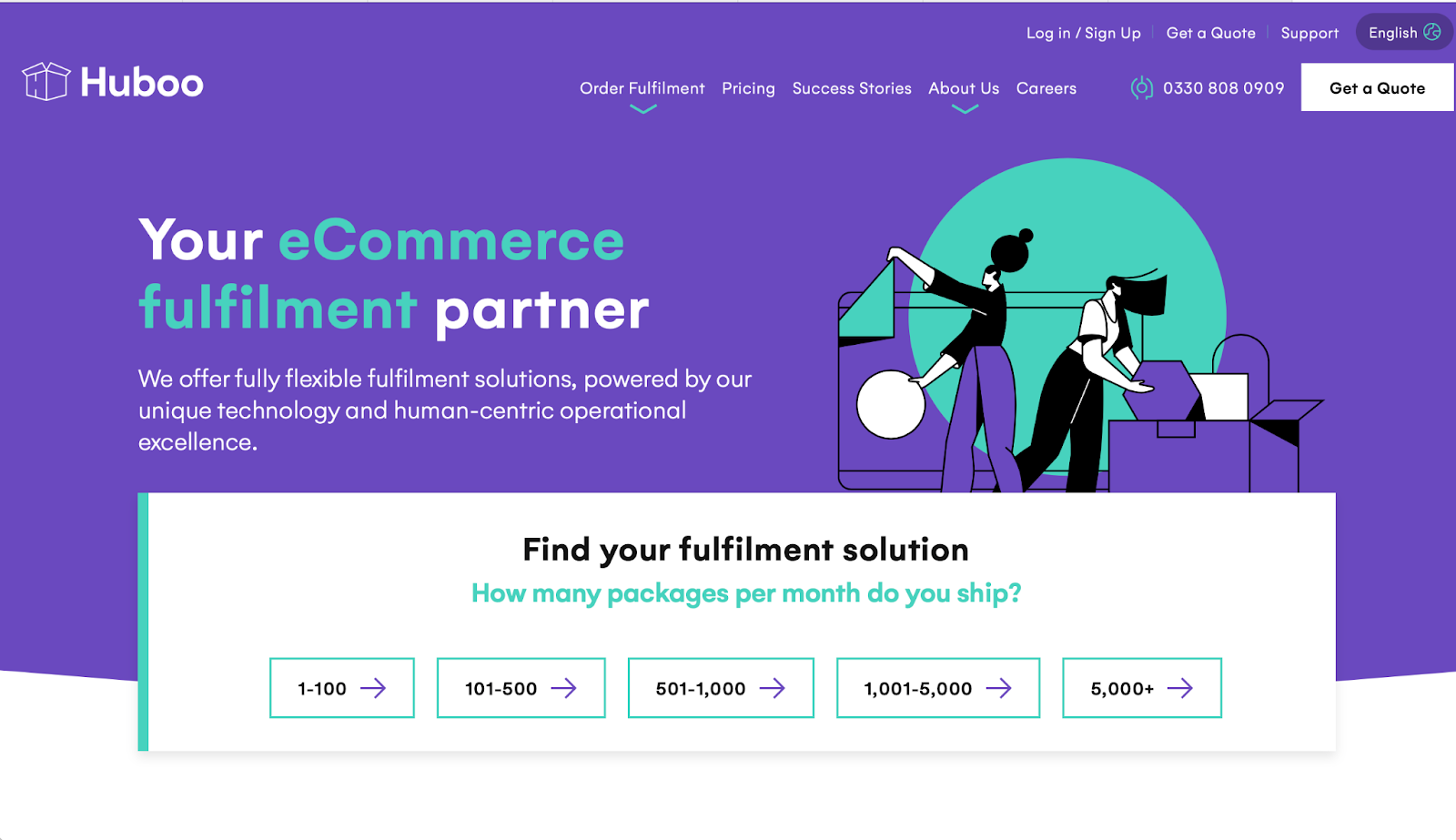
UK-based Huboo takes a more people-focused approach to logistics, combining proprietary technology with dedicated warehouse teams. Instead of heavy automation, the company emphasises operational flexibility and personalised support.
They position themselves as a "full stack" partner, meaning they own all their technology and warehouses rather than outsourcing, which allows them to move quickly and remain flexible for their clients.
SMEs and Startups
They offer dedicated services for owner-operators and sole traders who typically ship under 500 parcels per week, with entry points starting from £1,000 per month
Large & Enterprise Businesses
They provide fully flexible solutions designed to adapt to the speed and scale that modern large-scale businesses demand.
End-to-End Fulfillment Services
Picking, packing, shipping, and returns management are handled through a centralised dashboard with real-time visibility.
Extensive Integrations
Huboo offers more than 35 integrations with major marketplaces, channels, and systems.
Social Commerce
They have proven expertise in TikTok Shop integration, allowing brands to add social sales channels without disrupting their existing fulfillment operations.
Fast Dispatch
They aim to ensure that orders are typically dispatched within 24 hours to maintain a high-quality customer experience.
European Network
They operate four warehouses across the UK and the European Union, supported by a global courier network to help brands reach international audiences
Huboo stands out for accessibility and operational support. While it may not offer the same level of AI or robotics as other providers, it provides a reliable entry point for brands beginning their scaling journey.
The model appears particularly aligned with:
The choice of a fulfillment partner increasingly comes down to strategic fit: whether a brand’s growth trajectory, market priorities, and operational complexity align with the structural logic behind each fulfilment model.
While many fulfillment providers offer similar technologies on the surface, they diverge in how they structure control, flexibility, and efficiency within the logistics stack. Some build integrated ecosystems designed to centralise data and operations, others prioritise network orchestration to enable rapid geographic expansion, and a third group engineers highly standardised environments where automation drives performance at scale.
These differences shape how inventory is positioned, how costs evolve as volumes scale, and how consistently customer expectations can be met across borders.
As European e-commerce becomes operationally demanding, fulfilment is no longer a secondary consideration but a foundational element of strategy. Choosing the right partner, therefore, means looking beyond surface-level features and assessing how each model supports long-term expansion, margin stability, and the ability to adapt as market conditions shift.
Elogy is a European e-commerce fulfillment partner combining physical warehousing with a proprietary digital platform across Italy, Spain, and Eastern Europe. Their SmartShip™ system uses AI-driven courier selection and predictive inventory monitoring to help DTC brands scale efficiently across European markets.
Read more from Elogy at Elogy

Discover the best Shopify apps to automate warranty management in 2026. Compare features, pricing, and use cases to pick the right tool for your store.


The 9 best Shopify apps for fashion brands selling internationally in 2026. Compare pricing, ratings, and the right app to add first by problem.

Discover the 10 pre-order questions Shopify customers ask before buying, and how AI chatbots resolve ship-date and deposit tickets 24/7 in 2026.

Learn why AI chat fails without accurate inventory data, how hallucinations kill Shopify conversions, and how live stock feeds ground every reply.