Welcome to the world of ecommerce, where modern customers have the ability to browse through your online store, fill up their shopping carts, and then inexplicably decide to abandon their purchases at the last minute. This phenomenon, known as cart abandonment, is a frustrating challenge that many ecommerce businesses face. In this article, we will take a closer look at what cart abandonment is, why it happens, and most importantly, how you can reduce it to boost your revenue and increase customer satisfaction.
Key Takeaways
Cart abandonment happens when online shoppers add items to their cart but leave before completing checkout.
High cart abandonment rates often signal UX friction, trust issues, or missing support at critical moments.
Shipping costs, complex checkout flows, and last-minute doubts are among the most common causes.
Reducing cart abandonment requires proactive engagement, clear pricing, and a seamless checkout experience.
Real-time assistance and automated responses can prevent drop-offs before they happen.
Tools like Zipchat help ecommerce brands recover lost revenue by supporting shoppers at decision points.
What Is Cart Abandonment?
Cart abandonment occurs when a shopper adds one or more items to their online shopping cart but exits the website before completing the purchase. For example, a customer may browse products, add them to their cart, and leave at checkout due to unexpected costs or unanswered questions.
Cart abandonment rate formula:
Cart Abandonment Statistics and Revenue Impact
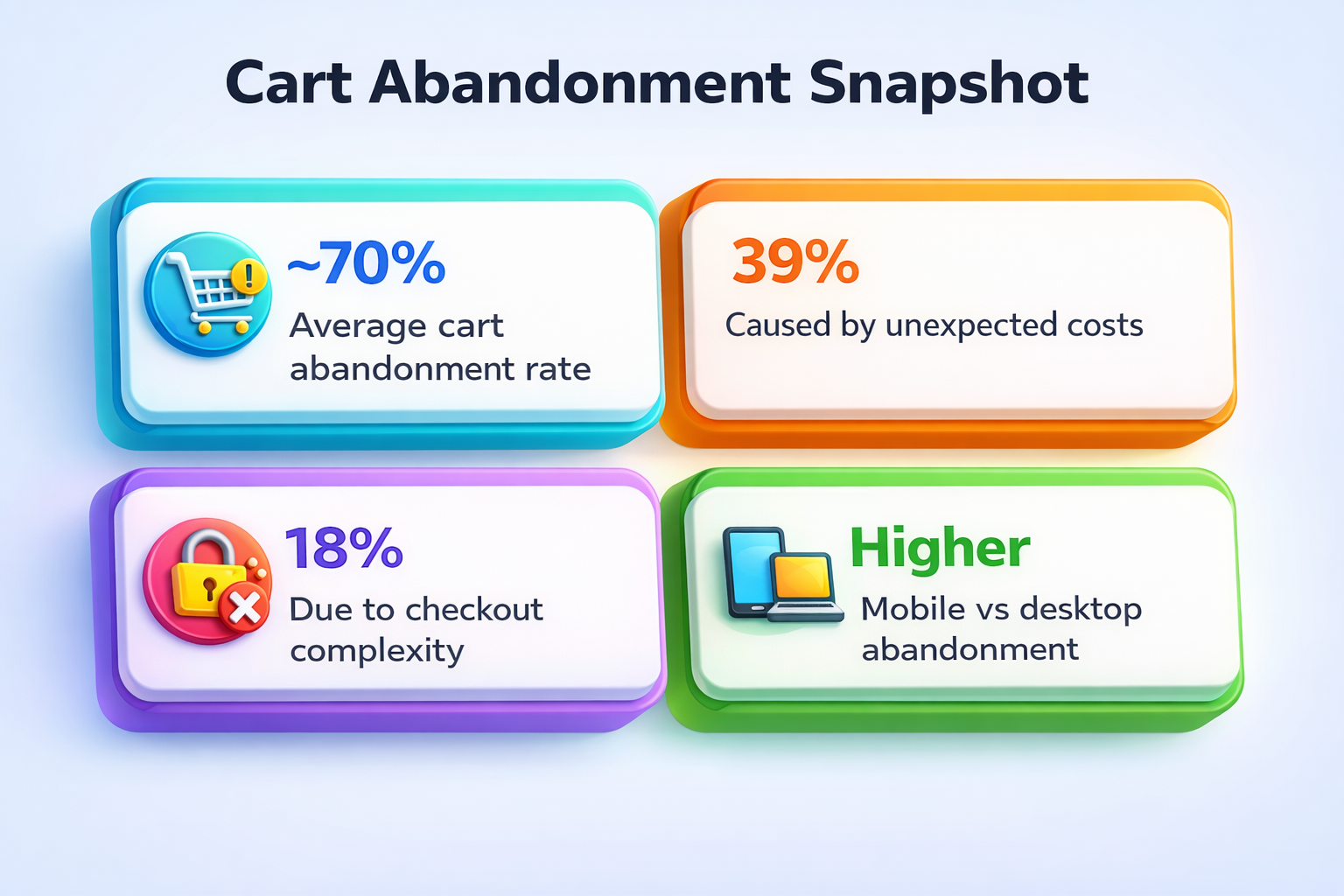
Cart abandonment is one of the biggest challenges in ecommerce. According to Baymard Institute, the average cart abandonment rate is around 70%, meaning most shoppers who show purchase intent never complete checkout. Studies also show that unexpected extra costs account for nearly 39%of abandoned carts, while complicated checkout processes contribute to over 18% of drop-offs.
These numbers matter because every abandoned cart represents lost revenue and wasted acquisition spend. High abandonment rates directly lower conversion rates, reduce return on ad spend, and limit growth, especially for stores investing heavily in traffic but failing to convert it.
What High Cart Abandonment Rates Can Indicate
A consistently high cart abandonment rate is rarely random. It often signals deeper issues in the shopping experience, such as a lack of trust, pricing friction, poor mobile usability, or unanswered last-minute questions. In many cases, high abandonment can also point to usability and support gaps, especially when you don’t prioritize mobile user experience.
Slow load times, clunky mobile checkout flows, or broken pages can quickly frustrate users, leading them to exit rather than troubleshoot. Studies have shown that 53% of mobile users abandon a site if it takes longer than three seconds to load (Google). In many cases, shoppers also leave because they have last-minute questions about delivery, returns, or sizing, and can’t find quick answers. When real-time support is missing at these decision moments, uncertainty wins, and the cart is left behind.
Common Reasons for Cart Abandonment
Cart abandonment usually happens when multiple friction points stack up. Below are the most common causes that ecommerce brands face today.
Last-Minute Doubts
Shoppers often hesitate at checkout due to unanswered questions about returns, delivery times, or product details. Without immediate reassurance, hesitation can quickly turn into abandonment.
High Shipping Costs
Unexpected shipping costs remain the top reason for checkout abandonment. When final costs exceed expectations, perceived value drops instantly (Baymard).
Complicated Checkout Process
Long forms, unnecessary steps, and slow page loads create friction. Even motivated buyers will abandon if checkout feels time-consuming or confusing.
Payment Security Concerns
If a site doesn’t clearly communicate security measures, shoppers may worry about sharing payment details. Missing trust badges or unclear policies increase risk perception.
Not Comparing Prices from Competitors
Price comparison is only one tab away. If shoppers see a better deal elsewhere, especially late in checkout, they may leave without hesitation.
Product Recommendations
Poor or irrelevant product recommendations can distract shoppers or overwhelm them, pulling focus away from completing the purchase.
Forced Account Creation
Requiring users to create an account before checkout increases friction, particularly for first-time buyers who want speed and convenience.
Limited Payment Options
Not offering the most popular payment methods, such as digital wallets or buy-now-pay-later options, can immediately stop a purchase.
Technical Issues
Slow load times, broken checkout pages, or mobile bugs quickly erode trust and patience, especially on mobile devices.
Strategies to Reduce Cart Abandonment
Reducing shopping cart abandonment means removing friction, supporting shoppers at decision points, and providing them with personalized customer service. The strategies below directly address the causes outlined above.
Provide Final Cost Upfront
Show full pricing, including shipping, taxes, and fees, early in the journey to prevent sticker shock at checkout.
Include a Status Tracker During Checkout
Progress indicators help shoppers understand how many steps remain, reducing anxiety and encouraging completion.
Offer Multiple Payment Options
Support credit cards, digital wallets, and local payment methods to match shopper preferences.
Invest in a Sales Chatbot
Real-time assistance through the use of sales chatbots helps answer last-minute questions, clarify pricing, and guide hesitant shoppers through checkout.
Create Enticing Checkout Buttons and CTAs
Clear, action-oriented CTAs like “Complete Order” or “Secure Checkout” reinforce confidence and urgency.
Include a Guest Checkout Option
Allow shoppers to purchase without creating an account to reduce friction and speed up checkout.
Offer Incentives
As an online retailer, strategic incentives such as free shipping or limited-time discounts can tip hesitant potential customers toward completion.
Optimize the Mobile Checkout Experience for Better Cart Recovery
Mobile shoppers abandon carts more frequently due to poor UX. Simplified layouts, autofill, and fast load times are critical.
Offer Flexible Payment Plans
Buy-now-pay-later options lower perceived cost barriers and increase conversion rates, especially for higher-ticket items.
How Zipchat AI Can Help Reduce Abandoned Carts
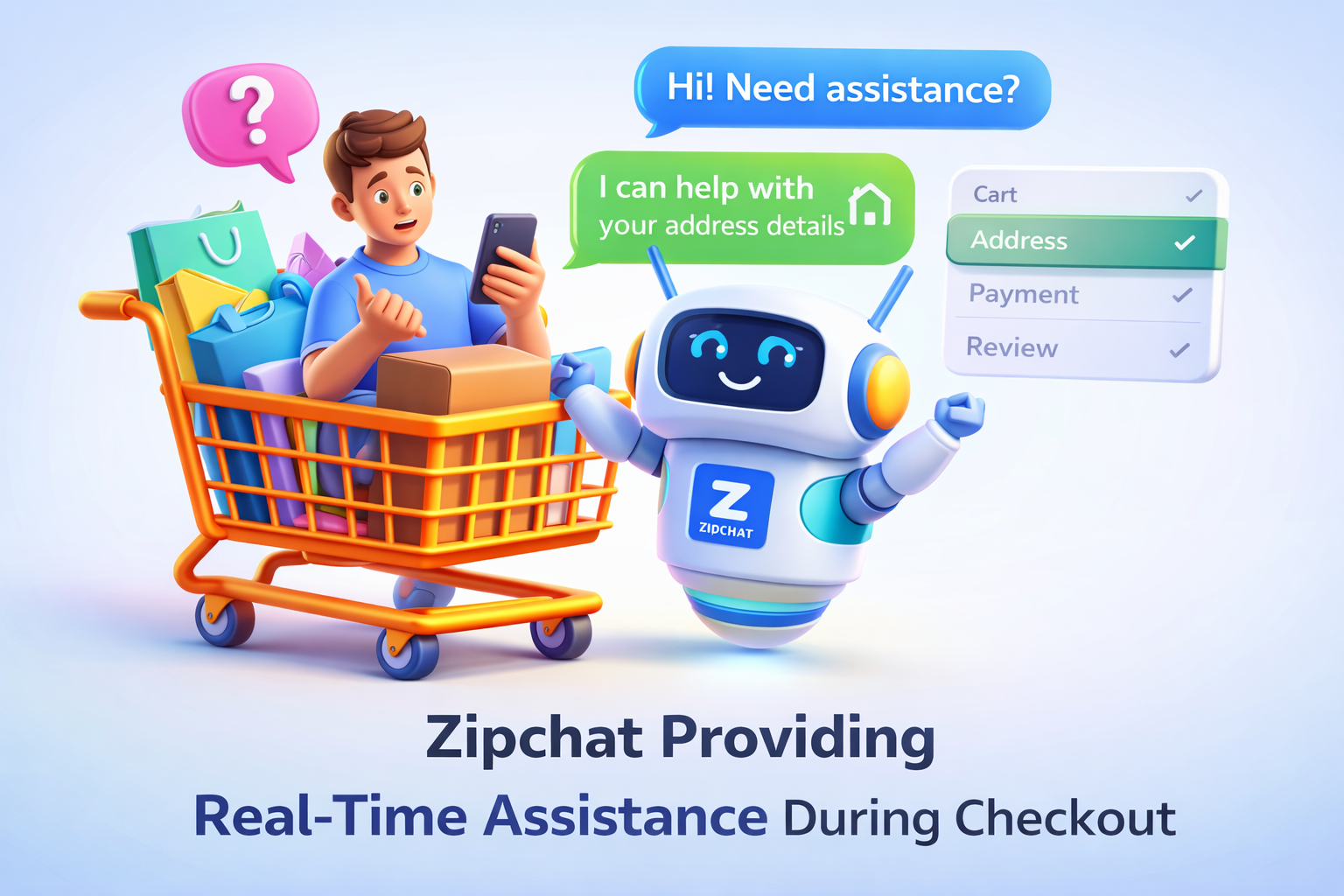
Shopping cart abandonment often happens at moments of uncertainty, when shoppers have questions, concerns, or need reassurance. Zipchat AI helps reduce abandonment by providing real-time assistance exactly when it’s needed. Through proactive engagement, it answers common questions, clarifies pricing or delivery details, and guides shoppers through checkout without delays.
By automating responses and intervening before frustration builds, Zipchat prevents drop-offs while improving the overall shopping experience. When combined with a high-converting checkout process, it becomes a powerful layer of support that turns intent into completed purchases.
Cart abandonment happens when a shopper adds items to an online cart but leaves the site before completing checkout. It often occurs due to pricing surprises, checkout friction, or unanswered questions.
What is the formula for cart abandonment?
Cart abandonment rate is calculated by subtracting completed purchases from carts created, dividing by carts created, and multiplying by 100.
How to reduce cart abandonment?
You can reduce cart abandonment by simplifying checkout, offering transparent pricing, providing real-time support, optimizing mobile experiences, and providing your customers with one-click checkout.
What’s a good cart abandonment rate?
A good cart abandonment rate varies by industry, but rates below 60% are generally considered strong. Most ecommerce stores average around 70%.