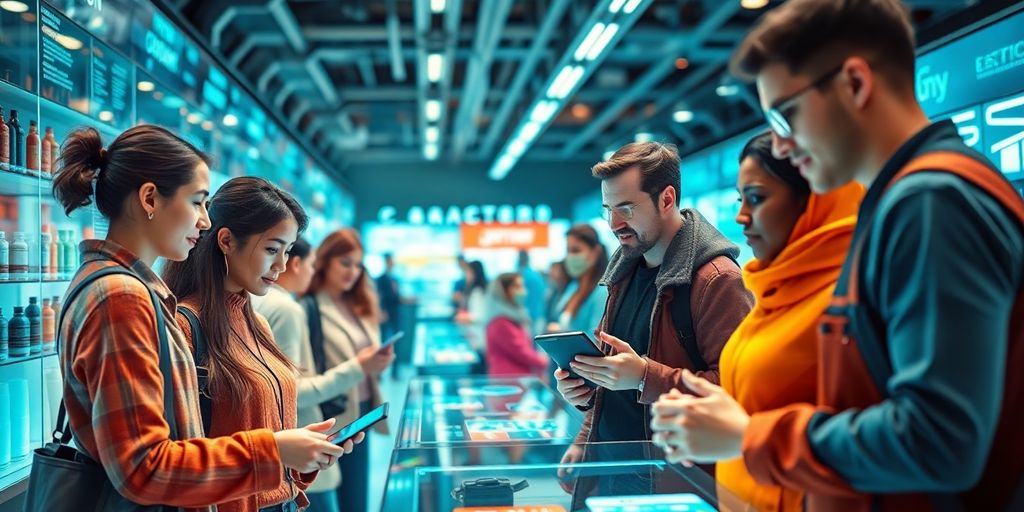
In the world of online marketing, social proof plays a crucial role in influencing consumer decisions. It refers to the idea that people are more likely to make a purchase when they see others doing the same or when they hear positive feedback from fellow customers. This article explores how social proof can enhance conversion rates for businesses, making it a vital aspect of effective marketing strategies.
Key Takeaways
Social proof significantly boosts consumer trust and confidence in products.
Positive reviews and testimonials can lead to higher conversion rates.
User-generated content, like customer photos, enhances brand credibility.
Influencer endorsements serve as powerful social proof for potential buyers.
Implementing social proof strategies can drive customer loyalty and repeat purchases.
Understanding Social Proof in Online Marketing
Definition and Importance
Social proof is a powerful concept in marketing that shows how people look to others when making decisions. It’s like a safety net for buyers. When you see others enjoying a product, it makes you feel more confident about your choice. This is especially true in online shopping, where you can’t physically touch or try the product before buying.
Psychological Mechanisms Behind Social Proof
There are a few key reasons why social proof works so well:
Uncertainty Reduction: When you’re unsure about a product, seeing others use it can help ease your mind.
Bandwagon Effect: If everyone seems to love a product, you might feel compelled to join in.
Similarity: You’re more likely to trust reviews from people who seem like you.
Historical Context and Evolution
Social proof has been around for ages, but it’s evolved with technology. In the past, people relied on word-of-mouth. Now, with the internet, you can see reviews, ratings, and testimonials from all over the world. This shift has made social proof even more crucial in online marketing.
Social proof is the backbone of any sales funnel and marketing strategy. It eases buyers into exploring your brand, helps alleviate any initial resistance, and ultimately boosts conversion rates.
Types of Social Proof Utilized in Online Marketing
Customer Reviews and Testimonials
When you see a product with lots of positive reviews, it makes you feel more confident about buying it. Customer reviews are one of the most powerful forms of social proof. They show that real people have had good experiences with a product. Here are some key points:
93% of consumers read online reviews before making a purchase.
Products with five reviews are 270% more likely to be bought than those without.
Positive reviews can significantly boost sales, while negative ones can deter potential buyers.
Influencer Endorsements
Influencers can sway your buying decisions. When a popular figure promotes a product, it often feels more trustworthy. Influencer endorsements can:
Reach a wider audience.
Build credibility for your brand.
Create a buzz around new products.
User-Generated Content
Seeing other customers using a product can be very convincing. User-generated content (UGC) includes:
Photos of customers using your products.
Social media posts featuring your brand.
Videos or testimonials shared by users.
Case Studies and Success Stories
These are detailed accounts of how your product helped someone. They provide real-life examples that can:
Build trust with potential customers.
Show the effectiveness of your product.
Highlight unique features that set your brand apart.
Remember, social proof is all about showing that others trust and enjoy your product. By leveraging these types of social proof, you can significantly enhance your marketing strategy and boost your conversion rates.
In summary, using social proof effectively can lead to higher sales and a stronger brand reputation. Whether it’s through reviews, influencer partnerships, or user-generated content, showing that others love your product can make a big difference in your marketing success.
The Impact of Social Proof on Consumer Behavior
Building Trust and Credibility
When you see others enjoying a product, it makes you feel more confident about your choice. Social proof builds trust by showing that others have had positive experiences. This is especially important when you’re unsure about a purchase. You might think, "If so many people like it, it must be good!"
Influencing Purchase Decisions
Social proof can sway your buying choices in several ways:
Customer Reviews: Reading what others say can help you decide.
Influencer Endorsements: Seeing someone you admire use a product can make you want it too.
User-Generated Content: Photos and stories from real users can make a product feel more relatable.
Enhancing Customer Loyalty
When you trust a brand because of social proof, you’re more likely to stick with it. This loyalty can lead to repeat purchases and recommendations to friends.
Social proof is a powerful tool that can significantly impact consumer behavior and enhance your brand's credibility.
In summary, understanding how social proof works can help you make better choices and feel more confident in your purchases. It’s all about seeing that others have had good experiences, which can lead to a more satisfying shopping journey!
Strategies for Leveraging Social Proof in E-Commerce
Incorporating Reviews and Ratings
When you showcase customer reviews and ratings, you’re not just filling space on your website; you’re building trust. Positive feedback can significantly influence potential buyers. Make sure to display these reviews prominently on your product pages. Consider using different formats like star ratings, written testimonials, and even video reviews to appeal to various customer preferences.
Utilizing Social Media Platforms
Social media is crucial for e-commerce, with 71% of consumers influenced by social referrals. Use platforms like Instagram and Facebook to share customer experiences and product highlights. Encourage your customers to post about their purchases and tag your brand. This not only amplifies your reach but also creates a community around your products.
Creating Engaging User-Generated Content
Encourage your customers to share their own photos and experiences with your products. User-generated content (UGC) serves as authentic social proof that can sway potential buyers. You might even consider running contests or giveaways to motivate customers to share their experiences. This not only boosts engagement but also provides you with a steady stream of content to showcase.
By leveraging social proof, you can turn hesitant visitors into confident buyers, ultimately increasing your conversion rates.
Summary Table of Strategies
Case Studies: Successful Implementation of Social Proof
E-Commerce Success Stories
When it comes to e-commerce, many brands have effectively used social proof to boost their sales. For instance, a popular online clothing store showcased customer reviews prominently on their product pages. This simple change led to a 20% increase in conversion rates. Here are a few more examples:
A tech gadget retailer displayed user-generated content on their homepage, which increased engagement by 30%.
A beauty brand collaborated with influencers, resulting in a 50% rise in sales during their campaign.
A travel agency featured testimonials from happy customers, which helped them gain trust and attract new clients.
Brand Collaborations with Influencers
Influencer marketing is a powerful form of social proof. Brands that partner with influencers can reach wider audiences and build credibility. Here’s how:
Choose the right influencer: Look for someone whose audience aligns with your target market.
Create authentic content: Encourage influencers to share their genuine experiences with your product.
Track results: Measure engagement and sales to see the impact of the collaboration.
User-Generated Content Campaigns
User-generated content (UGC) is another effective way to leverage social proof. Brands can encourage customers to share their experiences online. Here’s how to do it:
Run contests that invite customers to post photos using your product.
Feature UGC on your website and social media to create a sense of community.
Offer incentives for customers who share their stories, like discounts or shout-outs.
This case study serves as a testament to the power of social proof in influencing consumer decisions and building a successful online platform.
Measuring the Effectiveness of Social Proof
Key Metrics to Track
To truly understand how social proof is impacting your conversion rates, you need to keep an eye on several key metrics. Here are some important ones to consider:
Conversion Rate: This tells you the percentage of visitors who make a purchase after seeing social proof.
Engagement Rate: Look at how many people are interacting with your social proof elements, like reviews or testimonials.
Click-Through Rate (CTR): This shows how many people clicked on links related to social proof, such as product reviews.
Tools and Techniques for Measurement
There are various tools you can use to measure the effectiveness of social proof:
Google Analytics: Track user behavior and conversion rates.
Social Media Analytics: Platforms like Facebook and Instagram provide insights into engagement and reach.
A/B Testing Tools: Use these to test different social proof elements and see which ones perform better.
Interpreting Data to Improve Strategies
Once you have your data, it’s time to analyze it. Here’s how:
Look for trends in your conversion rates before and after implementing social proof.
Compare engagement rates across different types of social proof, like customer reviews versus influencer endorsements.
Adjust your strategies based on what the data tells you. For example, if customer reviews lead to a higher conversion rate, consider showcasing them more prominently.
Remember, data-driven decisions can significantly enhance your marketing strategies. By understanding what works, you can optimize your approach and boost your conversion rates.
Highlighting Key Statistics
According to recent findings, the average email conversion rate is around 3.84%, while paid advertising conversion rates hover around 2.2%. These statistics emphasize the importance of integrating social proof into your marketing efforts to enhance effectiveness and drive conversions.
Challenges and Limitations of Social Proof
Managing Negative Reviews
Negative reviews can be a real headache. They can diminish your brand's reputation and make potential customers think twice. Here are some tips to handle them:
Respond promptly to negative feedback.
Address the issue raised in the review.
Encourage satisfied customers to leave positive reviews to balance things out.
Avoiding Over-Reliance on Social Proof
While social proof is powerful, relying too much on it can backfire. If you lean heavily on social proof, it might reduce your brand's authenticity. Here’s how to avoid this:
Mix it up with original content.
Showcase your unique selling points.
Engage directly with your audience to build a personal connection.
Ensuring Authenticity and Transparency
In a world where consumers are savvy, authenticity is key. If your social proof seems fake, it can lead to distrust. To maintain transparency:
Use real testimonials from actual customers.
Be honest about your product's strengths and weaknesses.
Regularly update your social proof elements to reflect current feedback.
Remember, while social proof can boost your conversion rates, it’s essential to manage it wisely. Balancing authenticity with social proof is crucial for long-term success.
Future Trends in Social Proof and Online Marketing
Emerging Technologies
As we look ahead, technology is set to reshape how social proof is utilized in online marketing. Innovations like artificial intelligence will allow businesses to analyze customer behavior more effectively, tailoring social proof elements to individual preferences. This means you can expect more personalized experiences that resonate with your audience.
Predicted Consumer Behavior Shifts
Consumer behavior is evolving, and with it, the way social proof is perceived. People are becoming more discerning about the sources of social proof. They want authenticity and transparency. This shift means that brands will need to focus on genuine customer experiences rather than just flashy endorsements.
Innovative Social Proof Strategies
To stay competitive, you’ll need to adopt new strategies for leveraging social proof. Here are some ideas:
Utilize micro-influencers: They often have more engaged audiences and can provide authentic endorsements.
Incorporate real-time social proof: Show live updates of purchases or reviews to create urgency and trust.
Leverage user-generated content: Encourage customers to share their experiences, which can serve as powerful testimonials.
Remember, the future of social proof lies in authenticity and engagement. By focusing on real connections, you can build trust and drive conversions effectively.
Key Takeaways
Best Practices for Implementing Social Proof
Integrating Social Proof Seamlessly
When you’re adding social proof to your site, make sure it feels natural. You want it to blend in with your overall design. Here are some tips:
Place testimonials near product descriptions.
Use customer reviews on checkout pages.
Highlight social media mentions on your homepage.
Maintaining Consistency Across Platforms
Consistency is key! Ensure that your social proof elements are uniform across all platforms. This helps build trust. Here’s how:
Use the same style for reviews and testimonials.
Keep your messaging aligned across your website and social media.
Regularly update your social proof to reflect current customer experiences.
Regularly Updating Social Proof Elements
Keep your social proof fresh! Outdated testimonials can hurt your credibility. Make it a habit to:
Review and refresh testimonials every few months.
Remove any negative reviews promptly.
Encourage new reviews after every purchase.
Remember, social proof is about showing potential customers that others trust you. By implementing these best practices, you can effectively leverage social proof to boost your conversion rates and enhance customer trust.
Incorporating social proof effectively can lead to increased sales and customer loyalty. So, start integrating these strategies today!
The Role of Social Proof in Different Industries
E-Commerce and Retail
In the world of e-commerce, social proof is a game-changer. When potential buyers see positive reviews or testimonials, they feel more confident in their purchase decisions. For instance, 93% of shoppers read online reviews before making a purchase. This means that showcasing customer feedback can significantly boost your sales.
Hospitality and Travel
In the hospitality sector, social proof is crucial. Travelers often rely on reviews from platforms like TripAdvisor or Yelp. A hotel with numerous positive reviews is more likely to attract bookings. Additionally, user-generated content, such as photos from guests, can enhance a hotel's appeal. Here’s a quick look at how social proof impacts this industry:
Health and Wellness
In the health and wellness industry, social proof can be a powerful motivator. People often look for recommendations from others when choosing supplements or fitness programs. Seeing real results from others can encourage potential customers to take action. Here are some effective strategies:
Highlight success stories from clients.
Use before-and-after photos to showcase results.
Encourage satisfied customers to share their experiences on social media.
Social proof is not just about numbers; it’s about building a community of trust and shared experiences.
By understanding how social proof works in different industries, you can tailor your marketing strategies to effectively engage your audience and drive conversions.
Legal and Ethical Considerations in Using Social Proof
Ensuring Compliance with Advertising Standards
When you use social proof in your marketing, it’s crucial to follow advertising laws. Misleading claims can lead to serious consequences. Here are some key points to keep in mind:
Always be honest about endorsements and testimonials.
Disclose any relationships with influencers or reviewers.
Ensure that all claims can be backed up with evidence.
Respecting Consumer Privacy
In today’s digital world, data privacy is a big deal. You need to protect your customers’ information while using social proof. Here’s how:
Get consent before collecting personal data.
Be transparent about how you use customer information.
Allow customers to opt-out of data collection easily.
Avoiding Misleading Information
Using social proof responsibly means avoiding exaggeration. Here are some tips:
Don’t fabricate reviews or testimonials.
Use real customer experiences to build trust.
Regularly update your social proof elements to reflect current feedback.
Remember, ethical marketing not only protects you legally but also builds long-term trust with your audience. By prioritizing transparency and honesty, you can create a loyal customer base that values your brand.
Optimizing Conversion Rates Through Social Proof
A/B Testing Social Proof Elements
To really boost your conversion rates, A/B testing is your best friend. This means trying out different versions of social proof elements on your site to see which ones work best. Here’s how you can do it:
Choose a social proof element to test, like customer reviews or testimonials.
Create two versions: one with the social proof and one without.
Analyze the results to see which version leads to more conversions.
Personalizing Social Proof for Target Audiences
Personalization is key! Tailor your social proof to fit your audience. For example, if you know your visitors are interested in eco-friendly products, highlight reviews from customers who appreciate your sustainable practices. This makes the social proof more relevant and impactful.
Utilizing Data-Driven Insights
Using data to guide your decisions can significantly improve your conversion rates. Here’s what to focus on:
Track engagement metrics: See how users interact with your social proof elements.
Monitor conversion rates: Check if the social proof is actually leading to more sales.
Adjust based on feedback: Use customer feedback to refine your social proof strategies.
Remember, optimizing your social proof is an ongoing process. Keep testing and adjusting to find what resonates best with your audience.
By implementing these strategies, you can effectively leverage social proof to enhance your e-commerce user experience and ultimately drive more sales. Don't forget, using tools like an AI Chatbot can also help in gathering and displaying social proof efficiently!
Conclusion
In summary, social proof plays a crucial role in boosting conversion rates in online marketing. When potential customers see that others have had positive experiences with a product or service, they are more likely to trust and purchase it themselves. This can be achieved through various methods, such as showcasing customer reviews, testimonials, and user-generated content. By effectively leveraging social proof, businesses can create a sense of community and trust, ultimately leading to increased sales and customer loyalty. As online shopping continues to grow, incorporating social proof into marketing strategies will be essential for success.
Frequently Asked Questions
What is social proof in online marketing?
Social proof is when people look at what others are doing to decide if something is good or not. In online marketing, it means using reviews, testimonials, and recommendations to help convince customers to buy.
Why is social proof important for businesses?
Social proof helps build trust with potential customers. When they see that others have had good experiences, they are more likely to make a purchase.
What are some types of social proof?
Some types include customer reviews, testimonials, influencer endorsements, and user-generated content like photos and videos from customers.
How can social proof influence buying decisions?
When customers see positive feedback from others, it can make them feel more confident in their choice to buy. It shows that others have had a good experience.
Can social proof help with customer loyalty?
Yes! When customers feel part of a community and see others enjoying a product, they are more likely to return and buy again.
What are some ways to use social proof in marketing?
You can use social proof by showcasing reviews on your website, sharing customer stories on social media, or partnering with influencers to promote your products.
How do negative reviews affect social proof?
Negative reviews can hurt sales. If potential customers see bad feedback, they might decide not to buy. It's important to manage and respond to negative reviews.
What trends are emerging in social proof for marketing?
Emerging trends include using video testimonials, integrating real-time reviews, and leveraging social media to showcase customer experiences.