Try Zipchat in Action!
Enter your store URL to see how Zipchat would behave.


What is Customer Feedback Analysis? (Ecommerce Glossary)

What is Customer Feedback Analysis?
Customer feedback analysis is the process of collecting, organizing, and interpreting what customers say about your products or services to uncover trends, pain points, and improvement opportunities.
In ecommerce, this analysis helps brands understand what drives satisfaction or frustration across online reviews, surveys, chat logs, and social mentions.
Customer feedback analysis turns raw opinions into measurable insights that guide smarter data-driven decisions, from optimizing product pages to improving delivery experiences. Retailers who analyze feedback effectively see higher retention and lower churn, with 70% of buying experiences shaped by how customers feel they’re being treated (Salesforce).
Why Customer Feedback Analysis Matters for Ecommerce
Listening to your customers isn’t just good manners, it’s a competitive advantage. Here’s why it matters:
- Improves customer experience: By spotting friction points early, you can fine-tune your checkout flow, support interactions, and post-purchase follow-ups (Zipchat Customer Experience).
- Boosts customer satisfaction and loyalty: When customers see their feedback acted on, it builds trust and encourages repeat purchases (Zipchat).
- Drives data-backed decisions: Real user feedback replaces guesswork with direct input from your audience.
- Guides product and marketing strategies: Identifying recurring themes helps you prioritize updates that actually move the needle.
- Supports brand reputation: Responding transparently to reviews shows accountability and authenticity, which is key for social-era commerce.
How to Conduct Customer Feedback Analysis (5 Steps)
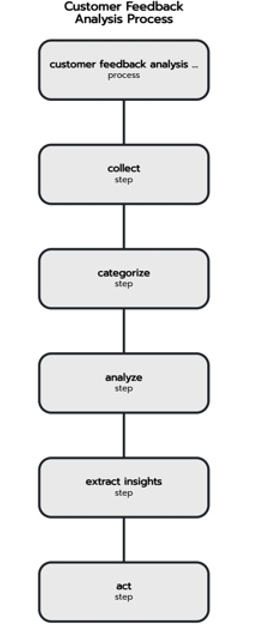
Analyzing customer feedback doesn’t need to be complicated. Whether you’re running a Shopify store or managing a large ecommerce brand, the feedback analysis process follows five key steps:
1. Collect Customers' Feedback Data from Multiple Sources
Gather feedback wherever your customers interact with your brand. These include online reviews, post-purchase surveys, live chat transcripts, emails, and social media comments.
Modern AI tools like Zipchat AI can automatically capture and categorize customer sentiment from on-site chat and WhatsApp conversations, giving you real-time meaningful insight into what customers actually say (and feel).
Tip: Combine structured data (survey scores, ratings) with unstructured data (comments, chat messages) to get the full picture of your conversational data.
2. Categorize Feedback into Themes
Once collected, categorize customer feedback into key themes. For example:
- Product quality
- Shipping and delivery
- Customer service
- Website usability
- Price/value
Labeling helps you spot recurring issues faster. For instance, if “delivery delays” keep showing up, you know where to focus improvement efforts.
3. Analyze Customers' Feedback - Sentiment and Trends
Use text analysis or AI-driven sentiment detection to identify the emotions behind customer comments, positive, negative, or neutral. This is where automated tools work best. Tool like Zipchat AI can instantly summarize thousands of messages, flagging urgent complaints or trending topics that need attention.
This step transforms customer data into direction. Instead of reading through hundreds of reviews, you’ll see clear trends like “customers love the new packaging but hate the return process.”
4. Extract Actionable Insights from Quantitative and Qualitative Analysis
Turn identified patterns into next steps.
- Negative reviews about delivery? Review your logistics partner.
- Low satisfaction scores after customer service chats? Improve response time or tone training.
- Repeated praise for product quality? Highlight it in your ads or landing pages.
Remember: insights from customer feedback only matter when they’re acted upon.
5. Act and Close the Feedback Loop
Finally, communicate back to your customers. Let them know their feedback led to real change, it builds trust and customer loyalty. This is known as the feedback loop.
Zipchat AI helps automate this loop by sending proactive messages or follow-ups when certain feedback triggers are detected, saving time while showing your brand actually listens.
Customer Feedback Analysis Process with Example (Ecommerce Case Study)
Let’s bring this to life with a realistic ecommerce scenario.
Imagine you run a Shopify store that sells eco-friendly skincare products.
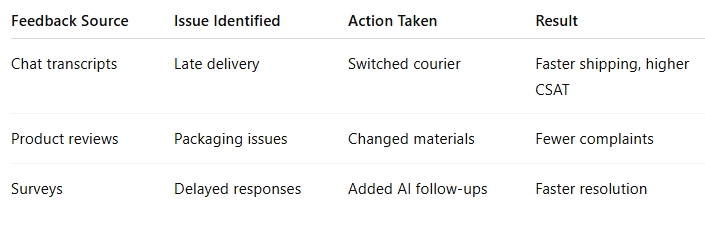
Over a two-week period, you notice a spike in chat conversations mentioning “late delivery” and “damaged packaging.” Instead of manually analyzing customers' feedback, your Zipchat AI dashboard flags delivery dissatisfaction as a rising trend with a negative sentiment score.
When you dig deeper, you find:
- 25% of recent reviews mention delays.
- 8 out of 10 low-star ratings include packaging complaints.
- Several WhatsApp chats mention “waiting over a week” for updates.
By analyzing both quantitative feedback (review scores, survey responses) and qualitative feedback (comments, chats), you uncover a pattern; most complaints trace back to one specific courier partner.
You take action:
- Switch to a faster local courier.
- Update your “Delivery Times” page to set clear expectations.
- Send follow-up messages via Zipchat AI, reassuring waiting customers and offering discount codes.
Two weeks later, your post-purchase survey satisfaction score jumps from 76% to 91%, and negative delivery mentions drop by half.
This is what effective customer feedback analysis looks like, spotting problems early, fixing the root causes, and turning unhappy buyers into loyal customers.
Ecommerce-Specific Tips & Best Practices
Customer feedback analysis isn’t one-size-fits-all, ecommerce brands deal with massive amounts of customer feedback data across different channels every day. From product reviews to chat logs, the real challenge isn’t getting feedback; it’s making sense of it fast enough to act.
Here are a few actionable tips to turn raw feedback into real growth:
1. Combine qualitative and quantitative feedbacks
- Quantitative feedback (like survey ratings, NPS scores, or delivery metrics) gives you measurable trends.
- Qualitative feedback (like customer reviews, chat transcripts, and open-text survey answers) tells you why those trends exist.
- Together, they show the full picture of your customer experience, not just numbers, but emotions and context.
2. Centralize your data
Don’t let valuable insights live in silos. Gather data from all feedback sources; online reviews, WhatsApp messages, surveys, and email replies, into one place.
AI-powered customer feedback tools like Zipchat AI can automatically collect and tag this information for you, saving hours of manual sorting.
3. Automate feedback analysis tools with AI
AI tools now go beyond simple sentiment analysis. They can detect recurring issues, prioritize based on customer impact, and even draft response templates to speed up resolutions.
This ensures every voice from a first-time buyer to a long-time subscriber, gets heard and addressed.
4. Close the customer interaction loop
Once you act on feedback, communicate the change. Let customers know their voice made a difference. Whether it’s improving packaging or revising delivery timelines, sharing these updates builds trust and long-term loyalty.
5. Regularly review trends and refresh data to improve customer satisfaction
Customer expectations evolve. Schedule quarterly reviews to compare feedback patterns and check whether old insights still hold true.
When done consistently, customer feedback analysis becomes more than a reporting process, it’s your competitive edge. It helps ecommerce brands anticipate needs, improve products faster, and deliver an experience that feels personal, not generic.
Conclusion & Next Steps
Customer feedback isn’t just noise, it’s your most honest growth signal. When you analyze it the right way, you uncover what really drives satisfaction, loyalty, and long-term revenue.
Ecommerce brands that treat feedback as strategy, not just support, are the ones that adapt fastest. From identifying recurring complaints to spotting product love early, customer feedback analysis gives you a live pulse on your business.
If you’re ready to go beyond spreadsheets and guesswork, Zipchat AI can help. It automatically organizes and interprets feedback across reviews, chat, and surveys so you can act on actionable insights, not intuition.
FAQ
1) What is customer feedback analysis?
Customer feedback analysis is the process of collecting and examining customer opinions from reviews, surveys, or chat conversations to identify patterns, pain points, and improvement opportunities. In ecommerce, it helps brands enhance product quality, service speed, and overall customer experience.
2) Why is customer feedback analysis important?
Because it turns everyday customer comments into actionable insights. By analyzing feedback, ecommerce businesses can increase customer satisfaction, refine their marketing, and fix recurring service issues before they affect customer retention or revenue.
3) How do you conduct customer feedback analysis?
You can conduct feedback analysis in five main steps:
- Collect data from multiple channels (reviews, surveys, chats).
- Categorize it by topic or sentiment.
- Analyze for recurring themes or problem areas.
- Extract insights about customer behavior and expectations.
- Act on the findings to improve operations or communication.
Modern customer feedback analytics tools like Zipchat AI automate this process, tagging sentiment and surfacing insights in real time.

Try Zipchat for free