Try Zipchat in Action!
Enter your store URL to see how Zipchat would behave.



"Opportunities? They are all around us . . . " — Orison Swett Marden
When you consider the fact that there are over 2 billion active WhatsApp users globally, that surely offers brands unprecedented opportunities, combined with the intimacy that traditional marketing channels have struggled to match. With a 98% open rate (compared to a mere 20% for emails) and conversations happening in real time (Landbot), WhatsApp isn’t just where people chat with friends anymore. It’s where buying decisions happen.
If you are still relying solely on email and traditional ads that struggle to deliver, you need to overhaul your marketing. WhatsApp marketing offers you direct, two-way conversations between your brand and customers through personalized messages, multimedia content, and interactive tools like chatbots. When put to good use, this turns the world's most popular messaging app into a powerful marketing channel that delivers exceptional results.
This guide breaks it all down for you. You’ll learn what WhatsApp marketing is, how it works at scale, which tools matter, and how modern brands use AI-powered conversations to sell, support, and retain customers without burning out their teams. Along the way, you’ll also see how platforms like Zipchat turn WhatsApp from a simple inbox into a high-conversion growth engine.
What Is WhatsApp Marketing?
WhatsApp marketing is a performance-driven messaging channel that connects businesses with customers on the app where they already are. It allows brands to send targeted messages and start real, two-way conversations that feel personal, timely, and trustworthy. With a 98% open rate, WhatsApp has become one of the most effective communication channels for driving action and improving user engagement.
At its core, WhatsApp marketing exists in two very different worlds. The first is the WhatsApp Business App, designed for small, local businesses managing conversations manually on a single device. The second is the WhatsApp Business API. It is built for growing brands that need automation, multiple agents, CRM, and ecommerce integrations, and the ability to handle thousands of conversations at once. When people talk about WhatsApp marketing at scale, they’re almost always referring to the API.
What sets WhatsApp apart from channels like SMS and email is how conversations work. Unlike SMS, WhatsApp supports rich media, interactive buttons, product catalogs, and verified business profiles.
These features only become fully available once a brand moves beyond casual messaging and operates through a properly configured Whatsapp business account, allowing customers to instantly recognize who they’re chatting with and trust the conversation. Compared to email, WhatsApp messages create instant conversational loops where customers can reply, ask questions, and move closer to purchase in real time instead of hours or days later.
Key Takeaways
- WhatsApp marketing is a high-conversion, conversation-based channel, not just messaging
- Serious marketing and automation require the WhatsApp Business API, not the free app
- Rich media, trust signals, and instant replies outperform SMS and email
- The channel works best when paired with automation and AI for scale
WhatsApp Business App vs. WhatsApp Business API
One of the biggest points of confusion in WhatsApp marketing is the difference between the WhatsApp Business App and the WhatsApp Business API. While they share the same name, they are built for very different use cases. Choosing the wrong one can limit your growth before you even get started.
Side-by-Side Comparison
The WhatsApp Business App is designed for simplicity. It works well for small shops, freelancers, and local businesses that handle a low volume of messages and don’t need automation. Conversations are managed manually on a single phone, which quickly becomes a bottleneck as message volume increases.
The WhatsApp Business API is built for scale. It allows multiple agents, AI chatbots, integrations with ecommerce tools, and automated flows that support the entire ordering process, from first message to purchase and follow-up. If you want to reconnect with dormant customers, run promotional campaigns, handle thousands of conversations at once, recover abandoned carts, and grow market share without increasing headcount, WhatsApp Business API is your best bet.
Verdict: If your goal is real WhatsApp marketing, automation, scale, and measurable revenue impact, you need the WhatsApp Business API. The app helps you reply to messages; the API helps you build a scalable marketing and sales channel.
Key Benefits of WhatsApp Marketing
WhatsApp marketing offers measurable advantages over other marketing channels like email and SMS, making it a high-performing tool for businesses looking to engage customers and drive sales. Here are the key benefits backed by industry data:
- Extremely High Open Rates: WhatsApp messages achieve an average open rate of 98%, compared to around 20% for email campaigns. This ensures your message reaches your audience almost every time.
- Immediate Engagement: 80% of messages are read within the first 5 minutes, giving businesses the ability to reach customers quickly with time-sensitive offers or alerts (Salesforce).
- Higher Click-Through Rates: Rich multimedia messaging, images, videos, GIFs, and interactive buttons significantly increase engagement. Call-to-action buttons like "Buy Now" or "Claim Offer" drive higher CTRs than plain text links.
- Trusted and Secure Communication: End-to-end encryption ensures conversations are private, while verified business profiles with the Green Tick build credibility and trust with customers.
- Two-Way Conversation Capability: Unlike email or SMS, WhatsApp enables instant conversational loops, letting businesses answer questions, guide purchases, and provide support in real time, which further strengthens customer relationships.
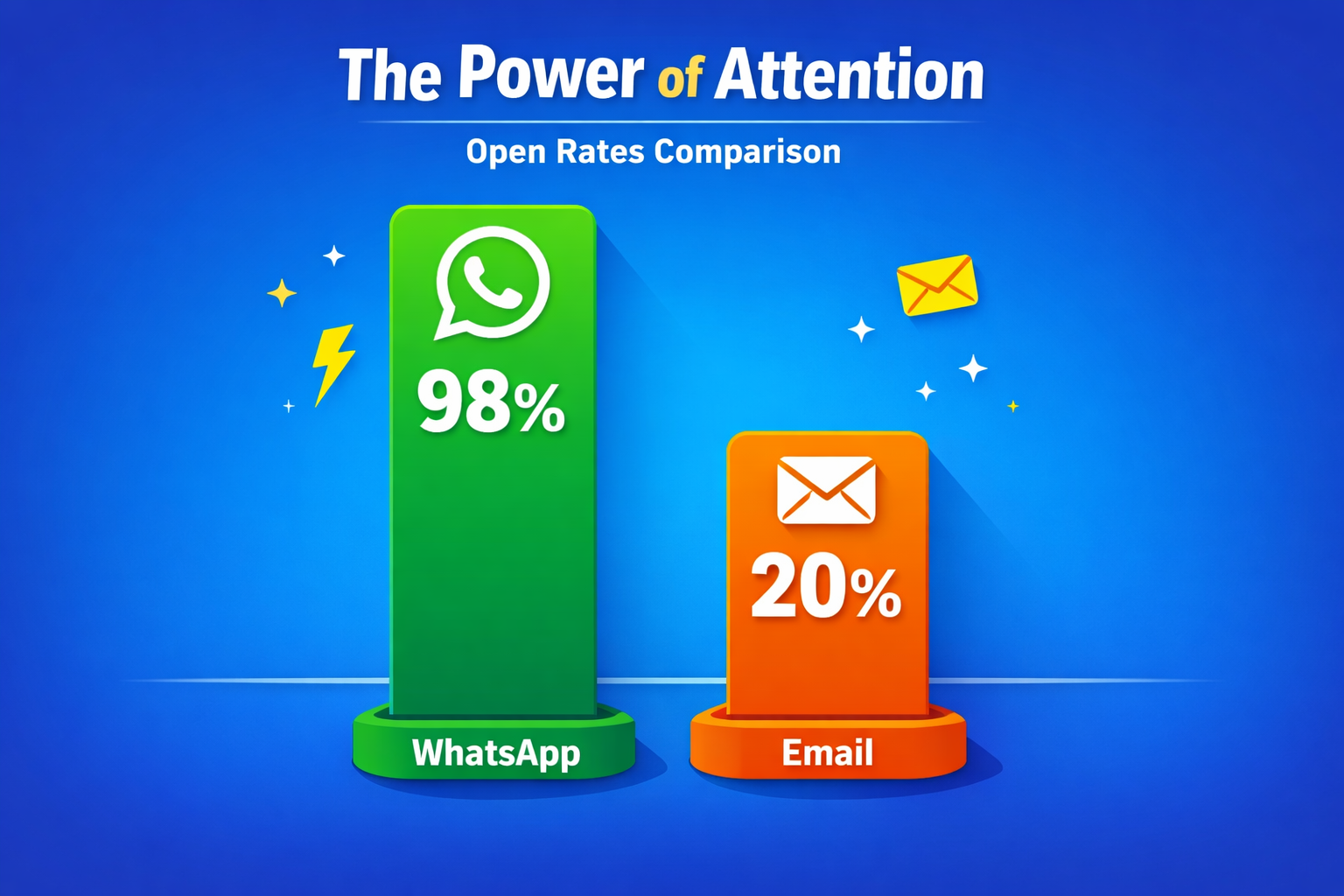
These benefits make WhatsApp a highly effective marketing channel for businesses aiming to increase conversions, reduce abandoned carts, and maintain strong customer relationships.
5 Proven WhatsApp Marketing Strategies To Increase Your Conversion Rate
WhatsApp is not just a messaging app; it’s a powerful marketing platform that can drive sales, recover lost revenue, and nurture lasting customer relationships. Here are five strategies that deliver real results:
1. Broadcast Campaigns Through Personalized Messages
Best For: Announcements, product launches, festive promotions
Personalized WhatsApp campaigns allow you to send messages to an opted-in list of customers simultaneously. Use this feature for newsletters, seasonal offers, promotional messages, or product drops. Unlike email, WhatsApp messages have higher open rates, making your announcements more likely to be seen and acted upon.
Common Mistake to Avoid: Sending messages to users who haven’t opted in can lead to blocks or spam complaints. Always respect consent.
2. Conversational Commerce (Chat-to-Buy)
Best For: Small catalogs, impulse purchases
Conversational commerce enables customers to browse your catalog, add products to a cart, and complete purchases without leaving WhatsApp. By keeping the transaction inside the chat, you reduce friction and increase conversion rates.
Pro Tip: Include rich media like images and videos of products to boost engagement and help customers make informed decisions.
3. Automated Customer Journeys
Best For: Abandoned cart recovery, order updates
Automation can turn WhatsApp into a revenue-generating channel. Trigger messages for abandoned carts, provide post-purchase shipping updates, or follow up on product reviews. These automated flows feel personal and timely, boosting recovery rates without manual effort.
Common Mistake to Avoid: Avoid sending generic messages. Personalize content using the customer’s name, product, and context.
4. Click-to-WhatsApp Social Media Ads
Best For: Social media campaigns, lead generation
Click-to-WhatsApp ads on Facebook or Instagram direct users into a WhatsApp chat instead of a website, lowering the cost per acquisition (CPA) and enabling immediate engagement.

Pro Tip: Pair with a welcome message or automated bot to guide new leads and recommend products instantly.
5. Customer Retention & Support
Best For: FAQs, ongoing customer engagement
Use WhatsApp to handle customer inquiries through chatbots or AI agents. Automating repetitive queries frees up human agents to focus on high-value conversations like upsells or complex support issues. This improves response time, customer satisfaction, and repeat purchases.
Key Takeaway: Combining automation with a proactive approach allows WhatsApp to act as both a sales and support channel, driving revenue while keeping operational costs low.
This structured approach to WhatsApp marketing ensures that every message adds value, whether it’s boosting conversions, recovering lost sales, or providing timely support.
Advanced Features: Integrating WhatsApp Flows & AI
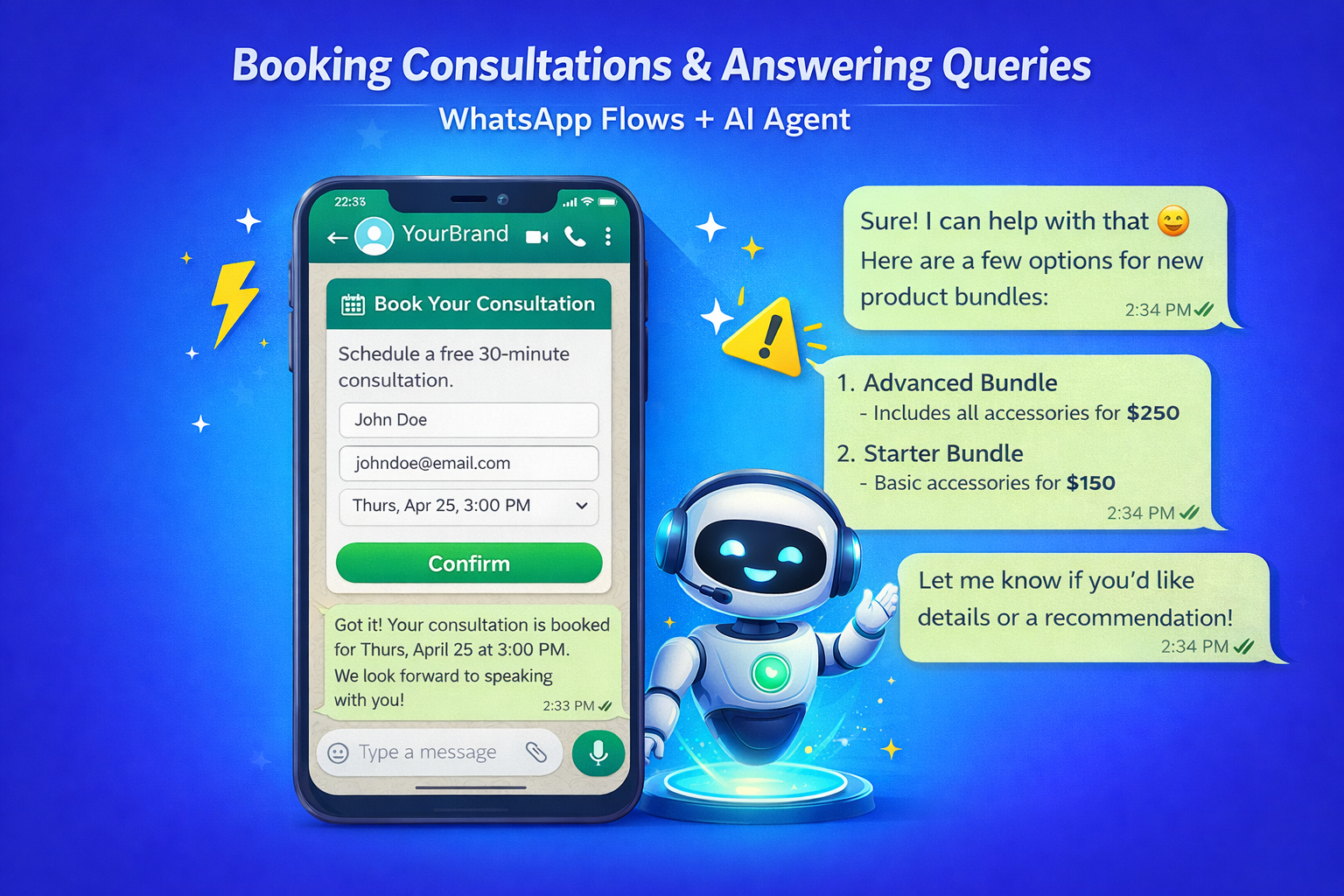
WhatsApp has evolved beyond simple messaging with WhatsApp Flows, allowing businesses to embed native forms directly inside the chat. These flows can be used for booking appointments, lead generation, newsletter sign-ups, or product inquiries, all without redirecting users to a separate website. By keeping interactions inside WhatsApp, businesses can reduce friction, improve engagement, and capture more leads efficiently.
Another cutting-edge feature is the integration of AI agents powered by large language models (LLMs) like ChatGPT. Unlike rigid, button-based chatbots, these AI agents can understand context, answer complex questions, and even guide buyers through objections and sales conversations. With AI, WhatsApp becomes a fully autonomous revenue and support channel that scales naturally with your business.
How To Build a Compliant WhatsApp List (Opt-ins)
Building a WhatsApp marketing list requires care; messaging users without consent can get your number banned. Follow these steps to grow your list safely:
- Obtain Consent First (The Golden Rule): Never message users who haven’t opted in. Consent is mandatory for compliance with WhatsApp policies and GDPR rules (WhatsApp Business Blog).
- Use Multiple Collection Methods: Collect opt-ins through website pop-ups, links in email signatures, QR codes on product packaging, and checkboxes at checkout. Offering a small incentive like discounts or early access can boost sign-ups.
- Prioritize Privacy and Transparency: Clearly state how customer data will be used in your privacy policy. Ensure users know they can opt out at any time, which builds trust and maintains long-term engagement.
Following these steps ensures your WhatsApp marketing campaigns are compliant, sustainable, and effective in driving real customer interactions.
Top WhatsApp Marketing Software & Tools
Choosing the right tool can make or break your WhatsApp marketing strategy. Here are the top five platforms to consider:
- Zipchat
- Pros: AI-powered, handles both sales and support, autonomous conversations, integrates with Shopify/CRM, and can scale across multiple devices.
- Cons: A paid subscription is required for full features.
- Best For: Businesses looking to automate conversational commerce while maintaining a human-like interaction. Start the free trial today.
- Brevo (formerly Sendinblue)
- Pros: Integrates email and WhatsApp campaigns, easy to use, robust analytics.
- Cons: WhatsApp features are limited compared to dedicated tools.
- Best For: Businesses already using Brevo for email marketing.
- Interakt / AiSensy
- Pros: Popular in India and Southeast Asia, supports automated flows, broadcast messages, and customer support.
- Cons: Regional focus; may lack integrations for global stores.
- Best For: E-commerce brands targeting emerging markets.
- Twilio
- Pros: Fully customizable, developer-friendly, scalable, and can integrate with almost any CRM or backend system.
- Cons: Requires technical expertise to set up and manage.
- Best For: Developers or tech-savvy teams who want complete control over automation.
- SleekFlow
- Pros: Omnichannel platform, manages WhatsApp, Messenger, Instagram DMs, and more in one inbox.
- Cons: Slight learning curve, pricing scales with the number of channels.
- Best For: Teams managing multiple messaging platforms simultaneously.
Best Practices To Avoid Being Blocked When Sending Marketing Messages
Maintaining compliance is key to long-term success on WhatsApp. Follow these do’s and don’ts:
Do’s:
- Send messages 1–2 times per week to avoid overwhelming your WhatsApp customers.
- Focus on relevant, high-value content rather than generic promotions.
- Always provide an easy opt-out option for users.
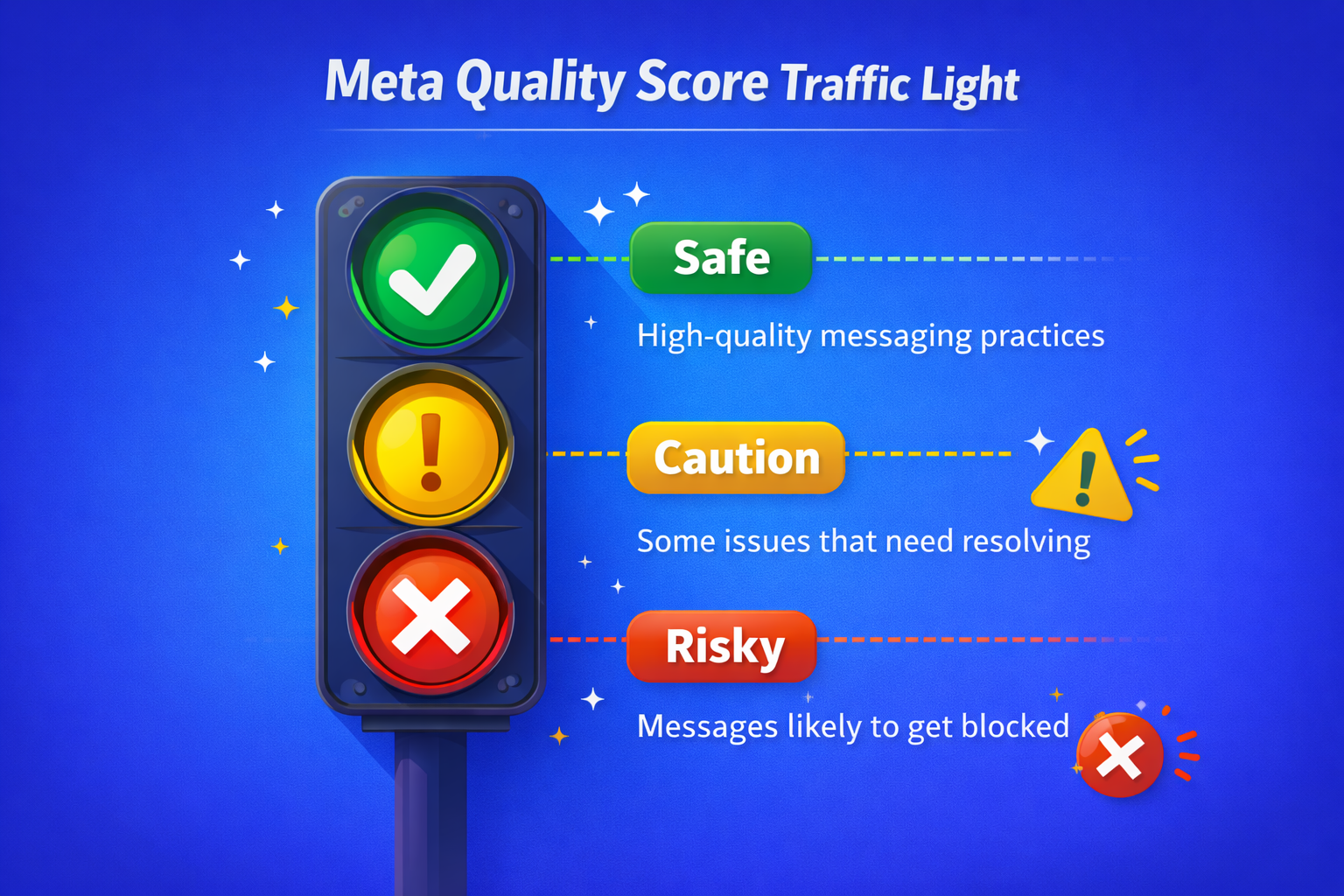
- Monitor Meta’s Quality Score to ensure your account stays in the green.
Don’ts:
- Avoid spammy, aggressive, or overly promotional language.
- Never message users without explicit opt-in consent.
- Don’t neglect monitoring customer feedback; negative reactions can impact delivery and block rates.
FAQ
Is WhatsApp marketing free?
The WhatsApp Business App is free, but the WhatsApp Business API incurs charges per conversation. Pricing depends on region and message volume.
Can I send bulk messages on the regular app and WhatsApp API?
Only through the API and exclusively to users who have opted in. Bulk messaging on the regular app violates WhatsApp’s policies.
How do I get the Green Tick?
High-volume API usage combined with brand verification qualifies your account for WhatsApp’s official Green Tick, signaling trust and authenticity to customers.


Try Zipchat for free