Try Zipchat in Action!
Enter your store URL to see how Zipchat would behave.


Ecommerce Inventory Management: What It Is, Why It Matters & Challenges

Inventory has become the real deal for any ecommerce store. Gone are the days when ecommerce retailers rely solely on a single warehouse; now, inventory can decide how quickly you get orders out the door, how much money you’ve locked up in products, and whether customers actually want to shop with you again. The truth is, when you get it wrong by ordering too much, too little, or just missing the timing, you feel it right away. Sales drop, shipping slows, and customers start to lose trust.
Managing inventory isn’t just about tracking how many items you have. For ecommerce brands, things get tricky fast. Demand shifts overnight. You’re selling on multiple platforms. And let’s be honest, supply chain issues are often out of your hands. If you don’t have a solid system, you end up putting out fires instead of planning. That hurts your profits, and it makes real growth a lot harder.
That’s why the right inventory management software and processes matter. In this article, we’ll dig into what ecommerce inventory management really means, why it’s so important for online stores, and the biggest headaches businesses run into as they grow. You’ll also know how inventory optimization tools like Zipchat can help ecommerce teams track inventory as it happens, streamline operations, and catch changes in demand before they turn into problems.
Key Takeaways
- Ecommerce inventory management helps businesses keep the right products in stock without tying up cash in excess inventory.
- Poor inventory decisions directly impact profitability, fulfillment speed, and customer satisfaction.
- Effective inventory management relies on planning, real-time tracking, and accurate demand forecasting.
- Common challenges include stockouts, overstocking, limited visibility, and supply chain delays.
- Small improvements in inventory control can lead to better margins, faster delivery, and more repeat customers.
What Is Ecommerce Inventory Management?
Ecommerce inventory management is the process of planning, tracking, and controlling product stock across online sales channels to meet customer demand without running out of items or overstocking. It ensures that the right products are available at the right time and in the right quantities.
At its core, inventory management helps ecommerce businesses balance supply and demand. By monitoring stock levels, forecasting future sales, and replenishing inventory efficiently, businesses can reduce waste, avoid missed sales, and deliver a smoother buying experience for customers.
Why Inventory Management Is Critical for Ecommerce Businesses
Proper inventory management is essential for online retailers because it ensures businesses can meet customer demand while avoiding costly mistakes. Here’s why it matters:
- Increases profitability – By keeping the right amount of stock on hand, ecommerce operations avoid tying up cash in excess inventory and reduce losses from unsold products.
- Enables fast and reliable fulfillment – Accurate inventory tracking and distribution ensure orders can be processed and shipped quickly, keeping delivery times consistent.
- Improves customer satisfaction – Having products available when customers want them builds trust, encourages repeat purchases, and prevents negative reviews.
- Enables better forecasting – By analyzing inventory costs, trends, and sales patterns, businesses can predict future demand and plan stock levels more effectively.
How the Ecommerce Inventory Management Software Works
The ecommerce inventory management software coordinates multiple functions to keep stock balanced and orders flowing. A conceptual diagram of the key functions might look like this:
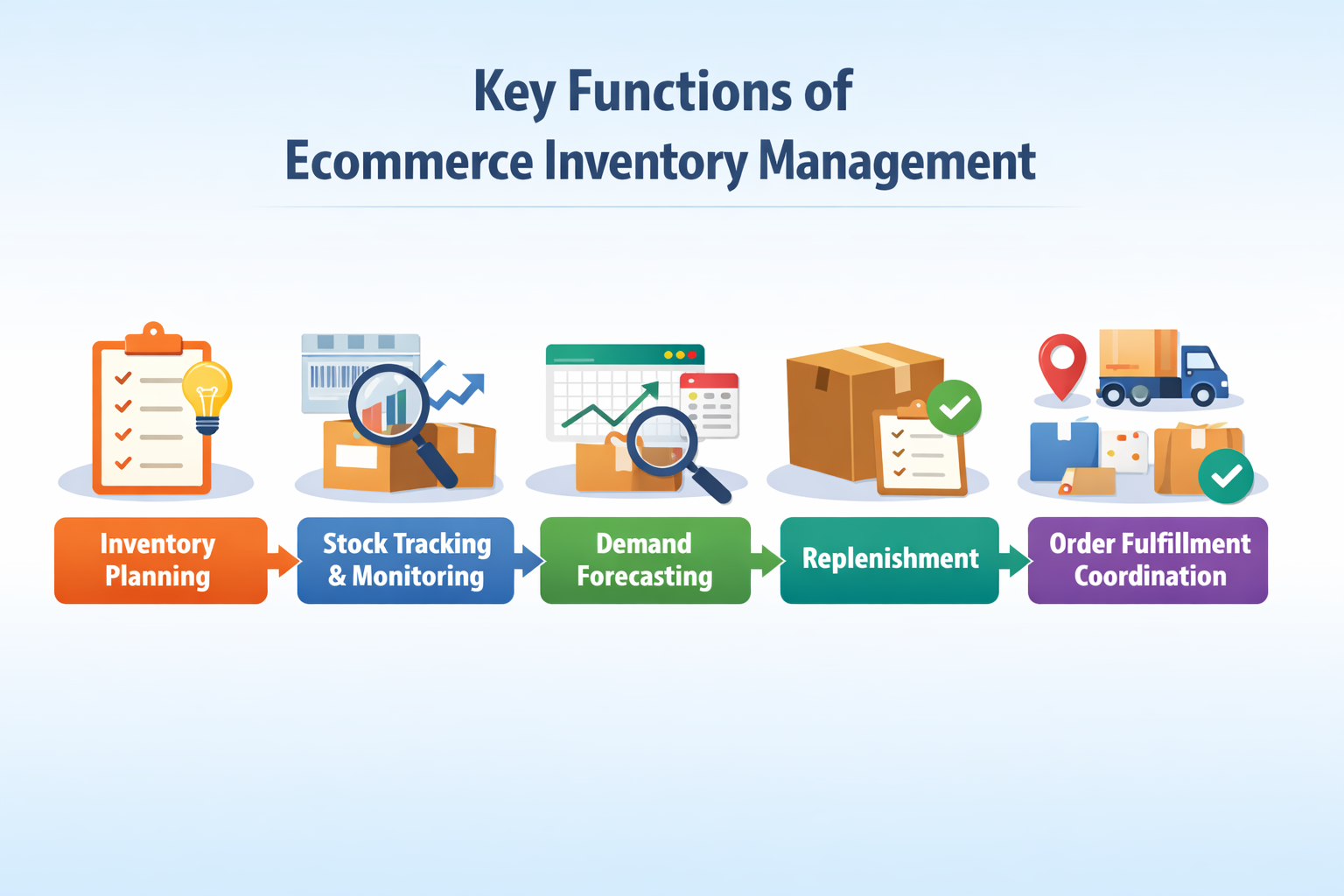
- Inventory planning – Determines what products are needed, in what quantities, and when.
- Stock tracking and monitoring – Uses tools to see current inventory levels in real time across all sales channels.
- Demand forecasting – Predicts how much stock will be needed based on past sales trends, seasonality, and market trends.
- Replenishment – Ensures timely ordering and restocking of products to avoid stockouts.
- Coordinating with order fulfillment – Aligns inventory levels with shipping, returns, and delivery processes so customers receive products on time.
Common Ecommerce Inventory Management Challenges
Even the best ecommerce inventory management platform faces multiple challenges when managing inventory. Understanding these pain points helps prevent disruptions and lost revenue.
Demand Inventory Forecasting Accuracy
Predicting exactly how much stock will sell is difficult, especially for new products or during seasonal peaks. Poor forecasts can lead to overstocking, understocking, and lost revenue.
Managing Inventory Tracking Across Multiple Sales Channels
Selling on platforms like Amazon, Shopify, and your own website requires syncing physical inventory across all channels. Mistakes can lead to overselling or duplicate stock orders.
Seasonal Demand Spikes
Holidays or promotional events can create sudden demand surges. Without careful planning and warehouse management, online businesses may run out of stock or overorder, impacting fulfillment and cash flow.
Stockouts and Overstocking
Running out of popular items leads to missed sales, while overstocking ties up capital and increases storage and operational costs. Both scenarios hurt profitability and slow down operations.
Limited Inventory Visibility
Not having a clear, real-time view of stock can cause errors in purchase order fulfillment and misaligned inventory decisions. Centralized systems are essential for accurate tracking.
Supply Chain Delays
Supply chain disruptions, shipping delays, or production problems can interrupt stock flow, leaving businesses unable to fulfill orders on time.
Managing Product Returns and Customer Satisfaction
Returns can complicate inventory counts and slow restocking. Efficient handling of product returns ensures returned items are quickly reintegrated into available stock and reduces losses.
The Business Impact of Poor vs. Effective Inventory Management
Inventory management really shapes how a business performs. It reduces operational costs, keeps customers happy, and makes daily work smoother. When companies mess this up, things go south fast. Shelves go empty, bestselling products vanish, and frustrated shoppers head elsewhere.
On the flip side, you get boxes piling up with stuff that just sits there, draining cash that could’ve gone somewhere useful. Slow shipping and bad tracking only add to the headache, driving customers away and making it tough to build any loyalty.
But when a business optimizes inventory, everything changes. Products are in stock when people want them. Margins look better, and shipping happens on time.
With smart planning and the right systems, companies can actually predict what people will buy, cut down on waste, and store things more efficiently. Orders move out the door quickly, customers notice, and they’re much more likely to come back next time.
Bottom line: solid inventory management means more money coming in, happier customers, and real growth that lasts. Companies that invest in smart inventory systems and thoughtful planning see the results, leaner operations, better cash flow management, and the freedom to grow without always worrying about stock headaches.
Best Practices for Ecommerce Inventory Management Methods
Align Inventory Planning With Demand Patterns
Plan your stock levels based on historical sales, seasonality, and upcoming promotions. Understanding demand patterns helps prevent overstocking and stockouts, keeping both cash flow and customer satisfaction in check.
Balance Stock Levels To Avoid Overstocking and Stockouts
Maintaining an optimal stock balance ensures products are available in multiple locations when needed without tying up too much capital in inventory. This reduces storage costs and avoids lost sales opportunities.
Continuously Review Inventory Performance
Regularly monitor metrics such as turnover rates, order fulfillment times, and stock accuracy. Reviewing performance helps identify slow-moving items, adjust forecasts, and refine inventory strategy over time.
Centralize Inventory Data Across Channels
Use a unified system to track in-store inventory across all sales channels, including online marketplaces and your own store. Centralizing stock tracking prevents overselling, avoids duplicate stock orders, and improves order accuracy.
Leverage Inventory Management Systems
Zipchat and other popular ecommerce platforms provide real-time inventory tracking, automate tracking, multi-channel integrations, and turn all that data into helpful insights.
They don’t just show you what’s happening, they help you spot trends, forecast demand, and keep your shelves stocked without wasting time or making messy mistakes.
Conclusion
If you want your growing ecommerce business to actually make money and keep customers happy, you’ve got to stay on top of inventory. Mess it up, and you’ll see empty shelves, annoyed shoppers, and cash tied up in products just gathering dust. But if you get it right? You’ll keep sales coming in, boost your margins, and grow without breaking a sweat.
That’s where tools like Zipchat come in. They let you track your inventory everywhere you sell, predict what’s going to sell next, and notice trends before everyone else. The end result? Less chaos, more profits, and a business that actually works the way you want.
Wouldn't you rather start improving your inventory management today with a free trial of Zipchat? Sign Up Here
Ecommerce Inventory Management FAQs
1. What is ecommerce inventory management?
Ecommerce inventory management is the process of planning, tracking, and controlling product stock to meet customer expectations without overstocking or running out. The inventory software ensures products are available when needed, reduces waste, and helps maintain profitability and smooth fulfillment.
2. Why is inventory management important in ecommerce?
Effective inventory management prevents stockouts and overstocking, improves order fulfillment speed, and enhances customer satisfaction. The inventory management process helps businesses optimize cash flow, reduce storage costs, and plan for future demand accurately.
3. What are common inventory challenges in e-commerce?
Common challenges include inaccurate demand forecasting, managing multiple sales channels, seasonal demand spikes, stockouts and overstocking, limited inventory visibility, supply chain delays, and handling product returns. Each can impact profitability and fulfillment.