Try Zipchat in Action!
Enter your store URL to see how Zipchat would behave.

Best Sitemap Apps for Shopify in 2026
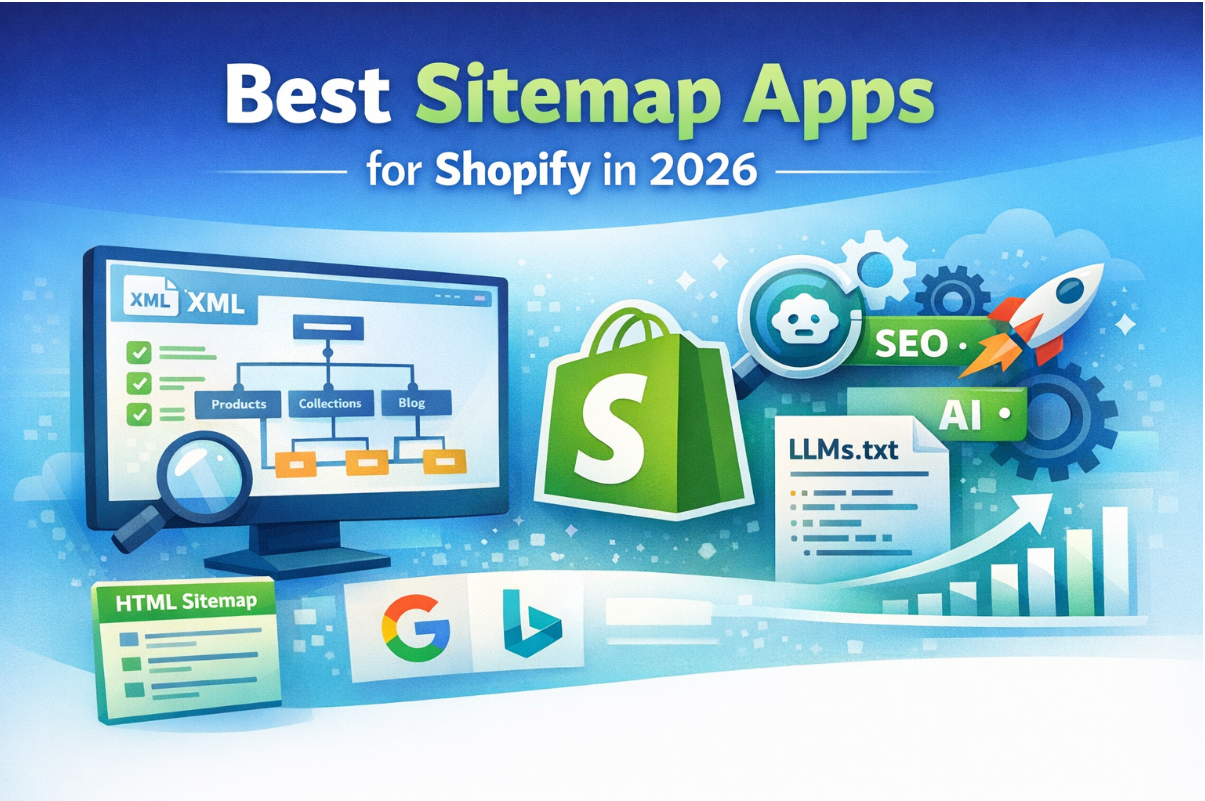
If you run a Shopify store, having a proper sitemap is an essential part of SEO. A sitemap helps search engines discover the structure of your website, including products, collections, pages, and blog posts. When search engines understand your site structure more clearly, they can crawl and index your content more efficiently.
Better indexing can lead to improved visibility in search results, faster discovery of new products, and stronger organic traffic over time.
While Shopify automatically generates a basic XML sitemap, many merchants install sitemap apps to gain additional control. These apps allow store owners to customize sitemap structure, remove unwanted pages, improve crawl efficiency, and create user-friendly HTML sitemap pages for customers.
In this guide, we compare the best Shopify sitemap apps in 2026 based on features, SEO capabilities, ease of use, and overall value for merchants.
1. Sitemap NoIndex Pro SEO
Best for advanced SEO control and complete sitemap management
Sitemap NoIndex Pro SEO is one of the most comprehensive sitemap and indexing control apps available for Shopify. Rather than simply generating a sitemap page, the app focuses on giving merchants full control over how their store is crawled and indexed by search engines.
In addition to generating both HTML and XML sitemaps, the app allows merchants to manage NoIndex and NoFollow directives across different areas of their store. This helps prevent low-value pages from appearing in search results and allows search engines to focus their crawl budget on important content.
For many merchants, the biggest advantage is the ability to manage indexing rules across products, collections, pages, blogs, and other store content. This level of control can be particularly valuable for stores with large product catalogs or complex SEO requirements.
The app also supports modern SEO practices such as AI-friendly sitemap structures and llms.txt files, which help emerging AI search systems understand store content more effectively.
Key Features:
- HTML sitemap for improved store navigation
- Customizable XML sitemap structure
- Full NoIndex and NoFollow controls
- Duplicate content management tools
- Multilingual sitemap support
- AI-ready llms.txt sitemap generation
- SEO visibility management across multiple page types
Pros:
- Very powerful SEO control compared to most sitemap apps
- Helps prevent indexing of low-value or duplicate pages
- Supports modern SEO practices and AI search discovery
- Works well for both small and large Shopify stores
Cons:
- Advanced features may require slightly more setup compared to basic sitemap generators.
Best for: Stores that want full control over indexing, crawling, and sitemap structure as part of a broader SEO strategy.
View the app on Shopify: Sitemap NoIndex Pro SEO.
2. Sitemapper Pro SEO Sitemap
Best for simple HTML sitemap pages
Sitemapper Pro is a long-established Shopify app that focuses primarily on creating HTML sitemap pages. These pages help customers navigate a store more easily, especially if the store has many products or collections.
The app automatically updates the sitemap whenever new products, collections, or pages are added to the store. This makes it a simple “install and forget” option for merchants who want a basic sitemap page available to both customers and search engines.
However, compared to more advanced sitemap tools, Sitemapper Pro focuses mostly on navigation rather than deeper SEO control.
Key Features:
- HTML sitemap generation
- Automatic updates when store content changes
- NoIndex and NoFollow support
- Multilingual sitemap pages
Pros:
- Very easy to install and configure
- Simple sitemap page for store navigation
- Free plan available
Cons:
- Limited XML sitemap customization
- Fewer advanced SEO features
- Less control over indexing compared to advanced apps
- No AI llms.txt sitemap
Best for: Merchants who mainly want a simple HTML sitemap page for customers.
3. Magical XML / HTML Sitemap
Best for automatic sitemap generation
Magical XML/HTML Sitemap focuses on simplicity and automation. Once installed, the app automatically generates both HTML and XML sitemaps for the store.
The app also allows some customization of the HTML sitemap layout so it can match the store’s design and branding. For merchants who want a quick solution without configuring SEO rules, this can be an attractive option.
Key Features:
- Automatic sitemap generation
- Customizable HTML sitemap design
- XML sitemap integration
- Automatic content rules
Pros:
- Very simple setup
- Clean HTML sitemap layout
- Affordable pricing
Cons:
- Limited SEO customization options
- Few indexing control tools
- Less flexibility for larger stores
- No AI llms.txt sitemap
Best for: Merchants who want a simple automated sitemap solution.
Comparison of the Best Shopify Sitemap Apps
| App | Best For | HTML Sitemap | XML Control | NoIndex Controls | AI LLM Sitemap (llms.txt) | Starting Price |
| Sitemap NoIndex Pro SEO | Advanced SEO control | ✅ Yes | ✅ Yes | ✅ Yes | ✅ Yes | $3.49/month |
| Sitemapper Pro SEO Sitemap | Simple sitemap pages | ✅ Yes | Limited | ✅ Yes | ❌ No | Free / $4.99 |
| Magical XML / HTML Sitemap | Simple sitemap pages | ✅ Yes | Limited | ❌ No | ❌ No | ~$1/month |
Why Shopify Stores Use Sitemap Apps
While Shopify automatically generates a basic XML sitemap, many merchants install sitemap apps to gain greater control over how their store is discovered and indexed by search engines.
The default Shopify sitemap is automatic and cannot be customized. This means merchants have limited control over which pages appear, how they are organized, or how search engines crawl their store.
Sitemap apps solve this by giving merchants tools to better manage their store’s search visibility. Common capabilities include:
- Creating HTML sitemaps to help customers navigate large stores
- Controlling which pages appear in search results
- Managing NoIndex and NoFollow tags
- Preventing low-value pages from being indexed
- Improving crawl efficiency for large product catalogs
- Supporting modern SEO features such as AI-friendly sitemaps
For stores with hundreds or thousands of products, controlling crawl behavior and indexing rules can significantly improve how search engines understand the site.
Final Thoughts
Sitemap apps can play an important role in helping Shopify stores improve their SEO and site structure.
While basic sitemap tools simply generate a navigation page, more advanced solutions provide additional control over how search engines crawl and index a store.
- If you want a simple HTML sitemap page, apps like Sitemapper Pro may be sufficient.
- If you prefer a simple automated sitemap solution, Magical XML / HTML Sitemap offers a quick setup.
- However, stores that want deeper SEO control, such as managing indexing rules, optimizing crawl behavior, and improving how search engines discover important pages, may benefit from using a more comprehensive tool like Sitemap NoIndex Pro SEO.
As search engines and AI discovery systems continue evolving, having better control over sitemap structure and indexing is becoming increasingly important for long-term organic growth.
FAQS
What is an llms.txt file and why is it important in 2026?
An llms.txt file is a specialized sitemap designed specifically for Large Language Models (LLMs) and AI search engines, like ChatGPT, Gemini, and Claude. Instead of just listing links, it provides a clean, AI-readable breakdown of your store’s content. As AI-driven search becomes the standard, having an llms.txt file ensures your products are easily understood and recommended by AI platforms. Currently, Sitemap NoIndex Pro SEO is one of the few apps to offer this.
Why would I want to NoIndex a page on my Shopify store?
Not every page on your store needs to be seen by Google. Pages like customer account logins, internal search result pages, legal policies, or duplicate product tags can waste your “crawl budget.” By using a NoIndex tag, you tell search engines to ignore these low-value pages and focus exclusively on ranking your most important products and collections.
What is the difference between an XML sitemap and an HTML sitemap?
An XML sitemap is written in code and is specifically designed for search engine bots (like Googlebot) to read and crawl your website efficiently. An HTML sitemap is a visual, clickable directory of links designed for human visitors to help them navigate your store. A complete SEO strategy usually involves having both.